


A folding ebike for steep hills faces more mechanical and electrical stress than standard commuter terrain. Gravity pulls harder, motors draw more current, and frames absorb greater torque. That’s the reality riders deal with every single climb.
Gravity, Rider Weight, and Load Factors
The steeper the incline, the more torque the motor must generate. Add rider weight, cargo, and accessories, and resistance multiplies quickly. Folding ebikes must balance portability with strength, which isn’t easy.
Urban vs Mountain Inclines
Urban hills often come in short bursts with traffic stops, while mountain inclines are sustained and relentless. A capable folding ebike for steep hills must handle both stop-and-go torque demand and long, continuous climbs without overheating.
Why a Folding Ebike For Steep Hills Is Different
Not all folding ebikes are built alike. Models designed for flat cities simply won’t cut it on aggressive slopes.
Frame Geometry and Structural Reinforcement
Hill-focused folding ebikes use reinforced hinges, thicker weld points, and lower center-of-gravity geometry. This prevents flexing when torque peaks during climbs.
Weight Distribution in Foldable Frames
Balanced weight distribution keeps the front wheel planted while climbing. Poor balance leads to wheel lift, traction loss, and rider fatigue—things you don’t want halfway up a hill.
Motor Power: The Core of Hill-Climbing Performance
Motor choice defines whether a folding ebike for steep hills feels effortless or exhausting.
Hub Motor vs Mid-Drive Motor
Hub motors are simpler and quieter, but mid-drive motors leverage the bike’s gears, making them exceptional climbers. However, high-torque hub motors with smart controllers can also perform remarkably well on steep gradients.
Torque Ratings Explained
Torque, measured in Newton-meters (Nm), matters more than raw wattage. For steep hills, 80Nm or higher delivers confident climbing without stressing components.
Battery Capacity and Power Delivery on Hills
Climbing drains batteries faster—no way around it.
Voltage vs Amp Hours
Higher voltage systems provide smoother power delivery under load, while larger amp-hour capacity ensures longer range. A folding ebike for steep hills needs both to stay consistent.
Heat Management During Long Climbs
Quality battery management systems regulate temperature, preventing power drop-off mid-climb. That’s essential for reliability and longevity.
Gearing Systems That Conquer Inclines
Gearing turns motor power into usable climbing force.
Derailleur vs Internal Gear Hubs
Derailleurs offer wider gear ranges for steep climbs, while internal hubs provide low maintenance. Hill riders typically prefer wide-range derailleur setups paired with powerful motors.
Tire Width, Grip, and Rolling Resistance
Wider tires improve traction and stability, especially on loose or uneven slopes. A folding ebike for steep hills benefits from tires between 2.4” and 4.0”, depending on terrain.

Braking Systems for Downhill Safety
Climbing is only half the battle—descending safely matters just as much. Hydraulic disc brakes deliver controlled stopping power without hand fatigue, especially on long downhill stretches.
Rider Comfort on Steep Terrain
Comfort isn’t optional on hills. Upright riding posture, suspension forks, and ergonomic grips reduce strain and improve control during demanding climbs.
Product Recommendation: Titan S Long-Range Electric Bike
When it comes to serious climbing performance, the VICTRIP Titan S Long-Range Electric Bike stands out as a powerful folding ebike for steep hills. Designed with high-torque output, long-range battery capacity, and reinforced frame engineering, it handles aggressive inclines with confidence.
For riders who face daily hills or live in mountainous regions, this model delivers consistent torque, reliable range, and foldable convenience without compromise.
TOP PICK
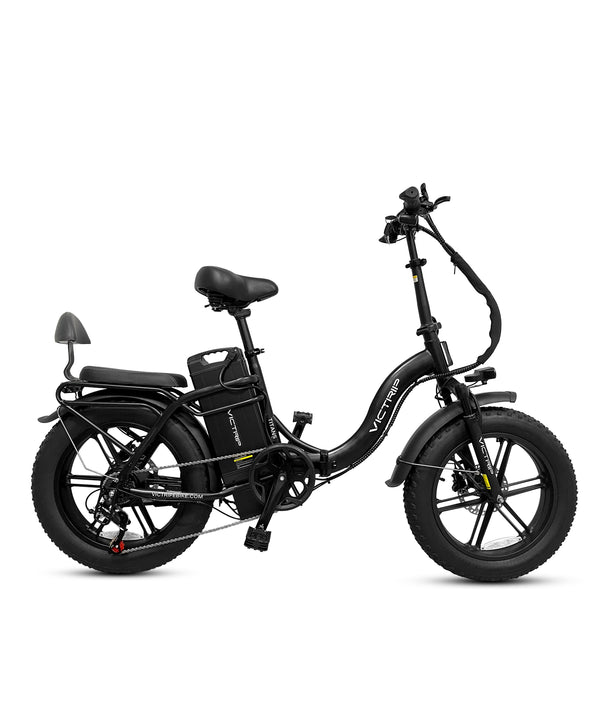
VICTRIP®TITAN S Folding Ebike For Steep Hills
$1,499.00
Real-World Riding Scenarios
From urban hill commuting to rural mountain roads, a folding ebike for steep hills adapts seamlessly. Riders report smoother starts, reduced leg strain, and better control compared to traditional folding models.
Maintenance Tips for Hill Riders
-
Check drivetrain wear regularly
-
Monitor brake pad thickness
-
Keep battery charged between 20–80%
-
Inspect folding joints monthly
Routine care ensures peak performance on climbs year-round.
Conclusion
A folding ebike for steep hills isn’t just about convenience—it’s about engineering, power, and reliability. With the right motor torque, battery system, gearing, and structural design, steep inclines become manageable and even enjoyable. Models like the Titan S prove that foldable electric bikes can dominate demanding terrain without sacrificing portability or comfort.
FAQs
Is a folding ebike powerful enough for steep hills?
Yes, if it has sufficient torque, battery capacity, and gearing designed for climbing.
What motor torque is best for hills?
Look for at least 80Nm for consistent hill performance.
Do folding ebikes overheat on long climbs?
Quality models with advanced controllers and battery management systems prevent overheating.
Are wider tires better for hill climbing?
Absolutely. Wider tires improve grip and stability on steep inclines.
How does rider weight affect hill performance?
Heavier loads require more torque and drain the battery faster, making motor strength crucial.
Share:
Electric Trike for People With Knee or Joint Pain
Best Folding eBikes for Commuters Who Hate Traffic