


Preparing Your Electric Dirt Bike for Off-Road Adventures
Preparing an electric dirt bike for off-road use is crucial for both safety and performance. Unlike traditional gasoline-powered dirt bikes, electric models have unique considerations related to their battery systems, electronics, and power delivery. A thorough pre-ride inspection and proper setup can prevent common issues such as power cutouts, tire failures, and suspension problems, ultimately enhancing the riding experience. This guide will walk you through the essential steps for an effective Electric Dirt Bike Off-Road Setup, ensuring your bike is ready for the trails. We will cover everything from mechanical checks and suspension tuning to battery management and rider-specific adjustments, providing practical advice for a safe and enjoyable off-road adventure.
Essential Pre-Ride Mechanical Checks
Before every off-road excursion, a comprehensive mechanical inspection is paramount. This process, ideally performed in a garage where tools and shade are available, can take around ten minutes but can prevent ride-ending failures.
Fasteners and Torque Settings
One of the most critical initial steps for a new bike, or after any significant maintenance, is to check all important bolts and fasteners. We recommend going over critical fasteners with a torque wrench and setting them to the manufacturer's specified torque. This ensures that components are securely attached and prevents loosening during aggressive riding.
Tires: Pressure, Condition, and Seating
Tires are your primary contact with the terrain, and their condition significantly impacts handling and safety.
-
Pressure: Always check both tires with a gauge, not just a thumb test. Fat tires, common on off-road electric dirt bikes, can lose pressure faster than expected. For off-road fat tires, a working range of 5-15 PSI is typical, with specific recommendations varying by terrain:
-
Hard-packed trails: 10-12 PSI
-
Snow: 6-8 PSI
-
Sand: 6-10 PSI for maximum float. Heavier riders, especially those near the bike's maximum load, should lean towards the higher end of the recommended PSI range to avoid pinch flats. Always refer to your bike's user manual or the tire's sidewall for specific min/max pressure guidelines.
-
-
Condition: Inspect tires for cuts, sidewall cracking, embedded debris, and ensure the bead is properly seated on both rims. Check the tread edges for wear.
Brakes: Functionality and Feel
An operable braking system is legally required for off-road vehicle operation in many areas, such as National Forest System land .
-
Lever Feel: Both front and rear brakes should feel firm. If a brake suddenly feels soft, it indicates a potential issue.
-
Response: Confirm that the brake cut-off feature responds correctly and that the brakes provide sufficient stopping power during a low-speed test ride.
Frame Integrity
Visually inspect the frame at high-stress points such as the head tube, swingarm pivot, and motor mounts for any signs of cracks or "paint spiders", which can indicate underlying structural issues.
Optimizing Suspension for Off-Road Performance
Properly tuned suspension is vital for comfort, control, and performance on varied off-road terrain.
Setting Sag
Suspension sag is the amount the suspension compresses under the rider's weight. This is often the most overlooked setup step. Factory settings are typically for an average rider, so adjusting sag to your specific weight is crucial.
-
Target Sag: A good off-road target is approximately 30% of fork and shock travel. For dirt-bike chassis, this often translates to roughly 100-105 mm of rider sag.
-
Procedure: Set your sag to a known baseline. If you are significantly heavier or lighter than the average rider, consider a weight-matched spring. If you frequently bottom out on small bumps, consider adding preload or compression to the suspension.
Inspecting Seals and Adjustments
-
Fork Seals: Check fork seals for any signs of oil weep.
-
Shock: Inspect the rear shock for any leaks or harsh top-out.
-
Clickers: Confirm that your rebound and compression clickers are set to your saved settings. When adjusting, always follow the manufacturer's counting direction and starting reference, and never force an adjuster against its stop.
Battery Management and Electrical System Integrity
The electrical system, particularly the battery, is the heart of an electric dirt bike. Proper management and inspection are vital for reliable operation.
Battery Charge and Installation
-
Charge Level: Ensure the battery has sufficient charge for your planned ride length. While not necessarily 100% for a short test ride, it should have enough for the ride and return. For the first ride after purchase, a full charge is recommended.
-
Security: The battery must be fully seated and secured in its mounting position. Check that the latch or mounting system is locked and that the battery does not move noticeably with a gentle push. Loose power leads are a common cause of mid-ride power cutouts.
-
Condition: Inspect the battery connectors and charging port for corrosion, moisture, or debris. The charging-port cover should be fully closed. Never pressure-wash the electronics, as most are only splash-resistant (IP65/IP ratings).
Charging Practices
-
Charger: Always use the supplied or manufacturer-recommended charger.
-
Safety: Charge the battery in an attended location, on a hard surface, away from flammable materials.
-
Temperature: Allow a hot battery pack to cool before charging. Similarly, do not charge a cold pack; let it reach room temperature first.
-
Storage: For storage between rides, keep the battery around 40-60% charge in a cool, dry place.
Electrical Connections and Controls
-
Visible Cables: Scan visible cables for pinching, abrasion, or changed routing.
-
Display and Switches: Confirm that the display starts normally, showing the correct battery level, riding mode, and bike status. Check that the power switch, mode selector, and stop switch work properly. If an error code appears, do not attempt to solve it by twisting the throttle.
-
Throttle: The throttle should return cleanly to its original position on its own. Test this with the power off, and then again by turning the handlebars lock-to-lock to ensure wiring changes do not cause sticking.
Rider-Centric Adjustments and Initial Operation
Beyond mechanical readiness, tailoring the bike to the rider is key for control and comfort.
Ergonomics: Levers, Bars, and Grips
-
Control Alignment: Ensure the handlebars, grips, and levers sit tight and are aligned to your preference.
-
Lever Position: Adjust the lever and bar position so controls fall naturally to your hands. Small fit changes can significantly impact control and reduce fatigue.
-
Steering: Turn the handlebars lock-to-lock to confirm that steering moves freely without binding or headset play.
First Ride Protocol
For the very first ride, especially when unfamiliar with the bike's throttle response, braking force, and center of gravity, a cautious approach is essential.
-
Low-Speed Test: Begin with a low-speed, straight-line ride to familiarize yourself with the throttle response, center of gravity, and brake strength.
-
Maneuvering: Progress to slow turns, stopping, and starting. Confirm the bike does not pull to one side, rub abnormally, lose power, or make unusual noises before increasing speed.
-
Post-Test Recheck: After this initial test, stop, turn off the power, and quickly recheck critical components like battery mounting, tires, brakes, chain, handlebars, and main connection points.
Safety and Security Measures
Safety is paramount in off-road riding, encompassing both personal protection and bike security.
Personal Protective Equipment (PPE)
Never ride without full protective gear. Electric dirt bikes can reach significant speeds instantly, making proper gear critical, especially on an unfamiliar, torquey machine.
-
Mandatory Gear:
-
Off-road helmet
-
Goggles
-
Gloves
-
Over-the-ankle boots (that protect ankles)
-
-
Recommended Gear:
-
Knee pads
-
Elbow pads
-
Body armor
-
-
Clothing: Secure loose shoelaces and clothing to prevent them from getting caught in the chain or wheels.
Route Planning and Legality
-
Terrain Selection: For a first ride, choose a flat, open, and permitted area. Avoid steep slopes, deep mud, sand, water crossings, or heavily rutted routes.
-
Trail Legality: Always confirm that the trails or private property you plan to ride are open and that you have checked your state and local rules regarding electric dirt bike operation. Regulations can vary significantly between forests, campgrounds, and private properties.
Bike Security
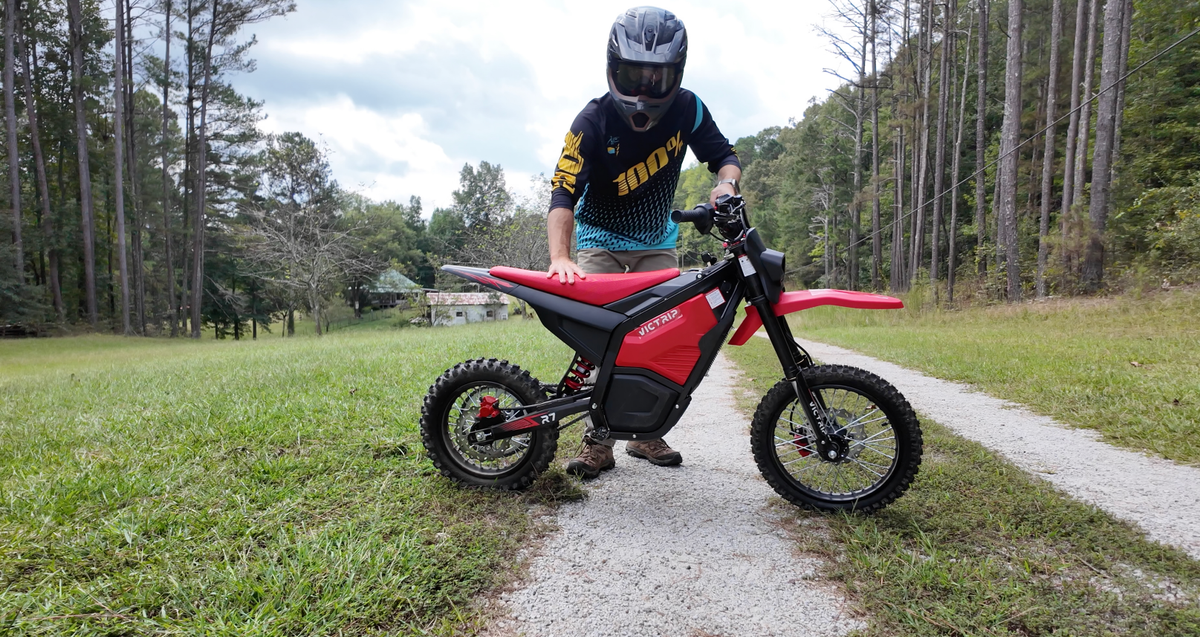
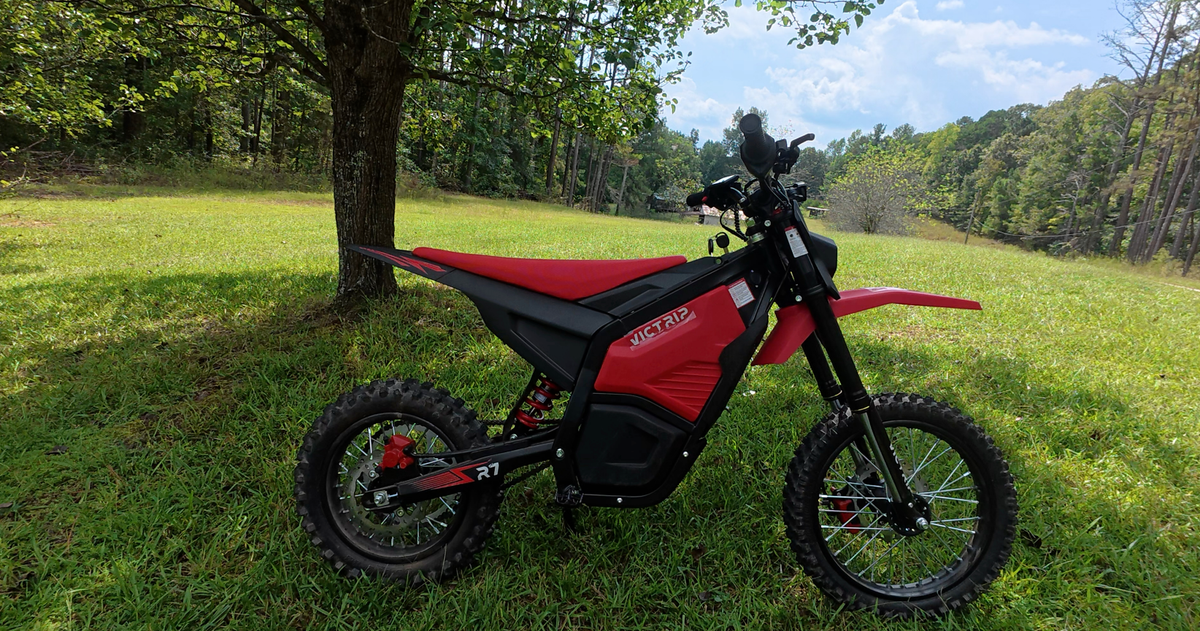
Electric dirt bikes, such as those offered by brands like VICTRIP, are valuable and often compact, making them attractive targets for theft.
-
Theft Prevention: Add a hardened lock and consider a hidden GPS tracker before leaving the bike unattended.
-
Documentation: Photograph your bike and record its VIN/serial number. Store this information safely, as it is crucial for recovery and police reports if the bike is stolen.
Frequently Asked Questions (FAQ)
Q: How often should I perform a pre-ride check?
A: A quick pre-ride check should be performed before every ride. A more thorough inspection, including torque checks, should be done periodically or after any significant maintenance.
Q: What tire pressure should I use for general off-road riding?
A: For off-road fat tires, a range of 5-15 PSI is common. For hard-packed trails, 10-12 PSI is a good starting point, while sand and snow require lower pressures (6-10 PSI and 6-8 PSI respectively) for better floatation . Always consult your specific tire and bike manual.
Q: Can I pressure-wash my electric dirt bike?
A: No, it is generally not recommended to pressure-wash the electronics of an electric dirt bike. Most are only splash-resistant (IP65/IP ratings), not submersible. Use a gentle wash and avoid directing water directly at electrical components.
Q: What should I do if my display shows an error code?
A: If your display shows an error code or flashes abnormally, do not continue riding or attempt to solve the issue by twisting the throttle. Consult your bike's manual or contact customer support.
Q: What is suspension sag, and why is it important?
A: Suspension sag is the amount your suspension compresses under your weight. It's crucial because it ensures the suspension operates within its optimal range, providing better handling, traction, and comfort.
Conclusion: Ensuring a Safe and Enjoyable Ride
A meticulous Electric Dirt Bike Off-Road Setup is not merely a recommendation; it is a fundamental aspect of safe and enjoyable off-road riding. By consistently performing pre-ride checks, optimizing suspension settings, managing your battery and electrical system diligently, and making rider-centric adjustments, you significantly reduce the risk of mechanical failures and enhance your control over the bike. Prioritizing safety through proper gear and understanding local regulations further contributes to a positive riding experience. Investing a few minutes in preparation before each ride can mean the difference between a thrilling adventure and an unfortunate incident. Ride responsibly, stay prepared, and enjoy the unique excitement that electric dirt biking offers.
If you are looking for reliable e-bikes and gear, we invite you to check out VICTRIP's official website at victripebike.com.
Share:
Electric Dirt Bike for Heavy Riders: What to Check Before Buying