


Torque sensors measure how hard you pedal and feed that information to the motor controller so the motor delivers assistance proportionally. That demands more sophisticated hardware, precision manufacturing, and tuned software — and that’s why they add cost to an e-bike. In return, you usually get a more natural, responsive ride, often improved battery economy and better control on hills and technical terrain.
How torque sensors work?
A torque sensor sits between the cranks and the drive (often inside the bottom bracket or drive unit) and measures the rotational force (torque) you apply when you pedal. It doesn’t just count pedal rotations — it senses force and often direction and relays that to the motor controller many times per second. The controller then calculates an assistance level that’s proportional (or otherwise mapped) to your input and sends the right amount of current to the motor.
That sounds technical, but the user-facing result is straightforward: pedal harder → more assist; ease up → assist drops. This proportional behaviour is the core difference from simpler cadence sensors that just detect movement and apply a fixed level of power when you’re pedaling.
Torque vs cadence sensors — core differences
-
What they measure: torque = force; cadence = rotation speed.
-
Response: torque sensors give proportional, immediate assistance; cadence systems give set assistance levels once pedaling is detected.
-
Ride feel: torque = natural, intuitive; cadence = sometimes “on/off” or jumpy under shifting loads.
-
Complexity & cost: torque systems require higher precision parts and more complex controllers — that’s where the price gap appears.
Why torque sensors cost more: component & engineering reasons
Here are the concrete reasons a torque sensor costs more to design and fit:
-
Precision mechanical sensors — many torque sensors use strain gauges, torsion discs, or multi-axis sensors that must be calibrated to tiny tolerances. Manufacturing these parts and installing them into the bottom bracket or drive unit is more difficult and expensive than snapping a cadence magnet and reed sensor onto a frame.
-
Integrated electronics & robust connectors — torque sensors usually include on-board electronics to process small voltage changes from strain gauges and to communicate reliably with the motor controller. Those electronics must be waterproof and resilient to cycling loads.
-
Controller sophistication — to translate torque readings into smooth motor output you need controller firmware with mapping, smoothing, filtering and safety checks. That adds R&D, validation, and often a more capable (and pricier) controller.
-
Calibration and testing — torque sensors must be calibrated at the factory and often require validation on test rigs. That’s a labour and equipment cost that doesn’t exist for basic cadence setups.
-
Integration and packaging — fitting a torque sensor into a compact e-bike design sometimes means custom housings or redesigns — an engineering expense passed to the buyer.
All this adds up in BOM (bill of materials), assembly time, and pre-delivery testing — which is why torque-equipped bikes usually command a higher price.
Software, calibration, and testing — hidden cost drivers
Hardware is one side of the coin; software is the other. To make torque sensors feel “right” you need:
-
Signal conditioning — filter noise out of strain gauge readings without adding latency.
-
Assist mapping — choose how motor power scales with torque; many companies tune unique “feel” maps (eco, tour, sport).
-
Adaptive algorithms — modern systems may factor cadence, slope, motor temperature, battery state-of-charge, and vehicle speed to adapt assistance in real time. Cowboy’s recent AdaptivePower update (for example) used torque data to improve hill climbing and efficiency via software, showing the value of firmware tuning even for older models.
Firmware development, testing across many riding conditions, over-the-air updates, and long-term validation significantly increase development costs — but they’re essential if the bike is to deliver predictable, safe assistance.
Real-world benefits: smoother power, better control, battery savings
Why do riders and reviewers praise torque sensors? Because they provide measurable, practical benefits:
-
Smoother acceleration and reduced “surge” — because power is proportional to force, you avoid sudden jumps in assist that can throw you off balance. That’s especially helpful in urban stop-start riding and technical trails.
-
Improved battery efficiency — by supplying only the power you need when you need it, torque sensors can reduce wasted energy and extend range in real-world riding. Some vendors and testing reports show double-digit percentage improvements in certain conditions.
-
Better hill control — torque systems respond to rider intent instantly, making climbs feel natural and reducing chain/sprocket stress from sudden motor surges.
-
Riding experience — many riders prefer torque sensor bikes because they feel like a seamless extension of your legs — less motor, more “I’m still doing the work” — which can be motivation to ride more often.
Read More: Cadence Vs Torque Sensor: Which Should You Choose for Your Next E-Bike?
When torque sensors are worth the investment (use cases)
Torque sensors are particularly valuable if you fall into one of these categories:
-
Daily commuters who want a natural, sweat-free arrival — smooth assistance helps you control effort and stay comfortable on mixed terrain.
-
Touring and long-distance riders — battery efficiency gains and predictable power make planning and stamina management easier.
-
Hilly or technical-terrain riders — precise torque response improves climbing and technical handling.
-
Riders upgrading from non-assist bikes who want a ‘bike-like’ feel — torque systems maintain a close connection between effort and speed.
If those benefits line up with how you ride, the extra cost often pays off in ride quality and long-term satisfaction.
When you might prefer a cadence sensor (and why)
Cadence sensors still make sense when:
-
Budget is the top priority — cadence systems are cheaper to manufacture and often keep the bike price low.
-
Simplicity is desired — casual riders who want a push-button boost and don’t care about a nuanced pedal feel can be perfectly happy with cadence sensors.
-
Throttle-only or hub motor applications — if you mostly use throttle or simple PAS levels, the cadence approach is adequate and cost-effective.
So, if you’re buying an entry-level commuter where price beats premium feel, cadence is fine.
How brands implement torque sensors — examples
OEMs integrate torque sensing differently: premium systems (Bosch, Shimano) pair sensor, drive, and controller closely, with dealer-level calibration and strong firmware. Other brands use torque data with adaptive updates to improve climbing and efficiency over time.
If you want a real-world model to test the feel, try comparing a torque-equipped step-through commuter like the VICTRIP Mimas step-through e-bike against a similar cadence model — you should notice the difference on the first hill.
TOP PICK
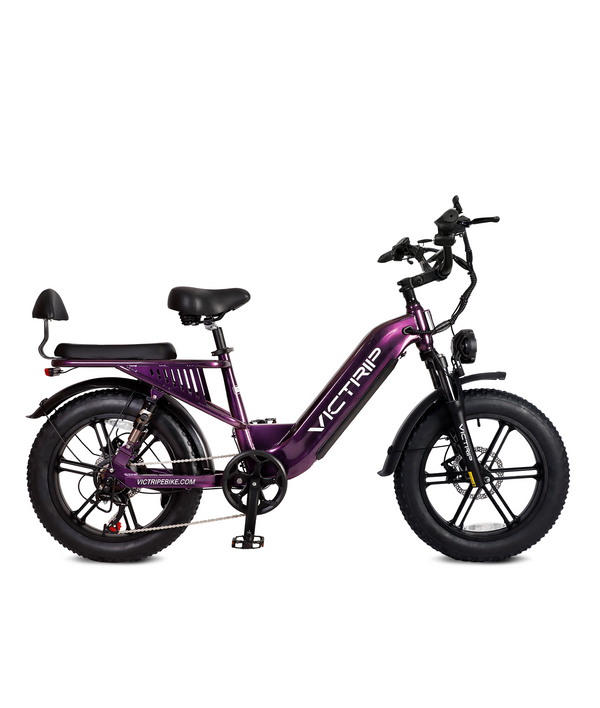
VICTRIP® Mimas Electric Bicycles With Torque Sensors
$1,399.00
Aftermarket upgrades and retrofits: realistic expectations
Can you retrofit a torque sensor to a cadence bike? Technically, kits exist, but:
-
Cost & complexity: kits and installation can be pricey and often approach the cost of trading up to a torque-equipped model. One estimate suggests sensor kits can cost $120–$400 and integration can add hundreds more to final price.
-
Compatibility: frame geometry, bottom bracket standards, and motor/controller compatibility can limit retrofit options.
-
Performance: retrofits may not match factory integration or firmware tuning, so the ride feel might be a compromise.
For many riders, upgrading to a new torque-equipped bike is simpler and yields a better user experience.
Longevity and maintenance — are torque sensors fragile?
Torque sensors contain precision parts and electronics, but modern designs are rugged and sealed against the elements. Points to consider:
-
Sealed assemblies: OEM torque sensors are usually IP-rated and designed to last typical e-bike lifecycles.
-
Serviceability: some torque units are integrated into the drive unit and serviced as part of motor maintenance; others may be modular and easier to replace.
-
Warranty & support: premium brands usually back torque systems with multi-year warranties and dealer networks for diagnostics and firmware updates.
So, while they’re more complex, well-designed torque sensors aren’t inherently fragile — they just require appropriate design and service.
How much extra should you expect to pay?
Price deltas vary by market, region, and manufacturer, but rough rules of thumb:
-
Cadence-based entry e-bike: baseline (for example) $800–$1,600.
-
Torque-equipped midrange e-bike: commonly adds several hundred to over a thousand dollars depending on integration and brand. Conservative estimates put the premium at about $700–$1,200 for fully integrated systems on mainstream models; standalone torque sensor kits (where available) may be $120–$400 but often lack the integration and mapping of OEM systems.
The extra cost buys better sensors, a beefier controller, firmware tuning, and factory calibration — all of which combine to produce the refined ride quality users praise.
Quick guide: choosing the right e-bike for your needs
Use this checklist:
-
Do you ride hills frequently? → Torque sensor recommended.
-
Is battery range a top priority? → Torque sensors can help with efficiency.
-
Are you price-sensitive or new to e-bikes? → Cadence sensor models can be a great starter choice.
-
Do you value software updates and refined ride feel? → Look for torque systems backed by established OEMs (Bosch, Shimano, VICTRIP,others).
Also, if you’re shopping for a commuter or step-through comfort bike, check integrated systems and try a test ride to feel the difference. If you like the step-through style, consider models that pair an efficient mid-drive and torque sensing for the best compromise of comfort and control.
Conclusion — the bottom line
Torque sensors cost more because they’re a system — precision hardware, sealed electronics, tuned firmware, and factory calibration — not just a magnet and reed switch. The higher initial price translates to a more natural ride, often better battery economy, improved hill control, and a bike that reacts like an extension of the rider rather than an on/off boost. If you ride frequently, tackle varied terrain, or just care deeply about ride quality, torque sensors are typically worth the investment. If pricing is the primary constraint and you want basic e-assistance, cadence systems remain a valid, budget-friendly choice.
If you want a real-world example to test the feel, try comparing a torque-equipped commuter or step-through like the step-through e-bikes against a similarly priced cadence model — you’ll notice the difference on the first hill.
FAQs
Q1: Will a torque sensor make me sweat more because I have to pedal harder?
A: Not necessarily. Torque sensors respond to intent: if you want light assistance you can pedal lightly and still get help. Some riders interpret torque systems as requiring more effort on steep starts, but the system’s mapping usually allows you to choose more assist in settings.
Q2: Do torque sensors improve battery life?
A: In many real-world tests and vendor claims, torque sensors can increase efficiency by reducing unnecessary power surges, which can translate to longer range in many riding scenarios. The magnitude depends on riding style and terrain.
Q3: Are torque sensors easy to repair if they fail?
A: Repairability depends on design. Some are modular and replaceable; others are built into the motor/drive unit and serviced by OEM dealers. Check warranty and service network when buying.
Q4: Can I switch between torque and cadence modes on the same bike?
A: Some modern systems support multiple sensor modes or software adjustments, but this is not universal. Some bikes (like models with "SensorSwap") allow different modes; others are built around one approach.
Q5: Is a torque sensor worth it for short city commutes?
A: If you value smooth starts, precise control in traffic, and a more “bike-like” feel, yes. If you’re just looking for a cheap hop-on ride and cost matters more than feel, a cadence bike will do the job.
Share:
Best Budget Mopeds You Can Buy Online in 2026
Best Foldable E-Bikes Adults Are Buying Right Now