


“Long range” on an e-bike used to mean 40–60 miles. Today, some bikes and battery systems claim 100+ miles, and a few specialty builds push far beyond that using large-capacity packs or multiple batteries. The practical winners blend a big battery, efficient motor, and conservative assist modes to deliver the best real-world miles per charge. If you want a single recommendation to start with, the VICTRIP TITAN S long-range model is positioned as a strong value pick in the long-range segment.
How manufacturers measure range (and why the numbers vary)
Manufacturers report range using their own test protocols or lab standards (WLTP in Europe, EPA for some e-bikes in the U.S., or proprietary tests). These controlled tests remove variables like hill climbing, rider weight, headwinds, and accessory loads. In real life, you’ll often see 60–80% of a claimed “maximum” range unless you ride in eco mode on flat terrain with a lightweight rider and minimal stops. Independent reviews and lab tests (e.g., ElectricBikeReport, OutdoorGearLab) are useful to translate claims into realistic expectations.
Key factors that determine an e-bike’s real range
-
Battery capacity (Wh) — the single most important spec. More watt-hours = more energy.
-
Motor efficiency and peak power — big motors use more current when under heavy load. A strong motor plus conservative assist settings is ideal for long range.
-
Total system weight — heavier bikes or loads cut range.
-
Rider weight and cargo — heavier riders reduce range proportionally.
-
Terrain and elevation — hills drain battery quickly.
-
Assist level and throttle use — frequent high assist or throttle-only riding shortens range.
-
Tire type & pressure — slick, well-inflated tires reduce rolling resistance.
-
Wind & temperature — cold batteries lose usable capacity; headwinds cut range.
-
Regenerative braking (if present) — helps a little in stop/start urban riding.
-
Multiple batteries / removable packs — some bikes support adding extra packs or swapping for longer trips (multi-battery approach).
Our pick — VICTRIP TITAN S Long Rang Ebike
Why it’s on this list: VICTRIP markets the TITAN S as a long-range, high-torque model with a high-capacity battery option and fat-tire versatility. The product pages and reviews claim competitive long-range numbers (manufacturer claims vary across model and battery configurations). If you need a bike that’s built to handle heavier loads and long distances without costing the premium you see on boutique long-range builds, Titan S is worth a serious look.
Titan S — specs snapshot and real-world notes
-
Motor: up to 1500W peak.
-
Battery: versions listed with large-capacity packs (examples show 48V 60Ah options on product pages). Large amp-hour packs scale energy into the multiple-hundreds of watt-hours.
-
Claimed range: manufacturer and affiliate reviews cite figures like 140+ miles under ideal conditions for some setups; independent testing may show lower real-world numbers. Always check the exact battery (Wh) when comparing ranges.
Caveat: Manufacturer range claims are often optimistic. Confirm the battery Wh rating and whether the claimed range assumes economy assist, single rider, flat terrain, and no cargo.
TOP PICK
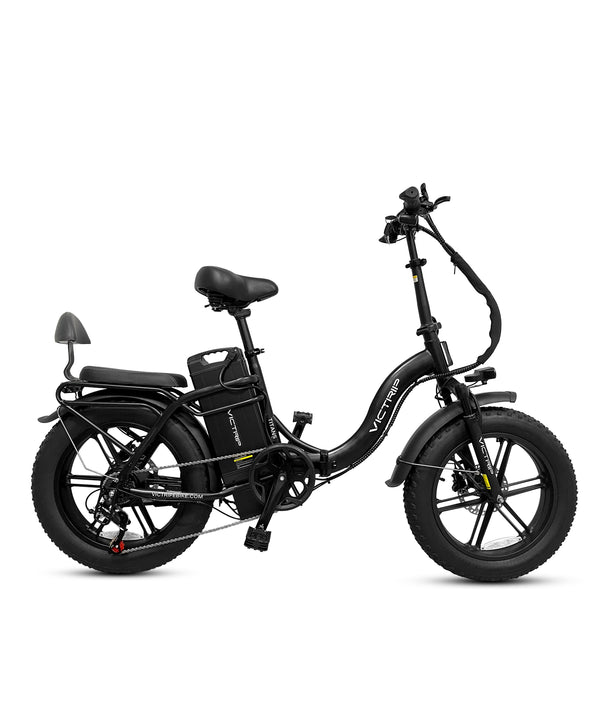
VICTRIP®TITAN S 1000W Ebike
$1,499.00
Top 12 long-range electric bikes right now — short profiles
Below are models and approaches that deliver the longest distance per charge in the current market. This list mixes factory long-range commuters, heavy-duty cargo/utility builds, and specialty ultra-range bikes.
-
Delfast Top 3.0 / Top 3.0i — Known historically for record-setting range (near 200-mile claims in certain configurations) by using very large battery packs. These are heavyweight, motorcycle-like e-bikes focused on distance.
-
Fiido Titan (multi-battery) — Designed to accept multiple batteries (up to three in some setups) to push range into the hundreds of miles in theory; good example of the multi-battery approach.
-
VICTRIP TITAN S — Large packs and high torque for long trips and heavy loads; good value for the capacity offered.
-
Engwe models (e.g., Engwe M20 / X26) — Budget long-range options with sizable batteries and efficient drivetrains for extended rides.
-
Aventon Aventure (and similar fat-tire long-range models) — Offer large batteries with comfortable, all-terrain capability; strong for mixed-terrain touring.
-
Velotric long-range commuter variants — Lightweight frames with efficient motors delivering excellent miles per charge for commuting.
-
Rad Power / RadExpand / RadRover family (upgraded battery options) — Mainstream options with aftermarket extended battery packs available.
-
Specialty cargo bikes with extended batteries — Designed for hauling and long family trips; battery capacity prioritised over weight.
-
Custom builds with whale-size battery packs — Enthusiasts sometimes mount motorcycle-style batteries to push range extreme distances. (Good for experimentation, but check local law.)
-
Bicycling and OutdoorGearLab top long-range picks — These testing outlets update annual lists of the best long-range options, blending lab and field testing.
-
Commercial e-bike conversions with high-capacity packs — A conversion can yield long range while using an existing frame.
-
Hybrid multi-battery commuter setups (e.g., bikes supporting rack batteries) — Practical approach for folks who want flexible range: commuter battery + rack battery for long trips.
Tip: The raw “miles” figure is meaningful only if you confirm the battery Wh and the conditions used for testing. Two bikes with the same claimed miles may use very different battery sizes and testing assumptions.
How to choose a long-range e-bike for your use case
Ask yourself these questions:
-
How many miles will I ride per day or per trip? If you commute 25–40 miles roundtrip, aim for a realistic 60–80+ mile real-world range.
-
Do I need cargo capacity? Cargo adds weight; prioritize larger battery and torque.
-
Will I climb hills often? Choose efficient motors with higher torque and reserve a buffer in capacity.
-
Do I want OEM support or a custom pack? OEM bikes offer warranties; custom packs may offer more range but less support.
-
How important is weight and portability? Bigger batteries add weight; if you need to carry the bike upstairs, balance capacity and weight.
Match the answers to battery Wh, motor specs, and frame type. For many riders, a 600–900 Wh real battery (or a dual-battery setup yielding 1,000+ Wh) is the sweet spot for 60–120 real miles in moderate assist.
Practical tips to maximize battery range (what actually works)
-
Ride in eco or low assist when possible — each assist level change has a large effect on current draw.
-
Keep tire pressure up — low pressure increases rolling resistance.
-
Use cadence-assisted pedaling — help the motor instead of relying on throttle-only.
-
Remove unnecessary cargo — lighter means farther.
-
Use conservative gearing on hills — let the motor assist, but shift early to keep RPMs efficient.
-
Plan routes with fewer stops and less steep climbing — steady speed is efficient.
-
Use regen if available in stop-start city riding — it can return some energy on descents.
-
Keep the battery warm — cold reduces usable capacity; store and charge indoors in winter.
-
Avoid constant high-speed riding — energy use increases with the cube of speed (air resistance).
-
Practice smart charging — top up rather than deep-cycling (details below).
Implementing these tips can often extend practical range by 20–40% compared with aggressive throttle use and frequent high assist.
Battery care and charging best practices
-
Charge regularly: Lithium batteries prefer partial charges. Charging after rides (not necessarily to 100% every time) helps longevity.
-
Storage: For long storage, keep batteries around 40–60% charge and in a cool, dry place.
-
Avoid full deep discharge cycles whenever possible. Deep cycles stress the cells.
-
Use correct chargers — never use mismatched voltage/chemistry chargers.
-
Monitor cycle count — most e-bike batteries last 500–1000 cycles before noticeable capacity drop.
-
Replace cells or packs through OEM or reputable service centers — DIY cell swaps are possible but risky.
Following good battery care protects capacity, which is central to maintaining long-range performance.
Legal and safety notes for high-power / long-range e-bikes
Many long-range e-bikes are also higher-power models (500W+). Local laws vary: in the U.S., federal guidance defines low-speed electric bicycles but states and municipalities can have stricter rules. Higher top speeds or power may classify a bike as a moped or motor vehicle, requiring registration, plates, insurance, or helmet mandates. Always check local rules before using a >750W or >20–28 mph capable bike on public roads. Safety gear is essential — brighter lights, mirrors, and good braking systems become more important with heavier bikes.
Cost, value, and when to consider swapping batteries
Longer range costs more — batteries are the single most expensive component. Compare cost per watt-hour when evaluating value. It’s often more economical to choose a solid midrange bike and add a secondary rack battery for occasional long trips than to buy a boutique ultra-range model. If your commute is daily and long, investing in a factory multi-battery capable bike may pay off. For sporadic long rides, a removable rack battery or spare pack is a flexible solution.
Conclusion — final recommendation & next steps
If you need long range today, there are two practical strategies: (1) buy a factory long-range model (like the VICTRIP TITAN S or Delfast/Fiido types) with a large OEM battery, or (2) choose a quality commuter/cargo bike that supports an additional rack battery for flexible range extension. Confirm battery watt-hours (Wh) first, read independent field tests, and remember that real-world range is often 60–80% of optimistic claims.
For a balanced mix of capacity, torque, and price, the VICTRIP TITAN S is a sensible place to start — it’s explicitly offered as a long-range model and represents the multi-purpose long-range segment. See the product page for specs and configurations.
FAQs
Q1: What’s the single most important spec for e-bike range?
A: Battery capacity measured in watt-hours (Wh). More Wh = more energy available. But motor efficiency, rider weight, terrain, and riding style also strongly affect how far that energy takes you.
Q2: Can I get 200+ miles from a single e-bike charge?
A: Yes, but typically only with specialized setups: very large battery packs, multiple batteries, or extremely conservative assist modes. These setups are heavier and often costlier; check real-world tests for realistic expectations.
Q3: Is the VICTRIP TITAN S really a long-range bike?
A: VICTRIP positions the TITAN S as a long-range model with large battery options. Manufacturer pages and some reviews cite high theoretical mileages; verify the exact battery Wh and understand claims are often under ideal conditions.
Q4: How do cold temperatures affect e-bike range?
A: Cold reduces battery chemistry efficiency and can cut usable range by 10–30% or more in very cold conditions. Warm the bike/battery and store/charge indoors when possible.
Q5: Should I buy a bike with one big battery or two smaller ones?
A: It depends. A single big battery simplifies integration and weight distribution; two batteries offer redundancy and flexible charging. Multi-battery systems can produce the longest practical range.
Share:
Which Cheap Moped Is Actually the Best for Your Money?
The Truth About Costco Electric Bikes — Worth Buying?