


If you’ve ever asked yourself, are torque sensors better for hilly rides, you’re already thinking like an experienced e-bike rider. Hills expose every weakness in an electric bike system. Flat roads are forgiving. Inclines are not.
On a hill, you demand instant power, smooth assistance, and predictable control. Any delay or surge becomes obvious. That’s why riders who live in mountainous areas or commute through rolling terrain quickly notice differences between e-bike sensor technologies.
Torque sensors are often praised as the gold standard for climbing. But why? Is it marketing hype, or is there genuine mechanical and physiological reasoning behind it? In this guide, we’ll break down the technology, rider experience, and real-world performance to answer one question thoroughly and honestly: are torque sensors better for hilly rides?
By the end, you’ll understand not just what works better—but why it works better.
Understanding Torque Sensors: How They Actually Work
What Is a Torque Sensor?
A torque sensor measures how hard you’re pedaling. It detects pressure applied to the crank, bottom bracket, or rear dropout and instantly adjusts motor output to match your effort.
In simple terms:
-
Push harder → motor gives more power
-
Ease off → motor reduces assistance
This happens hundreds of times per second.
That responsiveness is the core reason many riders believe torque sensors are better for hilly rides. When climbing, pedal force constantly changes, and torque sensors adapt in real time.
Torque Sensor vs Cadence Sensor
Cadence sensors measure if you’re pedaling, not how hard. Once the pedals rotate, the motor activates at a preset level.
| Feature | Torque Sensor | Cadence Sensor |
|---|---|---|
| Measures effort | ✅ Yes | ❌ No |
| Hill responsiveness | Excellent | Moderate |
| Natural ride feel | Very high | Artificial |
| Battery efficiency | Higher | Lower |
| Learning curve | Short | Very short |
On hills, cadence sensors often feel delayed or overly aggressive. Torque sensors feel intuitive—almost invisible.
Read More: Cadence Vs Torque Sensor: Which Should You Choose for Your Next E-Bike?
Why Torque Sensors Feel “Natural”
Human legs don’t deliver constant force. On hills, effort spikes and dips with terrain changes. Torque sensors mirror this behavior. That’s why many riders say torque-sensor bikes feel like an extension of their body.
And yes, that natural feel becomes critical when climbing steep grades.
Why Torque Sensors Are Better for Hilly Rides: Performance Breakdown
Power Delivery on Steep Climbs
On a hill, timing is everything. Torque sensors deliver proportional power the instant you push down. There’s no lag, no guessing.
This matters when:
-
Starting on a steep incline
-
Navigating switchbacks
-
Climbing uneven or broken pavement
Cadence sensors may wait half a pedal rotation before engaging. On a hill, that delay feels like a dead spot. Torque sensors eliminate it.
That alone answers part of the question: are torque sensors better for hilly rides? In terms of power delivery, absolutely.
Energy Efficiency on Long Hills
Long climbs drain batteries fast. Torque sensors help conserve energy by supplying only the power you need.
Instead of blasting full assistance:
-
Power increases when you push harder
-
Power decreases when terrain eases
This dynamic modulation significantly improves range in hilly environments. Riders often report 10–20% better battery efficiency on sustained climbs.
Traction and Control on Inclines
Torque sensors don’t just help you climb—they help you stay upright.
Because power output is smooth and proportional:
-
Rear wheel slip is reduced
-
Front-end lift is minimized
-
Balance remains predictable
Wet Roads and Loose Gravel
On wet asphalt or gravel climbs, sudden motor surges can break traction. Torque sensors avoid this by ramping power gradually, improving safety and confidence.
Real-World Benefits of Torque Sensors in Hilly Terrain
Reduced Rider Fatigue
Climbing taxes your cardiovascular system and leg muscles. Torque sensors reduce fatigue by sharing the load intelligently.
Instead of fighting a motor:
-
You ride with it
-
Effort feels evenly distributed
-
Muscle burn is delayed
This makes torque sensors ideal for:
-
Daily hill commutes
-
Long-distance touring
-
Riders with knee sensitivity
Improved Battery Range
Because torque sensors respond to effort instead of blindly applying power, battery usage becomes smarter.
Benefits include:
-
Longer range per charge
-
Less heat buildup in the motor
-
More consistent voltage output
Over months of riding, that efficiency translates into longer battery lifespan.
Confidence for Beginners and Advanced Riders
Beginners appreciate how predictable torque sensors feel on hills. Advanced riders appreciate how much control they retain.
No jerks. No surprises. Just steady, reliable climbing assistance.

Torque Sensors vs Cadence Sensors on Hills: A Direct Comparison
Climbing Consistency
Torque sensors maintain consistent speed even when gradient changes. Cadence systems often surge or stall.
Responsiveness Under Load
Under heavy rider weight or cargo:
-
Torque sensors scale power intelligently
-
Cadence sensors may feel underpowered or abrupt
Long-Term Wear and Maintenance
Smooth power delivery reduces:
-
Chain stress
-
Gear wear
-
Motor strain
That’s an often-overlooked advantage when riding hills daily.
Choosing the Right E-Bike for Hills
Motor Placement Matters
Mid-drive motors paired with torque sensors excel on hills because they leverage the bike’s gears. Hub motors can still climb, but efficiency drops on steep grades.
Frame Geometry and Hill Stability
A stable wheelbase, lower center of gravity, and stiff frame improve climbing confidence. These factors amplify the benefits of torque sensors.
Example of a Torque-Sensor Hill Climber
A well-balanced example of torque-sensor performance in real-world riding can be seen in bikes like the VICTRIP Mimas Electric Bicycles With Torque Sensors which integrates responsive pedal-assist behavior designed for varied terrain, including hills.
This kind of setup highlights how torque sensors and proper bike design work together.
TOP PICK
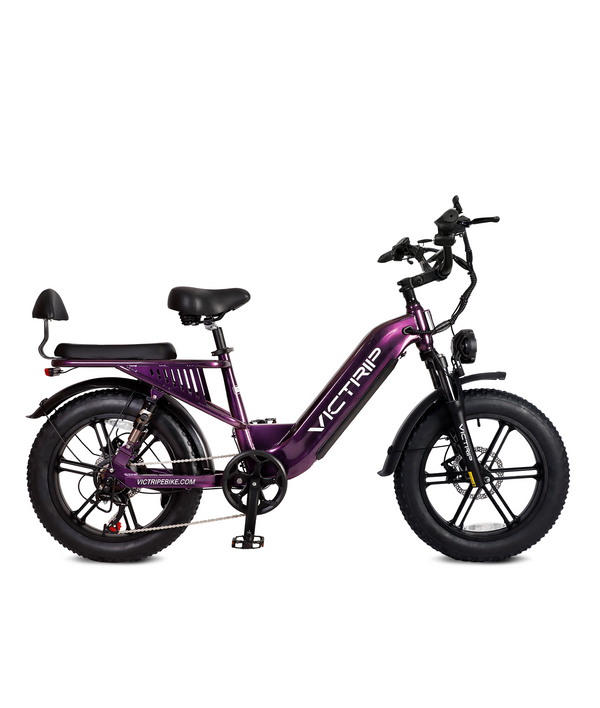
VICTRIP® Mimas Electric Bicycles With Torque Sensors
$1,399.00
Conclusion: Are Torque Sensors Worth It for Hilly Riding?
So, are torque sensors better for hilly rides? The evidence is clear.
They deliver:
-
Immediate power on demand
-
Superior control on steep terrain
-
Improved battery efficiency
-
Reduced rider fatigue
For anyone who regularly faces hills—whether commuting, touring, or riding recreationally—torque sensors aren’t just better. They’re transformative.
If hills are part of your riding reality, torque sensors aren’t a luxury. They’re the smart choice.
FAQs
Are torque sensors better for hilly rides than cadence sensors?
Yes. Torque sensors respond instantly to pedal pressure, making them significantly better for climbing hills smoothly and efficiently.
Do torque sensors use more battery on hills?
No. They usually use less battery because power output matches rider effort instead of running at fixed levels.
Are torque sensors good for beginners?
Absolutely. Their natural feel makes hill starts and steady climbs easier for new riders.
Do torque sensors work well on very steep hills?
Yes, especially when paired with a mid-drive motor and proper gearing.
Can torque sensors handle stop-and-go hill traffic?
Yes. Their instant engagement makes restarting on inclines much safer and smoother.
Share:
Why High-End E-Bikes Always Feature Torque Sensors?
Moped Style Ebike Buying Mistakes to Avoid