


Yes — in most U.S. states teenagers can ride electric bikes, but the rules vary a lot by state and by e-bike class. Generally, many states allow Class 1 (pedal-assist) and Class 2 (throttle or pedal-assist up to 20 mph) use by younger teens (often 14–16), while Class 3 (speeds up to 28 mph) is commonly restricted to older teens (typically 16+) or adults. Helmet rules, local ordinances, and recent 2025–2026 legislative changes mean you must check state and local law before letting a teen ride.
Why e-bike age rules matter (safety, tech, liability)
E-bikes combine pedal power with motor assistance; that makes them fantastic mobility tools but also changes risk profiles. Younger riders may lack judgment, speed awareness, or experience to handle faster or throttle-enabled e-bikes — and that’s exactly why many states link age limits to class and speed. Laws are a mix of public-safety, road-sharing, and liability considerations; parents and caregivers should treat legal minimums as baseline — not a substitute for training, supervision and safety gear.
How e-bikes are classified in the U.S. (Class 1, 2, 3)
To understand age rules you need the three-class system:
-
Class 1: Pedal-assist only (motor provides assistance only while pedaling) with top assisted speed of 20 mph.
-
Class 2: Throttle-assist or pedal-assist that can propel the bike up to 20 mph without pedaling.
-
Class 3: Pedal-assist only, but assists up to 28 mph (often treated like a faster, near-moped device).
Because Class 3 machines can reach higher sustained speeds, many states impose stricter age and helmet requirements for them. Knowing a bike’s class is the first legal and safety check before teen use.
Read More: What Is A Class 3 Ebike?
National trends and what changed in 2025–2026
Recent years (2023–2026) saw two trends:
- Standardization attempts — advocacy groups and state legislatures increasingly rely on the three-class framework to harmonize rules. PeopleForBikes and other national orgs maintain state-by-state trackers.
- Local tightening after incidents — a spike in e-bike incidents in several states prompted targeted bills (helmets, age caps for Class 3, registration/insurance for high-powered models). Connecticut’s 2026 activity is a vivid example; California continues to clarify Class 3 age rules. These local changes often follow high-profile crashes and hospital data.
2026 Update: What Parents Should Know Now
Include:
- Increased enforcement (not just laws)
- Focus on modified / high-speed e-bikes
- More city-level crackdowns
State-by-state summary
Because presenting all 50 statutes in one breath is dense, here's a pragmatic grouping (representative — always check your state/local code):
-
No state-level minimum age listed (local rules may apply) — Many states don’t impose a statewide minimum for Class 1/2 e-bikes but may restrict Class 3 or allow local ordinances.
-
States commonly set a 14–16 minimum for Class 1/2, 16+ for Class 3 — Several states fall here (a typical pattern).
-
States with stricter rules or recent changes — Connecticut (new 2026 measures limiting Class 3 use for under-16 and raising helmet mandates), California (Class 3 minimum age 16 and helmet rules), select counties with pilot programs imposing local age minimums.
-
States treating some e-bikes like mopeds — A few states treat higher-power e-bikes as mopeds (registration, license, insurance), which can place higher age limits. Check local statutory definitions.
Best practice: use a current, reputable checklist (PeopleForBikes, state DMV, or state legislature) for your state — laws change and local ordinances matter.
Selected State Highlights (2026 Updated)
California — Practical Rules Parents Should Know
California continues to follow the three-class e-bike system, but enforcement has become stricter in recent years.
- Class 1 & 2: No clear statewide minimum age, though local governments may impose restrictions.
- Class 3: Riders must be at least 16 years old, and helmets are mandatory.
- Under 18: Helmet use is widely required across all bike types.
In 2026, some counties and cities (such as Marin County pilot areas) are increasing enforcement, particularly for underage riders on higher-speed e-bikes. Parents should always verify rules through the California DMV or local ordinances, as city-level regulations can override general expectations.
Connecticut — Recent Tightening of Laws
Connecticut has introduced stricter safety-focused regulations following a rise in accidents.
- Class 3: Use is restricted for riders under 16
- Helmet requirements: Expanded, especially for minors
- High-powered e-bikes: Increasingly subject to registration and insurance discussions or requirements
By 2026, enforcement is more active, and parents should pay close attention to updates stemming from the October 2025 legislative changes, as implementation details may vary across municipalities.
Texas — Permissive Baseline, Local Rules Matter
Texas remains one of the more permissive states regarding e-bike use.
- Motor limit: Typically defined at 750W maximum
- Speed limits: Generally aligned with the 20–28 mph class system
- Age rules: Few strict statewide minimums
However, in 2026, many cities and trail systems are adding their own restrictions. This means teens may legally ride on roads but still face limitations on trails, parks, or sidewalks depending on local authority rules.
New York — Increasing Urban Enforcement
New York has a more complex regulatory environment, especially in dense urban areas.
- Helmet laws: Required for younger riders and strongly enforced in cities
- Class 2 (throttle): Under growing scrutiny, particularly in urban enforcement zones
- Local control: Cities like New York City impose additional restrictions on where and how e-bikes can be used
As of 2026, enforcement has intensified, especially for unsafe riding, underage use, and sidewalk violations.
Florida — Helmet Rules and Ongoing Policy Discussions
Florida maintains relatively accessible e-bike laws but includes important safety requirements:
- Under 16: Helmets are legally required
- Class access: Generally allowed, but subject to local control
- Trail access: Managed at the municipal or park level
In 2026, Florida lawmakers are actively discussing expanding helmet requirements and clarifying rules for higher-speed e-bikes, signaling possible future changes parents should monitor.
Common helmet, registration and trail rules that affect teens
-
Helmet laws: About half the states have some helmet requirement for minors on bikes/e-bikes; a subset requires helmets for all e-bike riders. Identify your state’s helmet age threshold.
-
Registration & licensing: Most Class 1/2 e-bikes escape motor-vehicle style registration, but higher-powered e-bikes (and those defined as mopeds) may need plates/licenses in certain jurisdictions. That often raises minimum age indirectly.
-
Trail & bike-path access: State and local park rules govern trail access — some trails allow Class 1 but prohibit Class 2/3. Teens may be allowed on roads but restricted on trails. Check park authority rules.

Practical checklist for parents before letting a teen ride
-
Confirm the e-bike class and top assisted speed. Class 3 often has stricter age rules.
-
Check your state DMV / legislature page and local city ordinances. Use PeopleForBikes or your state site as a starting point.
-
Helmet first — choose a certified bicycle or multi-sport helmet rated for higher speeds.
-
Match bike size and controls to the teen’s body and skills (no oversized frames).
-
Disable or block throttle where local law or parent preference suggests.
-
Supervised practice in a low-traffic area and a riding skills checklist (stopping, emergency braking, scanning).
-
Consider insurance/registration if local law requires or if higher-powered e-bike.
Teaching a teen to ride an e-bike: step-by-step
- Begin with a non-powered bike review (balance, braking).
- Introduce electric assist at low power on flat ground — use Class 1/pedal-assist first.
- Practice starts/stops and emergency braking — incorporate a parent demonstration.
- Teach road rules, signaling, and scanning; emphasize blind spots.
- Progress to busier environments only when skills and judgment are proven.
- Explain legal constraints: class, local curfews, and helmet requirements.
Where Can Teenagers Ride E-Bikes Legally?
- Roads ✅
- Bike lanes ✅
- Trails ⚠️ (often Class 1 only)
- Sidewalks ❌ (many cities ban them)
Buying guide: what to look for in a teen e-bike
-
Motor power and top speed (prefer a Class 1/2 limited to 20 mph for most teens).
-
Throttle vs. pedal-assist: throttle bikes are easier to misuse; pedal-assist fosters skill.
-
Battery placement & weight: lighter, lower center-of-gravity bikes are easier to control.
-
Frame fit & adjustable seat stem: fit reduces crash risk.
-
Speed limiters / parental-control features: some models offer app-based limits — highly recommended.
-
Reliability & local dealer support for maintenance and safety checks.
The VICTRIP R6 is often highlighted as a compact, stable option that balances performance and safety features. With its thoughtful frame design and controlled power output, it’s a model that parents may consider for teens — provided local state laws permit and proper safety measures (helmet, training, supervision) are in place.
However, because it can reach higher speeds (up to 28 mph), parents should:
- Confirm whether Class 3 e-bikes are legal for teens in their state
- Enable any available speed restrictions
- Ensure consistent helmet use and supervision
👉 Positioning it this way improves credibility and reduces liability risk.
TOP PICK
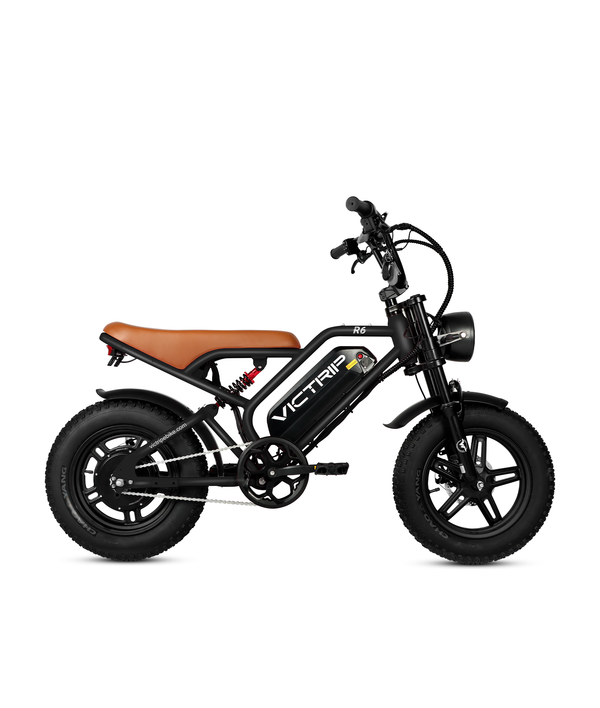
VICTRIP®R6 Off Road Ebike for Teens
Enforcement & liability: what parents need to know
Enforcement varies widely: some police departments issue education-first warnings to teens, while others enforce fines for helmet or age violations. Civil liability in crashes can implicate parents (especially when minors are involved) if negligence or defective modifications are factors. Never modify an e-bike beyond legal specs; many serious collisions involve heavily modified units. Recent legislative pushes targeting high-powered or modified e-bikes mean enforcement trends may tighten regionally.
Conclusion — balanced view and next steps
Can Teenagers Ride Electric Bikes in 2025-2026? Age Restrictions by State — the short answer: yes, often — but with strong caveats. Rules vary by state and by e-bike class. Class 1 and 2 models are usually more accessible to younger teens; Class 3 is commonly restricted to older teens or adults. Helmets, local ordinances, and recent safety-driven legislation (notably in states like Connecticut and California) mean parents should verify local law and follow best-safety practices before allowing a teen to ride. Use this guide as a practical primer — then check your state DMV or official legislative resources for the current text.
FAQs
Can teenagers ride electric bikes in 2026 — is there a single federal rule?
No. There is no single federal minimum age for e-bike use in the United States. Laws are set at the state and local level, and they often depend on the e-bike’s classification (Class 1, 2, or 3).
For the most accurate and current information, check your state’s DMV website or trusted resources like PeopleForBikes, which maintains a regularly updated state-by-state guide.
Are helmets mandatory for teen e-bike riders?
It depends on the state and sometimes the city.
- Many states require helmets for riders under 16 or 18
- Some states require helmets for all Class 3 e-bike riders
- A few jurisdictions require helmets for all e-bike users
Even where not legally required, wearing a certified helmet is strongly recommended, especially given the higher speeds of e-bikes.
Can a 14-year-old ride a Class 2 e-bike?
In many states, yes — but not everywhere.
- Class 1 & 2 e-bikes: Often allowed for riders aged 14–16+
- Class 3 e-bikes: Commonly restricted to 16+ only
However, local ordinances may impose stricter rules, especially in cities or on public trails. Always verify both state and local laws before allowing a teen to ride.
What happens if an e-bike is modified to go faster?
Modifying an e-bike can significantly change its legal status.
If speed or motor power is increased beyond legal limits, the bike may be reclassified as a moped or motor vehicle, which can require:
- A driver’s license
- Registration and insurance
- A higher minimum age
In 2026, enforcement against modified e-bikes is increasing in many areas. For safety and legal reasons, avoid altering the motor, controller, or speed limiter.
Where can I quickly check my state’s current e-bike laws?
The fastest and most reliable sources include:
- PeopleForBikes (state-by-state law tracker)
- Your state DMV website
- Legislative summaries from organizations like National Conference of State Legislatures
Because laws continue to evolve in 2026, especially at the local level, it’s important to check recent updates before riding.
Share:
Fat Tire Electric Bike Benefits for Heavy Riders
How to Pick the Perfect E-Bike for Teenagers?