

The dream of one bike for dirt, snow, and sand is easy to understand. Riders want fewer bikes, fewer expenses, and more freedom to explore whatever surface comes next. That idea sounds simple, but the reality is a little more nuanced. A bike that performs well on hard-packed dirt may struggle in deep snow. A bike that feels amazing on sand may feel sluggish on paved roads. Still, there is a category that comes close enough to make the idea real: the fat-tire bike.
A fat bike is built for low ground pressure and better traction on soft, unstable terrain such as snow and sand. In practice, that means it can move through places where a regular mountain bike would sink, spin, or simply lose confidence. IMBA’s fat biking guidance also shows that tire width and low pressure are central to snow riding, with wide tires and very low PSI often recommended for control and flotation.
What “One Bike for Dirt, Snow, and Sand” Really Means
Before buying anything, it helps to define the goal. A bike that works on dirt, snow, and sand does not need to be the fastest bike in every setting. It needs to be versatile, stable, and predictable. That is a different standard.
A true all-purpose off-road bike should do three things well. First, it should stay upright and confident on loose ground. Second, it should let you adjust tire pressure to match the terrain. Third, it should remain comfortable enough that you actually want to ride it more than once. That combination is what turns a nice idea into a practical machine.
The phrase one bike for dirt, snow, and sand usually points to a fat-tire bike, and that is not marketing fluff. It is the most realistic answer for most riders because the platform is designed to float instead of dig in. On soft terrain, that floating effect is the entire game.

The Bike Type Most Likely to Pull It Off
Fat-Tire Bikes
Fat bikes are the strongest answer because they are made for soft terrain first and speed second. Their oversized tires create a larger contact patch, which helps the bike stay on top of snow or sand instead of cutting straight into it. That low-pressure design is the reason fat bikes feel so different from standard mountain bikes.
In winter riding, IMBA notes that wide tires, sometimes wider than 3.5 inches, and very low tire pressure are common. Michigan’s Department of Natural Resources similarly advises fat tires at least 3.7 inches wide and no more than 4 PSI for certain snow trail conditions. Those details matter because they explain why fat bikes are so effective on soft terrain.
Plus-Size Mountain Bikes
A plus-size mountain bike can handle dirt very well and may be decent in light snow or firmer sand, but it usually falls short of a true fat bike on the softest surfaces. It is a good compromise for riders who spend most of their time on dirt and only occasionally touch snow or beach sand.
A Simple Real-World Example Without Overcomplication
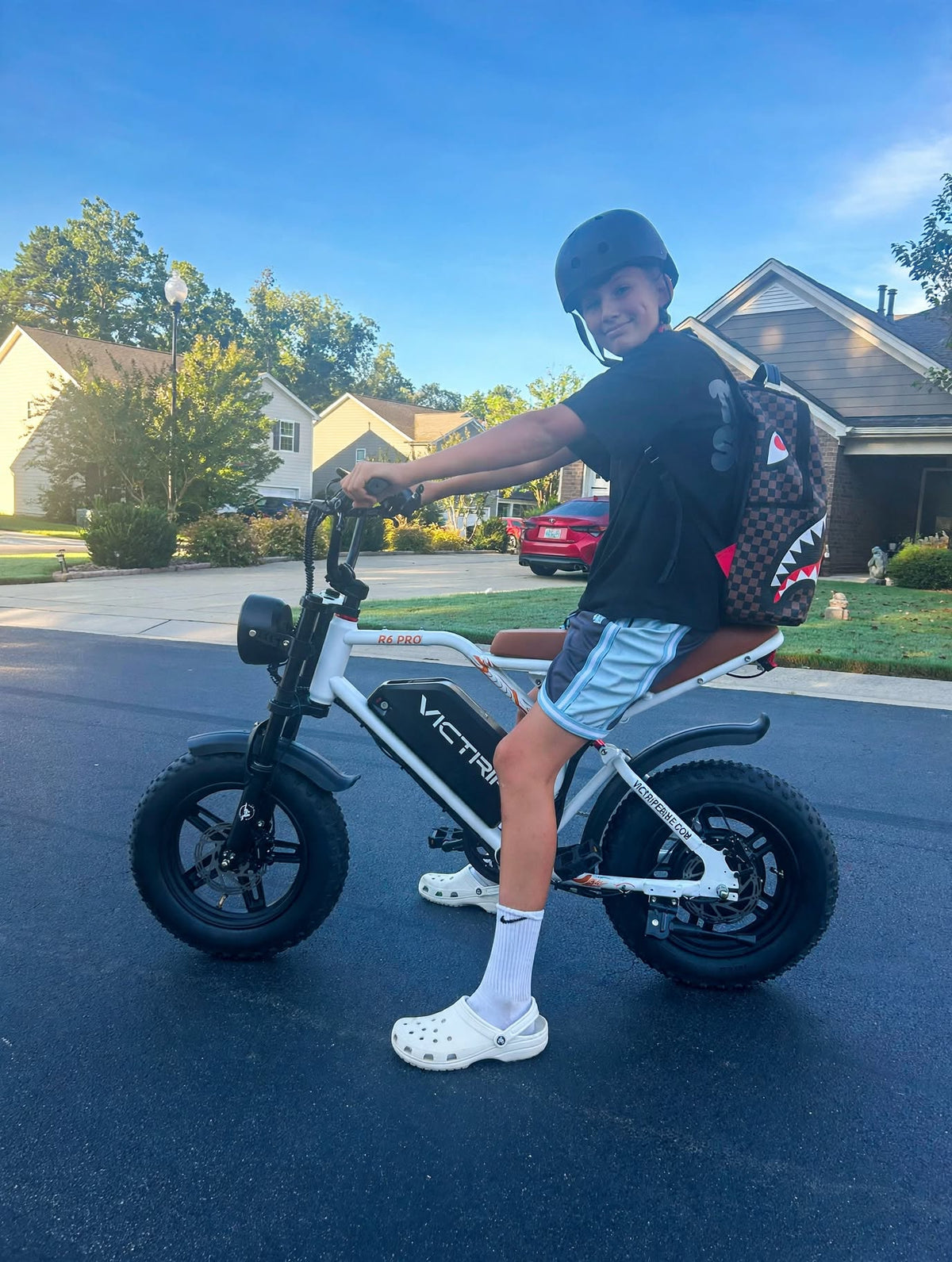
To better understand how a one bike for dirt, snow, and sand works in real life, it helps to look at a practical all-terrain eBike example like the VICTRIP R6.
The VICTRIP R6 Off Road Ebike is designed for riders who want one machine that can confidently handle mixed environments without switching bikes. Instead of focusing on extreme speed or sport-specific performance, it emphasizes stability, control, and adaptability.
In everyday riding terms, that means:
- It feels steady on dirt trails
- It stays controlled on sand and loose surfaces
- It performs reliably in light snow conditions
- It reduces rider effort on tough terrain
This kind of setup reflects the real purpose behind the idea of one bike for dirt, snow, and sand—not perfection in one area, but consistent performance across all of them.
Why Not Just Use a Regular Mountain Bike?
A regular mountain bike can work in the right conditions, especially on hard-packed dirt. But once the ground gets soft, it lacks the flotation needed for deep snow or loose sand. It may feel twitchy, sink more easily, and require more rider effort. So while it can be an all-season bike, it is not the best one bike for dirt, snow, and sand if those surfaces are truly part of your plan.
What Makes a Bike Work Across All Three Surfaces
Tire Width
Tire width is the first big factor. Wider tires spread the rider’s weight over a larger area, which reduces sinking. That is why fat bikes are so effective on snow dunes, beach sand, and other soft ground. The wider footprint helps the bike “float” rather than plow.
Tire Pressure
Pressure may be even more important than width. IMBA says snow riding often involves tire pressure under 10 PSI, with 4–6 PSI typical in many cases. The Michigan DNR also lists up to 4 PSI for certain fat-tire snow trail conditions. McCall’s fat biking guidance adds that softer conditions call for lower air pressure and that hard-packed terrain may ride well around 6–8 PSI. In plain English: softer ground usually means lower pressure.
Frame Geometry
Geometry matters too. A bike with a stable, upright feel is easier to manage when the surface changes under you. Shorter stems, steady handling, and good balance can make a big difference when the trail shifts from dirt to snow to sand.
Traction vs. Speed
There is always a tradeoff. The more a bike is tuned for flotation and grip, the less likely it is to feel quick and snappy on hard surfaces. Fat bikes are not usually the fastest option, and that is okay. Their value comes from access, control, and confidence.
Dirt, Snow, and Sand: How the Same Bike Performs
On Dirt
On dirt, a fat bike can be surprisingly fun. On hard-packed trails, gravel roads, and smooth forest paths, it may feel stable and comfortable. The large tires add confidence, especially on loose corners, rocky patches, or washboard surfaces. On pure dirt, the bike is at its most versatile.
On Snow
Snow is where a fat bike shines. IMBA describes winter fat biking as a use case where wide tires and low pressure help with flotation, traction, and control. Michigan also points out that fat-tire biking is a seasonal winter activity in some places, and it even publishes guidelines for riding on groomed snow trails and dunes. That tells you everything you need to know: snow is not an afterthought for this bike type; it is part of the design purpose.
On Sand
Sand is the wild card, but it is still very doable. Soft sand works much like snow in one important way: a wider tire with lower pressure helps keep the bike from sinking. Michigan’s Silver Lake State Park even sets aside open dunes for fat-tire biking during a seasonal window, which is a strong real-world example of sand-friendly riding.

A Simple Terrain Comparison
| Terrain | Best Pressure Style | Strength | Weakness |
|---|---|---|---|
| Dirt | Moderate to lower pressure | Stable handling and comfort | Less efficient than a lighter bike |
| Snow | Very low pressure | Excellent flotation and traction | Slower than standard mountain bikes |
| Sand | Very low pressure | Stays on top better | Can bog down if pressure is too high |
What to Look for Before Buying
Tire Size
This is the number one buying decision. If the bike is meant for sand and snow, look for real fat tires rather than “wide-ish” tires. Thin tires are the wrong tool for soft terrain.
Brake Performance
Soft terrain often means more effort, more braking, and more control work. Strong brakes help with descending, stopping on loose ground, and handling surprise changes in surface.
Drivetrain Range
A wide gear range makes climbing and soft-ground pedaling less painful. This matters because sand and snow both demand more from your legs than hard pavement does.
Frame Clearance
Extra clearance helps prevent mud, slush, and snow buildup from becoming a problem. It also makes the bike more comfortable when conditions are messy.
Rider Fit
The best all-terrain bike is still a bad buy if it does not fit your body. Comfort, confidence, and proper reach are part of real-world performance.
Setup Tips That Make a Big Difference
Start a Little Higher, Then Air Down
McCall’s fat biking guidance suggests starting higher and letting air out as needed because it is easier to reduce pressure than add it back on the trail. That is practical advice for anyone learning how to dial in a bike for changing surfaces.
Use the Surface as the Guide
Hard-packed dirt can handle a bit more pressure. Soft snow or loose sand usually needs less. If the tires are sinking or leaving ruts, the pressure is probably too high.
Keep Expectations Realistic
A bike built for flotation will never feel exactly like a cross-country machine. That is not a flaw. It is the price of versatility. The goal is to ride more places, not to win a race on each surface.
Trail Etiquette and Safety Matter
Respect Access Rules
Just because a bike can ride somewhere does not mean it should. IMBA stresses that riders should not go out unless biking is permitted by the land manager, and riders should yield appropriately to skiers and snowshoers on shared winter trails. That is important for access, safety, and keeping trails open.
Protect the Surface
On groomed snow trails, riding too soft can leave ruts and damage the surface. Michigan advises avoiding certain conditions and keeping tire width and pressure within a responsible range for trail use. That is a good reminder that the best rider is also the one who protects the trail.
Watch for Wildlife and Changing Conditions
IMBA also warns riders not to disturb sensitive wildlife habitat, especially on beaches and in winter environments. Conditions can change fast, and what felt safe on the way out may be soft, slushy, or more dangerous on the way back.
Common Mistakes Riders Make
Overinflating the Tires
This is the biggest mistake. Too much pressure reduces grip and flotation. On soft ground, that usually means the bike starts behaving like it does not belong there.
Choosing the Wrong Terrain
A fat bike is strong on soft surfaces, but it is not magic. Deep mud, steep loose climbs, and badly frozen trails can still be tough.
Ignoring Trail Rules
Some places allow fat biking only on certain trails or during specific seasons. Riding where you should not can damage the trail and hurt access for everyone.
Expecting One Bike to Feel Perfect Everywhere
The better mindset is flexibility, not perfection. One bike for dirt, snow, and sand can be excellent, but it will always be a compromise.
Conclusion
So, does one bike for dirt, snow, and sand exist? Yes, it does. The most realistic answer is a fat-tire bike built for low pressure, wide contact, and stable control. It will not be the fastest choice on hard ground, and it will never feel identical across every surface. Still, for riders who want freedom, adventure, and fewer compromises, it is a smart and exciting solution.
If your routes change with the seasons, a fat bike can be a very practical buy. It gives you something most bikes cannot: the ability to roll from dry dirt to soft snow to loose sand without changing the whole ride plan. That is a pretty strong case for versatility.
FAQs
1. Is there really one bike for dirt, snow, and sand?
Yes, there is, and the closest practical answer is a fat-tire bike. It is the best all-around choice for riders who want soft-terrain versatility without owning multiple bikes.
2. Can a regular mountain bike handle snow and sand?
Only in limited conditions. Hard-packed snow or firmer sand may be possible, but soft surfaces usually expose the limits of a standard mountain bike.
3. What tire pressure should I use?
It depends on the ground. IMBA says snow setups often run under 10 PSI and frequently around 4–6 PSI, while McCall suggests about 6–8 PSI for hard-packed terrain and around 5 PSI for softer groomed conditions. Michigan’s snow guidance also points to very low pressure for fat-bike trail use.
4. Is a fat bike good for beach riding?
Yes, especially on loose sand. Lower pressure and wider tires help the bike stay on top of the surface instead of digging in.
5. Is a fat bike only for winter?
No. It works year-round. Winter is where it stands out most, but dirt and sand are also part of its natural lane.
Share:
Safe and Stylish: 16 Inch Electric Mini Bike for Young Riders
Compact Power: Why Mini Off Road E-Bikes Are Perfect for Outdoor Fun