

Choosing an electric dirt bike for teens isn't simply about finding the bike with the highest speed or most powerful motor. Rider height can have a major effect on comfort, control, balance, and confidence. A bike that looks great on paper may still feel awkward if the rider can't comfortably reach the controls or manage the bike at a stop.

For parents and young riders, height is one of the most useful starting points when comparing electric dirt bikes. However, it's only part of the equation. Inseam length, riding experience, weight, seat height, frame geometry, tire size, and intended terrain also matter.
The good news? Finding the right fit doesn't have to be complicated.
This guide explains how rider height affects electric dirt bike selection and provides practical tips for choosing a bike that matches a teen's body size, experience, and riding goals.
Electric Dirt Bike Size Starts With Rider Height
Rider height gives you a quick way to narrow down your options, but it shouldn't be treated as an exact sizing rule.
Two teenagers can be the same height while having different leg lengths, torso proportions, and riding experience. That's why manufacturers often provide a recommended rider-height range rather than one exact height.
A useful starting point is to compare:
- Rider height
- Inseam length
- Seat height
- Frame dimensions
- Handlebar position
- Footpeg position
- Rider weight
- Overall bike weight
For example, a shorter teenager may struggle with a full-size dirt bike even if they technically meet the manufacturer's height recommendation. On the other hand, a taller teen may quickly outgrow a compact electric dirt bike.
Why Height Matters on an Electric Dirt Bike
Height affects how naturally a rider can interact with the bike.
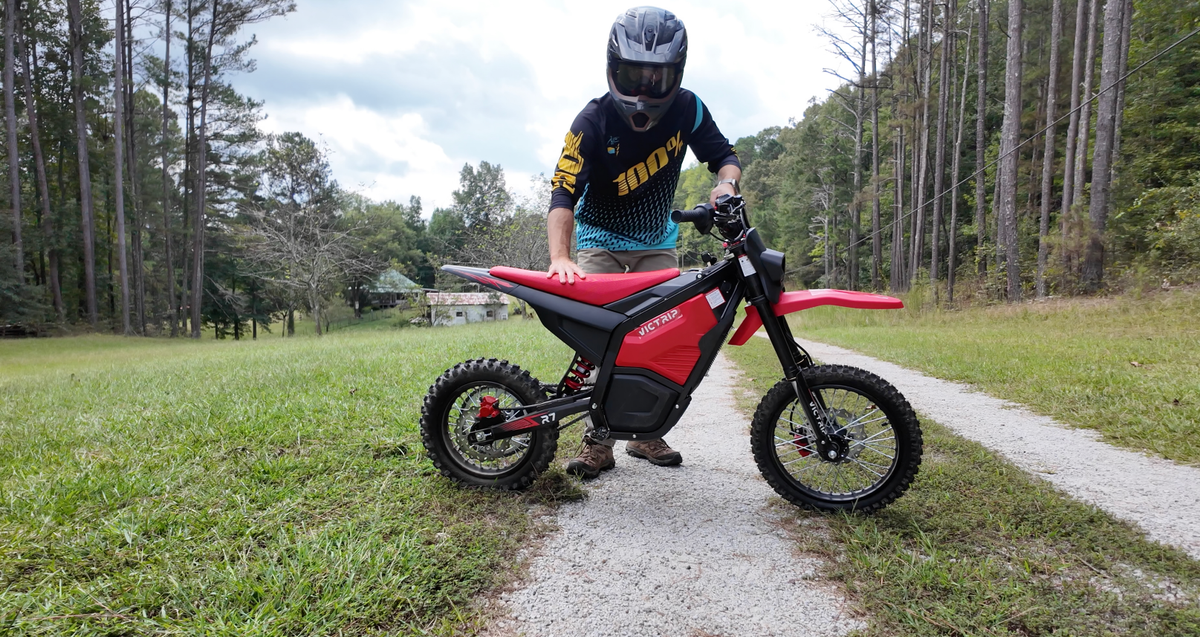
When seated, the rider should be able to maintain a comfortable riding position without feeling stretched out. When standing on the footpegs, the knees should remain slightly bent so the rider can absorb bumps and maintain control.
A bike that's too large can feel difficult to maneuver. A bike that's too small can create a cramped riding position and limit long-term usability.
That's why the goal isn't simply to find the biggest bike a teenager can ride.
The goal is to find a bike that fits the rider now while matching their intended riding style and experience level.
Recommended Electric Dirt Bike Size by Teen Rider Height
There isn't one universal height chart for every electric dirt bike. Frame designs and seat heights vary considerably between models.
Still, a general height-based guide can help narrow the search.
| Rider Height | General Bike Size Direction | What to Consider |
|---|---|---|
| Under 4'6" | Compact/minibike | Low seat height, manageable weight, easy controls |
| 4'6"–5'0" | Small/compact dirt bike | Leg reach and handlebar position become important |
| 5'0"–5'4" | Small to mid-size | Compare seat height and inseam carefully |
| 5'4"–5'8" | Mid-size | More frame options become available |
| 5'8"–6'0" | Mid-size/full-size | Check cockpit space and riding position |
| Over 6'0" | Full-size | Prioritize frame size, seat height, and ergonomics |
These ranges are only starting points. Always check the manufacturer's specifications before buying.
A 5'2" rider with a long inseam may fit a bike differently from another 5'2" rider with shorter legs. Likewise, a confident off-road rider may be comfortable with a different setup than someone who is just learning.
Height vs. Inseam: Which Matters More?
Height is useful, but inseam can sometimes tell you more about whether a rider can comfortably manage a bike.
Inseam measures the distance from the floor to the inside of the leg. It provides a better indication of how easily a rider can reach the ground when stopped.
This matters because dirt bikes aren't designed like ordinary commuter bicycles. Riders often move between seated and standing positions while riding over uneven surfaces.
How to Measure Inseam

A simple measurement can be taken at home:
- Stand barefoot with your back against a wall.
- Place your feet approximately shoulder-width apart.
- Put a book between your legs with its top edge pressing comfortably against the body.
- Measure from the floor to the top of the book.
- Record the measurement in inches or centimeters.
Use this number alongside the manufacturer's seat-height information.
Don't assume that being able to touch both feet completely flat on the ground is always necessary. Dirt-bike riding positions are different from those used on many city bikes.
However, a new rider should still be able to stop and stabilize the bike with confidence.
How Seat Height Changes the Riding Experience
Seat height is one of the most important measurements when comparing an electric dirt bike for teens.
A lower seat can make mounting, stopping, and low-speed maneuvering easier. A taller seat can provide more room for longer legs and may create a more natural standing position for taller riders.
The right height should allow the rider to:
- Sit comfortably without feeling cramped
- Reach the handlebars naturally
- Keep a controlled bend in the elbows
- Move easily between sitting and standing
- Reach the foot controls without excessive stretching
- Maintain balance at low speed
Is a Lower Bike Always Better for Teens?
Not necessarily.
A very low bike may be comfortable initially but become cramped as the rider grows. Meanwhile, a bike that's too tall can be difficult to control from day one.
This is where parents should think beyond the current measurement.
If a teenager is still growing rapidly, a model with enough room to accommodate some growth may offer greater long-term usability—provided the rider can safely control it today.
Don't buy a bike that's clearly too large simply because the rider is expected to grow.
The 7 Smart Fit Tips for Choosing an Electric Dirt Bike
1. Start With the Rider's Actual Height
Measure the rider rather than relying on age alone.
Teenagers can vary significantly in height, so a "teen bike" label doesn't automatically mean it will fit every teenager.
Use the rider's current height as the first filter.
2. Check the Inseam
Next, compare inseam length with seat height and overall frame dimensions.
If the manufacturer provides a recommended rider-height range but doesn't list an inseam recommendation, look at photos, geometry, and other dimensions to understand how the bike is proportioned.
3. Don't Ignore Bike Weight
A bike's weight matters almost as much as its dimensions.
A teenager may technically fit a larger electric dirt bike but still struggle to move it, park it, or recover it from a low-speed tip-over.
Consider whether the rider can comfortably:
- Push the bike
- Turn it around
- Lift or reposition it when necessary
- Hold it steady at a stop
- Control it on uneven ground
A manageable bike can be much easier to learn on.
4. Match Power to Riding Experience
Height shouldn't be the only consideration when choosing motor power.
A compact bike with very aggressive acceleration may not be the easiest option for an inexperienced teenager.
Look at throttle response, riding modes, speed settings, and the rider's previous experience.
For experienced riders, more performance may be appropriate depending on the riding environment and local requirements. For beginners, predictable power delivery can be more useful than maximum output.
5. Look at Tire Size and Traction
Tire size affects more than appearance.
Larger off-road tires can provide additional ground clearance and help roll over certain uneven surfaces. Wider tires can also influence stability and traction on loose terrain.
However, larger tires can add weight and change the way a smaller rider handles the bike.
Think about where the teenager will actually ride:
- Dirt trails
- Grass
- Gravel
- Hard-packed soil
- Sand
- Private off-road areas
A bike designed around the intended terrain is generally easier to use effectively.
6. Check the Riding Position
Ask the rider to imagine themselves on the bike.
Are the handlebars too far away?
Do the knees feel cramped?
Are the elbows locked?
Does the rider feel stretched when standing?
A good riding position should feel natural rather than forced.
This is especially important for teenagers who are between bike sizes.
7. Leave Room for Growth—But Don't Overdo It
Growth matters, but buying a bike that's too large today isn't a good shortcut.
A teenager should be able to control the bike safely at the time of purchase.
A little room for growth is useful. A bike that's dramatically oversized can make learning more difficult.
Why Bike Geometry Matters as Much as Seat Height
Two electric dirt bikes can have similar seat heights while feeling completely different.
That's because geometry affects the relationship between the seat, handlebars, wheels, and footpegs.
Important measurements include:
- Wheelbase
- Seat height
- Frame length
- Handlebar position
- Footpeg location
- Wheel size
- Ground clearance
A longer wheelbase can provide a different feeling from a compact frame. A wider handlebar may improve leverage for some riders but feel difficult for smaller riders.
This is why comparing one number isn't enough.
Compact vs. Full-Size Electric Dirt Bikes
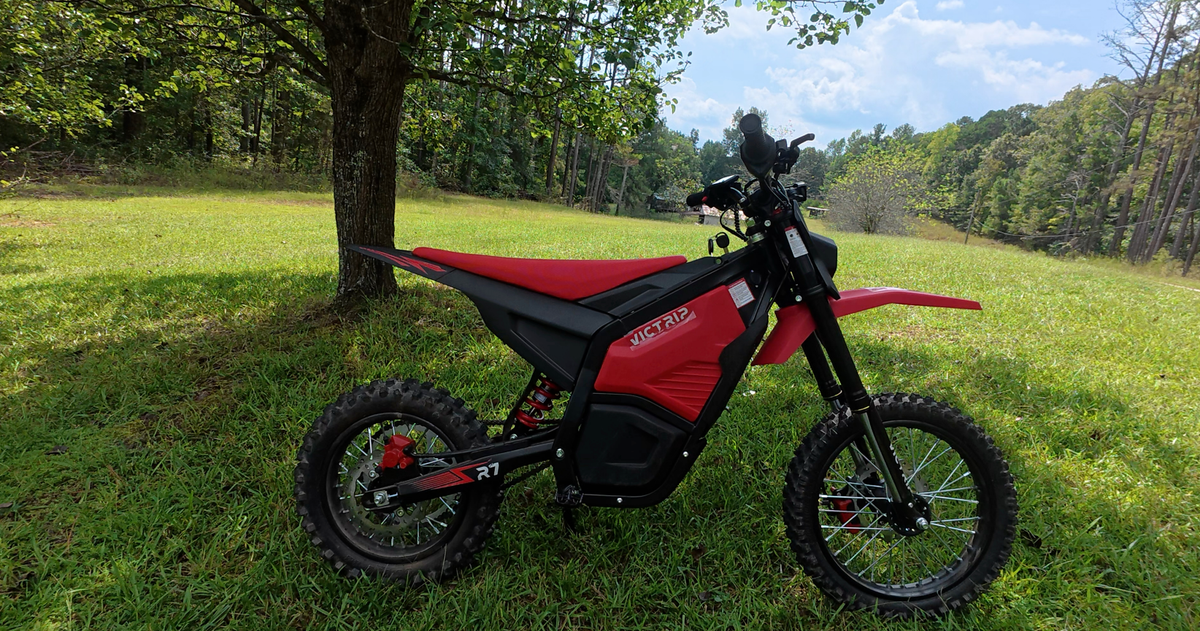
Compact bikes generally make sense for shorter riders or those who prioritize maneuverability.

Full-size bikes may provide more room for taller riders and can be more comfortable as a teenager grows.
Here's a simple comparison:
| Feature | Compact Electric Dirt Bike | Full-Size Electric Dirt Bike |
| Rider fit | Shorter riders | Taller riders |
| Maneuverability | Often easier | May require more effort |
| Weight | Often lower | Often higher |
| Growth potential | More limited | Usually greater |
| Trail presence | Depends on model | Often suited to larger terrain |
| Learning curve | Often approachable | Can require more experience |
Neither category is automatically right for every teen.
The rider's body size and experience should determine the choice.
How Riding Experience Changes the Ideal Bike Size
Height tells you whether a rider can physically fit a bike. Experience helps determine whether they can control it.
A beginner teenager may benefit from:
- Predictable throttle response
- Moderate acceleration
- Easy-to-reach controls
- Manageable bike weight
- A comfortable seat
- Stable handling
An experienced rider may be more comfortable with a larger and more powerful machine.
This distinction is important because electric motors can deliver strong torque immediately. A teenager who has only ridden a basic bicycle may need time to become comfortable with an electric dirt bike's throttle and braking behavior.
Beginner vs. Experienced Teen Riders
| Rider Type | Main Priority |
| Beginner | Control and confidence |
| Intermediate | Balance of control and performance |
| Experienced | Fit, suspension, power, and terrain capability |
In other words, don't choose based on horsepower alone.
A bike that's easy to control can help a new rider develop good habits before moving toward higher-performance equipment.
How Suspension and Brakes Affect Fit
Suspension isn't directly related to rider height, but it changes how a bike behaves underneath the rider.
A suspension system designed for off-road riding can help the bike respond to bumps and uneven terrain.
However, suspension setup matters.
A very light rider may not compress suspension the same way a heavier rider does. Likewise, a taller teenager may place their body differently on the bike when standing.
Brakes matter too.
Controls should be positioned so the rider can comfortably reach the levers without excessively stretching their fingers.
A teenager should be able to apply the brakes smoothly while maintaining a stable grip on the handlebars.
Choosing an Electric Dirt Bike Based on Riding Terrain
The right size also depends on where the bike will be used.
For Backyard and Short Practice Sessions
A compact electric dirt bike may be easier to maneuver in a smaller riding area.
The rider can practice:
- Starting and stopping
- Turning
- Braking
- Throttle control
- Basic balance
For Longer Dirt Trails
A larger bike may provide more space and stability for a taller teenager.
Ground clearance, suspension, tire design, battery capacity, and riding position become increasingly important.
For Loose or Uneven Terrain
Tire design becomes especially important.
A bike intended for off-road use should have tires and chassis characteristics suited to the terrain rather than simply relying on high motor output.
Electric Dirt Bike Safety for Teen Riders
Choosing the correct size is only one part of responsible riding.
Before riding, parents and teens should check the bike's instructions, recommended age and weight limits, and intended riding environment.
The U.S. Consumer Product Safety Commission recommends wearing a properly fitted helmet when riding bikes, scooters, and e-bikes, and advises users to follow manufacturer directions and local rules.
Other useful habits include:
- Wear a properly fitted helmet.
- Use appropriate protective gear for the riding environment.
- Inspect brakes before riding.
- Check tire condition and pressure.
- Check the throttle and controls.
- Inspect the frame and handlebars.
- Make sure the battery and electrical components are in good condition.
- Ride in an appropriate area.
- Follow applicable local laws and property rules.
- Never assume a more powerful bike is automatically suitable for a younger rider.
Parents should also teach teenagers how to stop safely before allowing faster riding.
Why Helmet Fit Matters
A helmet shouldn't simply be the right age category. It should fit the rider's head correctly.
According to CPSC guidance, a bicycle helmet should fit properly and remain securely positioned on the rider's head.
For an electric dirt bike, parents should also consider whether the helmet is appropriate for the type of riding being performed.
Common Mistakes When Buying an Electric Dirt Bike for Teens
Even after measuring height, it's easy to make a few common mistakes.
Choosing by Age Alone
"Teen" covers a wide range of body sizes.
A 13-year-old and a 17-year-old may have very different physical dimensions.
Choosing by Motor Power Alone
A bigger motor doesn't solve a poor fit.
A rider who can't comfortably control the bike may struggle regardless of its specifications.
Buying Too Large for Future Growth
It's tempting to buy a large bike and expect the rider to grow into it.
That can backfire if the bike is difficult to control right now.
Ignoring Bike Weight
Remember that the rider has to manage the entire machine, not just sit on it.
Focusing Only on Seat Height
Seat height is important, but frame length, handlebars, footpegs, wheelbase, and weight also affect comfort.
A Simple Electric Dirt Bike Fit Checklist
Before buying, run through this checklist:
Rider measurements
- Current height measured
- Inseam measured
- Rider weight checked against manufacturer limits
Bike measurements
- Seat height reviewed
- Frame size considered
- Wheel size checked
- Handlebar position considered
- Bike weight reviewed
Performance
- Motor output matches rider experience
- Speed is appropriate for the intended riding area
- Throttle response is manageable
- Braking system is suitable
Riding environment
- Intended terrain identified
- Tire type matches the terrain
- Local riding rules checked
- Appropriate protective equipment available
If most of these boxes are checked, you're much closer to finding a suitable fit.
Final Thoughts: Choose Fit Before Maximum Performance
Choosing an electric dirt bike for teens should start with the rider, not the specification sheet.
Height is an excellent first filter, but inseam, bike weight, frame geometry, seat height, riding experience, and intended terrain all play a role. The ideal bike should feel manageable rather than intimidating and should give the rider enough room to maintain a comfortable position.
For growing teenagers, the goal is to find a balance between current fit and reasonable room for growth. Going slightly larger can make sense when the rider can already control the bike confidently, but buying a machine that's clearly too large simply to extend its lifespan isn't always practical.
Ultimately, the best fit is the one that allows the rider to sit comfortably, reach the controls naturally, maintain balance, and control the bike for the type of riding they actually plan to do.
That's a much better starting point than simply choosing the biggest or fastest electric dirt bike available.
FAQs
What size electric dirt bike is right for a teenager?
The right size depends on height, inseam, weight, experience, and the bike's dimensions. A teenager shouldn't choose a bike based on age alone. Start with the manufacturer's recommended rider-height range, then compare seat height and overall geometry.
Does height matter more than age when choosing an electric dirt bike?
Usually, height provides more useful sizing information than age. Teenagers of the same age can have very different body sizes. Height and inseam help determine whether the rider can comfortably reach the controls and manage the bike.
Can a short teenager ride a full-size electric dirt bike?
It depends on the specific bike and the rider's experience. If the bike is too tall or heavy to control comfortably, a smaller model may be more appropriate. Always consider the complete geometry rather than seat height alone.
Should I buy a bigger electric dirt bike so my teenager can grow into it?
A small amount of room for growth can be useful, but the bike should still be manageable today. Buying a machine that's significantly oversized can make starting, stopping, turning, and low-speed control more difficult.
Is a powerful electric dirt bike suitable for every teenager?
No. Motor output should be considered alongside rider experience, physical size, riding environment, and the manufacturer's intended use. A powerful motor doesn't necessarily make a bike a better choice for a beginner.
How do I know if an electric dirt bike is too small?
Look for signs such as cramped knees, a very short cockpit, limited room when standing, or handlebars that feel unusually close to the rider. If the teenager looks cramped even in a normal riding position, the bike may be too small.
Share:
Electric Dirt Bike Vs Enduro Bike: What Should You Choose?
What Should You Check Before Buying an Electric Dirt Bike?