


If you’re new to two-wheeled electric transport, the Best Entry Level Moped Scooter is the category to watch. This guide walks you step-by-step through what matters most: safety, simplicity, and cost. You’ll get plain-language advice on features, laws, running costs, and two practical product recommendations. By the end you’ll know how to pick a user-friendly, dependable moped scooter and avoid rookie mistakes.
Why choose an entry level moped scooter?
Entry-level moped scooters exist because a lot of people want short, reliable trips without the expense or complexity of a motorcycle. They’re simpler than motorcycles, often lighter, and many models are legal on bike lanes or low-speed roads depending on local rules.
Cost-effectiveness and accessibility
An entry-level moped scooter can be one of the most cost-effective ways to add personal mobility to your life. You usually pay much less than for a motorcycle, you spend less on fuel (or electricity), and routine maintenance is simple. That makes these scooters great for students, urban commuters, and first-time riders.
Ease of use and learning curve
Most entry-level mopeds are automatic, meaning there’s no clutch or gear shifting. That reduces the learning curve drastically. Controls are straightforward, and many scooters have user modes (e.g., eco, normal) that limit top speed for safer learning.
Key features to check before buying
When shopping, focus on features that affect safety, comfort, and practicality. Below are the essentials.
Motor & power basics
Motor power is usually measured in watts (W). For an entry-level moped scooter, 250W–1500W is a common range depending on whether it’s intended for city streets or light off-road. Higher wattage gives better hill-climbing and acceleration, but also uses more battery. For beginners, a moderate-power motor (500W–1000W) offers a safe balance of performance and control.
Battery and real-world range
Battery capacity (watt-hours, Wh, or amp-hours, Ah) determines theoretical range, but real-world range depends on weight, speed, terrain, and riding style. Manufacturers may state an optimistic figure; expect 60–80% of that number in mixed city riding. Charge cycles and warranty terms matter — a good warranty gives peace of mind.
Brakes, lights, and safety aids
Hydraulic or quality mechanical disc brakes are preferable for stopping reliability. Good daytime running lights, clear turn indicators, and a stable rear brake light that brightens with harder braking are safety musts. Some models include ABS-like electronics; while rare on budget models, any extra safety tech is a plus.
Frame, seat, suspension, and comfort
A comfortable seat, decent suspension travel, and a stable frame mean you’ll ride longer and safer. Look for adjustable seat height if you’re unsure of reach. Simple suspension improves control on uneven pavement and reduces fatigue.

Legal & registration basics
Every jurisdiction treats mopeds and scooters differently. Some are classified like bicycles, others like low-speed motorcycles. Before you buy, check local rules — they determine where you can ride and what paperwork you need.
Helmet laws and local rules
Almost everywhere, helmets are required or strongly recommended. Some places require a motorcycle license for higher-powered mopeds. Check local Department of Motor Vehicles (DMV) guidance before riding on public roads.
Insurance and vehicle class
Depending on classification, you might need insurance. Entry-level electric mopeds that meet “low-speed” definitions sometimes require minimal or optional coverage, but insurance protects you and others — especially in urban traffic.
Cost of ownership
Initial price is only part of the total cost. Consider electricity, maintenance, replacement parts, and depreciation.
Typical charging and electricity costs
Charging a scooter is cheap compared with gasoline. A typical small battery might be 1–2 kWh. If your local electricity rate is $0.15/kWh, a 2 kWh charge costs $0.30. That’s only a few cents per mile in most cases. Keep in mind battery replacement is the largest long-term cost.
Maintenance checklist and intervals
Maintenance for entry-level mopeds is minimal but regular: tire pressure and tread checks, brake pad inspection, occasional brake fluid or cable checks, and fastener torque checks. A simple checklist every 500–1,000 miles keeps the scooter reliable.
Riding tips for new riders
Start slow. Practice turning, braking, and low-speed maneuvers in a quiet parking lot. Learn to counter-steer at higher speeds, and always judge road conditions — wet leaves, gravel, and sudden potholes are common hazards.
-
Wear a DOT- or ECE-rated helmet.
-
Use gloves and closed shoes.
-
Keep a smooth throttle to avoid sudden torque that can unbalance new riders.
-
Observe local speed limits and lane rules.
Recommended entry-level models
Below are two friendly, approachable models that fit the entry-level brief. These recommendations are included naturally so readers can check specifics and availability.
VICTRIP R6 Off Road Ebike
A versatile, approachable model for riders who want a bit of ruggedness while staying easy to ride. It’s a practical pick for people who mix city streets and light trails.
VICTRIP R6 Pro 1500W Moped Style Ebike
For riders who prefer a classic moped style — step-through frame, comfortable seat, and moped-like ergonomics — the VICTRIP R6 Pro offers a friendly onboarding experience. It’s designed to feel familiar and easy for new riders.
TOP PICK
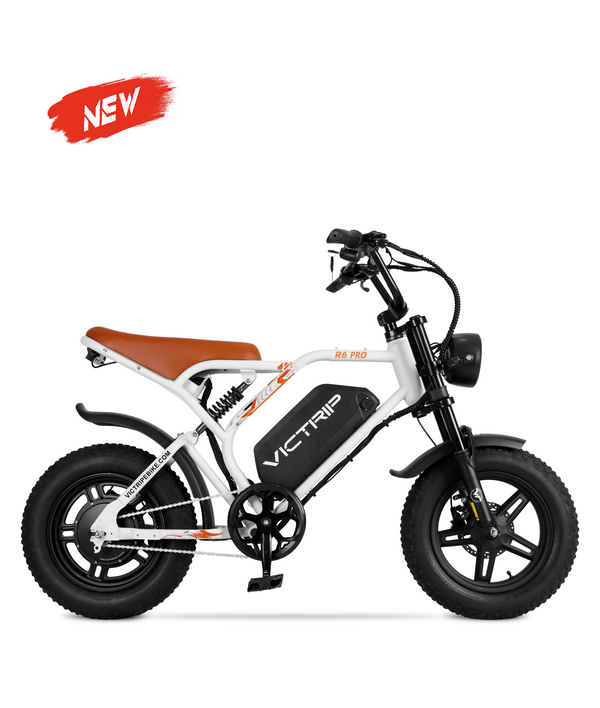
VICTRIP®R6 Pro 1500W Moped Style EBike
$1,099.00
How to choose between models
To decide, score each model against these priorities:
-
Safety features: Better brakes and lights rank high.
-
Usability: Seat height, controls, and weight (can you lift it easily?) matter.
-
Range that meets your needs: Pick a battery size that matches your daily rides with margin.
-
After-sales support and warranty: A dealer or responsive online seller reduces long-term headaches.
-
Price vs. value: Don’t chase the cheapest option — a slightly higher upfront cost often saves money later.
Make a simple spreadsheet listing these items, assign weights (e.g., safety 30%, range 20%), and score each model.
Where to buy & trusted resources
Buy from reputable dealers or official brand stores whenever possible. That improves warranty handling and avoids grey-market issues. For legal and safety guidance in the U.S., the National Highway Traffic Safety Administration (NHTSA) is a reliable external resource. See their site for broader motorcycle/motor vehicle safety info: https://www.nhtsa.gov/.
Conclusion
Choosing the Best Entry Level Moped Scooter means balancing safety, simplicity, and affordability. Focus on brakes, lights, comfortable ergonomics, and a battery/range that suits your daily trips. Start with a practical shortlist, try a test ride if possible, and prioritize models with clear warranties and good support. The VICTRIP models linked above are two friendly starting points if you want moped-style ergonomics or a slightly rugged look without complexity.
FAQs
Do I need a motorcycle license to ride an entry-level moped scooter?
It depends. Many jurisdictions allow low-powered mopeds to be ridden with a standard driver’s license, but some require a motorcycle endorsement for higher-powered models. Always check local DMV rules before riding.
How fast do entry-level moped scooters go?
Typical top speeds range from 15–30 mph for low-powered electric mopeds; higher-power models can exceed that. Manufacturers often list top speeds, but local regulations may cap the legal maximum on public roads.
How far will a single charge take me?
Range varies with battery size, rider weight, and terrain. Expect manufacturer claims to be optimistic; real-world range is often 60–80% of the advertised range. For daily commutes, choose a model with at least 20–30% extra range buffer.
What safety gear should I buy as a beginner?
At minimum: a certified helmet, gloves, and abrasion-resistant jacket. Consider reflective gear, sturdy pants, and boots. Visibility and protection reduce both injury risk and rider anxiety.
How do I protect my battery long-term?
Avoid full discharges, store the battery at moderate charge if not used for long stretches, and keep it at room temperature when possible. Follow manufacturer charging guidelines and avoid leaving the battery at 100% for prolonged periods.
Share:
Why an eBike Is the Perfect Christmas Gift This Year?
A Complete Guide to the Different Types of Electric Tricycles