

In 2026, 4 inch tires have officially become the benchmark across electric bike and fat tire cycling industries. Riders everywhere—from city commuters to off-road adventurers—have embraced 4 inch tires for their unmatched performance and versatility.
So why have 4 inch tires become the industry standard?
The answer lies in a blend of engineering evolution, consumer demand, and real-world performance. Manufacturers didn’t randomly choose 4 inches. Instead, years of testing, innovation, and rider feedback revealed that this width strikes the perfect balance between traction, control, comfort, and efficiency.
Today, 4 inch tires are widely used on electric bikes, particularly fat tire eBikes. Brands across North America and Europe now design frames and motors specifically optimized around 4 inch tires.
In fact, according to industry insights from organizations like PeopleForBikes, the fat tire segment has seen continuous growth due to its adaptability across urban and recreational use cases.
Clearly, 4 inch tires aren’t a fad—they’re the new normal.

The Evolution of Fat Tire Technology
Fat tires weren’t always 4 inches wide. Early models experimented with widths ranging from 3.5 inches to over 5 inches. However, as riders pushed bikes into more extreme environments, engineers discovered a sweet spot.
From 3.8" to 4.0": The Turning Point
Originally, 3.8-inch tires were common. They offered good flotation but lacked the added stability riders wanted in snow and loose terrain. Meanwhile, 4.5-inch and 5-inch options provided excellent traction but added unnecessary rolling resistance and weight.
By 2024, manufacturers found that 4 inch tires delivered optimal performance without excessive drag. The difference might seem small—just 0.2 inches—but it changed everything.
That marginal width increase provided:
-
Greater surface contact
-
Better cornering stability
-
Enhanced shock absorption
-
Improved load support
Gradually, supply chains adapted. Rim manufacturers standardized around 4-inch compatibility. Motor torque systems were tuned accordingly. As a result, 4 inch tires became not just popular—but foundational.
7 Proven Reasons 4 Inch Tires Dominate in 2026
Superior Traction Across All Terrains
First and foremost, 4 inch tires offer exceptional traction. Their wider footprint increases ground contact, which dramatically improves grip.
Whether riding:
-
Loose gravel
-
Muddy forest trails
-
Snow-covered roads
-
Sandy beaches
4 inch tires distribute weight evenly, preventing sink-in. That’s why off-road enthusiasts swear by them.
Enhanced Stability and Balance
Stability matters, especially for beginners. A wider tire naturally improves balance. Riders feel more secure at lower speeds and during sharp turns.
This is particularly helpful for electric bikes, where torque can amplify instability. The broader stance of 4 inch tires offsets that effect.
Improved Shock Absorption
Lower PSI equals better cushioning. Because 4 inch tires hold more air volume, they act like natural suspension systems.
This reduces:
-
Wrist fatigue
-
Lower back strain
-
Frame vibration
In short, rides feel smoother—even without advanced suspension forks.
Increased Load Capacity
Cargo and delivery riders benefit greatly from 4 inch tires. Reinforced sidewalls and a broader base allow them to support heavier loads without sacrificing stability.
That’s why many moped-style and cargo eBikes rely on 4 inch tires as standard equipment.
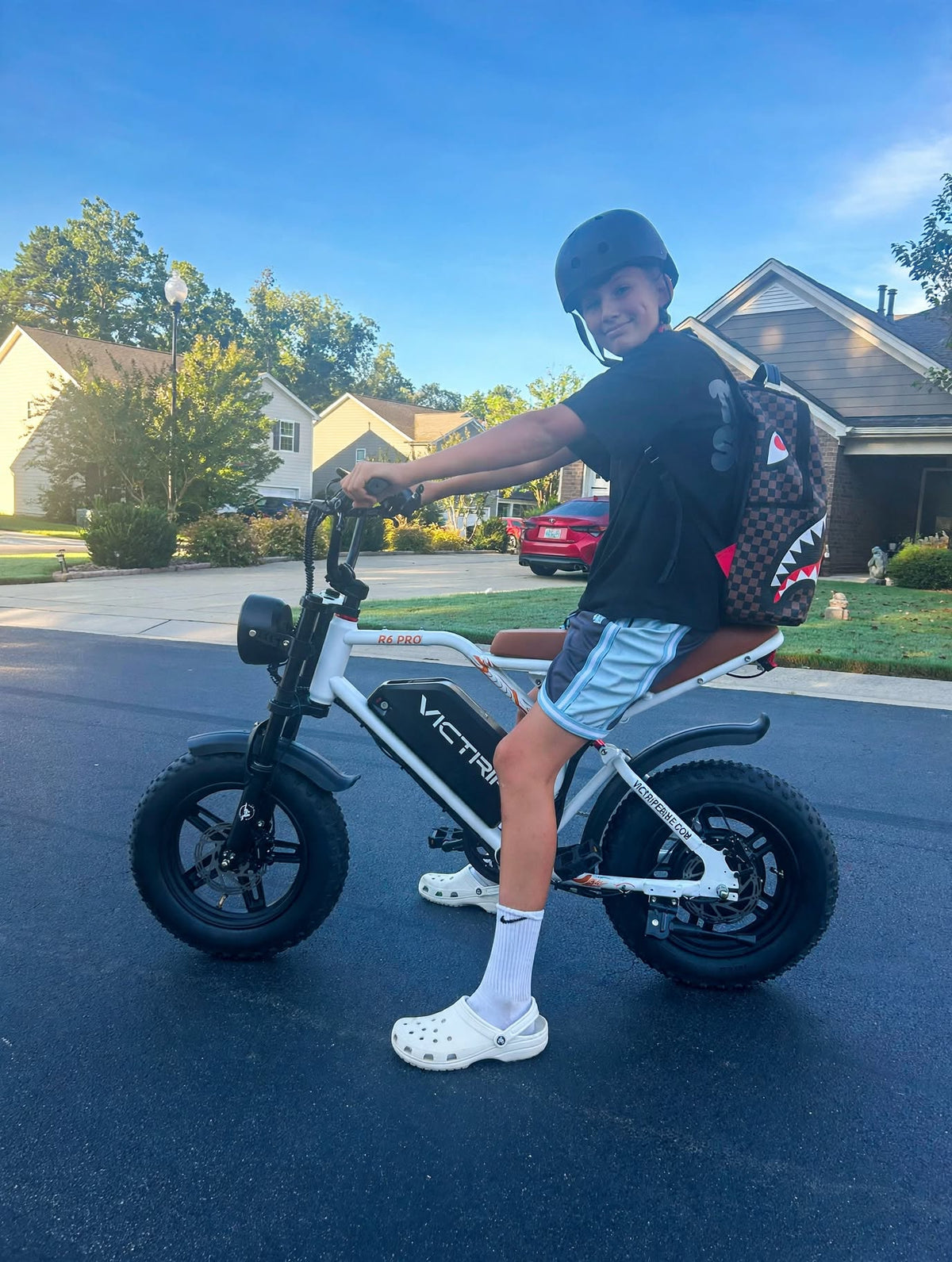
For example, the Victrip R6 Pro Moped Style eBike integrates 4 inch tires specifically to enhance load stability and urban versatility. The bike’s frame geometry and motor torque output are optimized around this width, proving how central 4 inch tires have become to modern electric bike engineering.
Better Control at Lower PSI
Running tires at lower pressure enhances grip. However, narrow tires risk pinch flats at low PSI.
4 inch tires maintain structure even at reduced pressures, ensuring both safety and comfort.
Market Standardization
Manufacturing efficiency plays a role too. Once demand shifted heavily toward 4 inch tires, suppliers streamlined production.
This lowered costs and increased availability—creating a feedback loop of adoption.
Consumer Demand Trends
Let’s face it—riders want versatility. They don’t want separate bikes for commuting, snow, and trails.
4 inch tires deliver that flexibility. One bike, multiple terrains. It’s that simple.
4 Inch Tires vs Other Tire Widths
| Feature | 3.5–3.8 Inch | 4 Inch Tires | 4.5–5 Inch |
|---|---|---|---|
| Stability | Moderate | Excellent | Excellent |
| Rolling Resistance | Low | Moderate | High |
| Weight | Light | Balanced | Heavy |
| Terrain Adaptability | Good | Outstanding | Specialized |
| Market Availability | Declining | Industry Standard | Niche |
As shown above, 4 inch tires strike the best balance overall.
Real-World Applications in 2026
Commuting
Urban riders appreciate comfort and durability. Potholes and rough pavement are no joke.
4 inch tires smooth out daily rides, reducing maintenance and fatigue.
Off-Road Adventures
Trail riders need grip and control. 4 inch tires excel in forest paths, rocky climbs, and dirt descents.
For example, major cycling events covered by Union Cycliste Internationale have increasingly featured wider tire categories reflecting market trends.
Snow and Sand Riding
Perhaps most impressively, 4 inch tires handle extreme terrain without modification.
Lower PSI allows flotation over snow and sand—something traditional mountain bike tires simply can’t match.

Industry Data and Market Trends
Market research indicates fat tire eBike sales have grown annually by double digits since 2022.
Retailers now report that over 60% of electric bikes in the all-terrain category ship with 4 inch tires as standard equipment.
Moreover, consumer reviews frequently cite comfort and stability as the top purchasing factors—both directly tied to 4 inch tires.
For further reading on cycling innovation trends, visit: https://www.bicycleretailer.com/.
Technical Specifications Explained
Understanding 4 inch tires requires examining:
-
PSI Range: Typically 5–30 PSI
-
Rim Width Compatibility: 60–100mm
-
Tread Patterns: Knobby, hybrid, slick
-
Sidewall Construction: Reinforced nylon or Kevlar blends
The air volume inside 4 inch tires allows greater customization based on terrain. Riders can fine-tune performance simply by adjusting pressure.
Environmental and Efficiency Considerations
Some argue wider tires reduce efficiency. However, modern rubber compounds minimize rolling resistance.
Additionally:
-
Longer lifespan reduces waste
-
Lower maintenance decreases part replacement
-
Improved durability reduces total consumption
Thus, 4 inch tires align well with sustainable mobility goals.
Common Misconceptions About 4 Inch Tires
Myth 1: They’re only for snow.
Reality: They perform well year-round.
Myth 2: They’re too heavy.
Reality: Modern materials keep weight manageable.
Myth 3: They’re inefficient.
Reality: Optimized tread designs counter drag.
Maintenance and Longevity Tips
To maximize 4 inch tires lifespan:
-
Check PSI weekly
-
Rotate tires every 1,000 miles
-
Inspect sidewalls for cuts
-
Clean debris after muddy rides
Proper care ensures thousands of miles of performance.
Conclusion
In 2026, the verdict is clear: 4 inch tires are the industry standard because they deliver unmatched versatility, stability, and performance.
They aren’t just a trend—they’re the result of years of engineering refinement and rider feedback.
For commuters, adventurers, and cargo riders alike, 4 inch tires represent the ideal balance between traction and efficiency.
And as cycling continues to evolve, one thing seems certain—4 inch tires are here to stay.
FAQs
1. Are 4 inch tires good for city riding?
Yes. They absorb shocks and improve stability on uneven pavement.
2. Do 4 inch tires reduce speed?
Not significantly. Modern tread designs maintain efficient rolling.
3. Can beginners handle 4 inch tires?
Absolutely. They enhance balance and confidence.
4. Are 4 inch tires harder to maintain?
No. Maintenance is similar to standard bike tires.
5. What PSI is best for 4 inch tires?
It depends on terrain, but typically between 8–20 PSI for mixed riding.
Share:
VICTRIP 5th Anniversary Special: Cheap Electric Bikes + Huge Savings!
Electric 3 Wheel Bike for Adults Over 50