

At first glance, an electric dirt bike and an electric motorcycle can look almost identical. Both may have a motorcycle-style seat, two wheels, a powerful electric motor, and a rechargeable battery. So what's the actual difference?
The answer comes down less to the power source and more to how the vehicle is designed and where it's intended to be ridden.
An electric dirt bike is generally built around off-road riding. Its tires, suspension, frame geometry, ground clearance, and controls are designed to handle dirt, gravel, hills, and uneven terrain. An electric motorcycle, meanwhile, is generally designed around paved-road transportation and may include equipment required for public-road use.
That distinction matters when you're comparing performance, handling, range, safety, and legality.
In this guide, we'll break down the electric dirt bike vs electric motorcycle question and explain which type makes more sense for different riders.
1. What Is an Electric Dirt Bike?
An electric dirt bike is a two-wheeled vehicle designed primarily for off-road riding and powered by an electric motor.

Instead of a gasoline engine and fuel tank, it uses a battery and electric drivetrain. Depending on the model, an electric dirt bike may be designed for casual trail riding, recreational use, private property, motocross-style terrain, or more demanding off-road riding.
The most important feature isn't necessarily its motor wattage.
It's the way the entire bike is built around off-road conditions.
Typical Features of an Electric Dirt Bike
An electric dirt bike may have:
- Knobby or off-road tires
- Long-travel suspension
- High ground clearance
- A narrow and agile chassis
- Strong low-speed torque
- Motorcycle-style handlebars
- Disc brakes
- A lightweight or performance-focused frame
- Minimal road equipment on off-road models
These features make a difference when the riding surface becomes rough.
On pavement, a small bump may barely register. On a dirt trail, the same bump can affect traction, stability, and rider control. That's why suspension and tire design become so important on an electric dirt bike.
Are Electric Dirt Bikes Just Smaller Motorcycles?
Not necessarily.
Some full-size electric dirt bikes can be physically similar to motorcycles and can produce substantial power.
The better way to think about the difference is:
Electric dirt bike = off-road-focused design
Electric motorcycle = road-focused design
There can be overlap between the two categories, especially as electric vehicles become more powerful and manufacturers create models capable of handling multiple environments.
2. What Is an Electric Motorcycle?
An electric motorcycle is a motorcycle powered by an electric motor and battery instead of an internal-combustion engine.
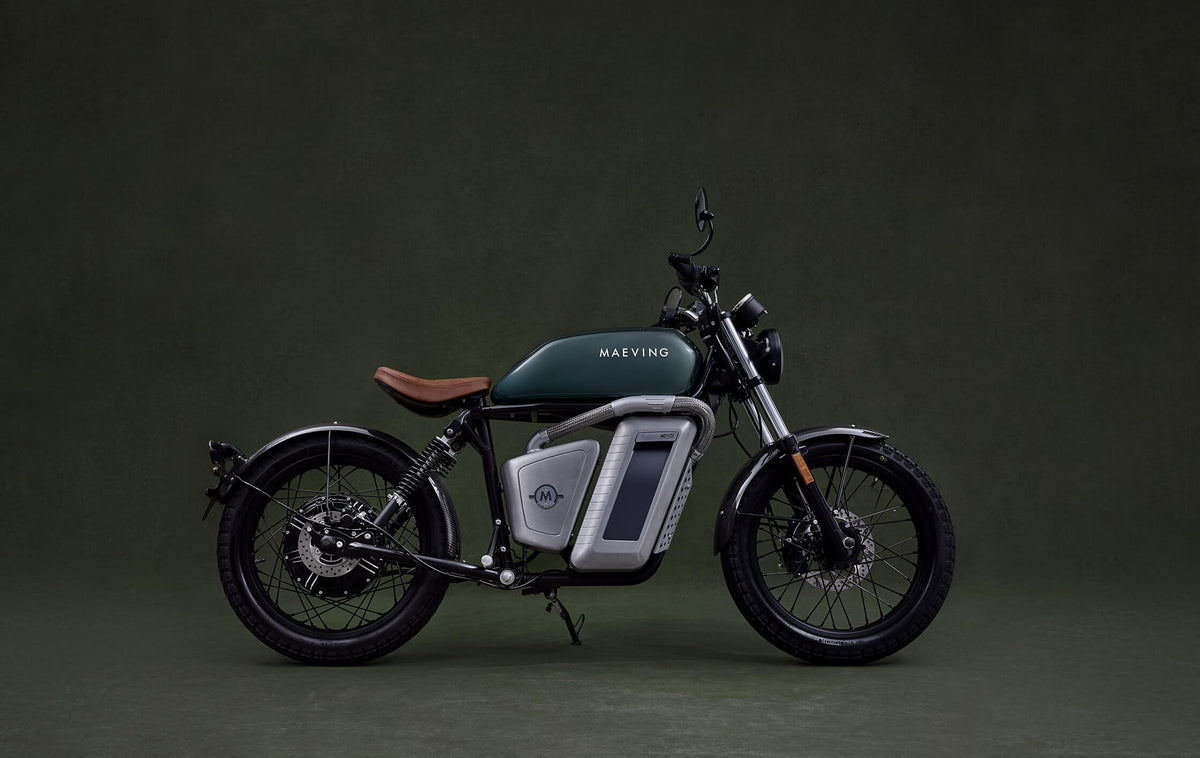
Electric motorcycles are generally designed with road riding in mind. Depending on the model and applicable regulations, they may include headlights, brake lights, turn signals, mirrors, road tires, and other equipment needed for public-road operation.
Under US federal regulations administered by NHTSA, a motorcycle is generally defined as a motor vehicle with motive power, a seat or saddle for the rider, and no more than three wheels in contact with the ground. NHTSA also notes that manufacturers are responsible for certifying applicable vehicles as compliant with federal motor vehicle safety standards.
This is important because a vehicle's marketing name doesn't automatically determine its legal classification.
An electric vehicle that looks like a motorcycle isn't necessarily legal to ride on public roads.
What Are Electric Motorcycles Designed For?
Electric motorcycles are generally better suited to:
- Daily commuting
- City streets
- Paved roads
- Longer road trips
- Urban transportation
- Highway-oriented riding, where the specific model and law allow it
Some electric motorcycles can handle gravel or light off-road conditions, but that doesn't necessarily make them equivalent to a dedicated dirt bike.
The same principle works in reverse.
An electric dirt bike may be extremely capable on trails but unsuitable for public roads.
3. Electric Dirt Bike vs Electric Motorcycle: 7 Key Differences
The easiest way to compare the two is to look at the components that affect the riding experience.
| Feature | Electric Dirt Bike | Electric Motorcycle |
|---|---|---|
| Main purpose | Off-road riding | Road riding |
| Tires | Knobby/off-road focused | Street-oriented |
| Suspension | Rough-terrain focused | Road-focused |
| Ground clearance | Usually higher | Usually lower |
| Riding style | Active and maneuverable | Seated and stable |
| Road equipment | May be limited | Usually more extensive |
| Typical environment | Trails and private land | Streets and paved roads |
These aren't absolute rules for every model, but they're useful starting points.
1. Tires
Tires are one of the clearest differences.
Electric dirt bikes commonly use tread patterns designed to maintain grip on loose surfaces. Dirt, sand, gravel, and mud require a different approach to traction than smooth pavement.
Street-oriented electric motorcycles generally use tires designed for asphalt.
Why does that matter?
Imagine riding the same bike on two completely different surfaces. A tire that feels stable on pavement may not provide the same level of control on loose dirt.
That's why you shouldn't choose a bike based only on motor power.
The tires need to match the terrain.
2. Suspension
Suspension is another major difference.
An electric dirt bike needs to deal with:
- Rocks
- Ruts
- Roots
- Uneven trails
- Drops
- Loose surfaces
- Steep terrain
As a result, off-road models commonly emphasize suspension travel and ground clearance.
Electric motorcycles generally prioritize road stability, comfort, and predictable handling on paved surfaces.
Neither approach is inherently better.
They're simply optimized for different environments.
3. Frame and Riding Position
Off-road riding often requires the rider to move around more.
You may shift your body forward when climbing, move backward on descents, or stand on the foot pegs while crossing rough terrain.
Because of this, dirt-bike geometry is designed around rider movement.
Electric motorcycles generally prioritize a more consistent seated position for road riding.
That difference may seem small when looking at a parked bike, but it becomes obvious once the terrain gets rough.
4. Ground Clearance
Ground clearance matters when riding over obstacles.
A dirt bike with greater clearance is less likely to contact rocks, roots, and uneven sections of trail.
On a paved road, high ground clearance isn't as important.
In fact, a lower center of gravity can help contribute to predictable road handling.
This is another example of why the "better" vehicle depends on the environment.
5. Weight
Weight can have a major impact on handling.
A lighter electric dirt bike can be easier to maneuver around tight trails and technical terrain.
A heavier electric motorcycle may prioritize battery capacity, road stability, equipment, and longer-distance riding.
However, lighter doesn't automatically mean better.
A heavier bike can feel planted at higher speeds, while a lighter bike may feel easier to control off-road.
The ideal weight depends on what you're trying to do.
6. Power Delivery
Electric motors provide an important advantage for both vehicle types: immediate power delivery.
An electric dirt bike can use that characteristic for climbing and accelerating through loose terrain.
An electric motorcycle can use it for smooth acceleration in traffic.
But raw power isn't everything.
A very powerful motor can be difficult for an inexperienced rider to control, especially on loose terrain.
For off-road riding, predictable and controllable power can be more useful than simply chasing the biggest number.
7. Road Equipment
This is perhaps the biggest practical difference for US buyers.
A road-oriented electric motorcycle may be equipped with components such as:
- Headlights
- Turn signals
- Brake lights
- Mirrors
- Road tires
- License-plate mounting provisions
- Other required equipment
An off-road electric dirt bike may not have all of these features.
And even if a dirt bike has lights or mirrors, that doesn't automatically mean it's street legal.
4. Electric Dirt Bike vs Electric Motorcycle: Where Can You Ride?
Your intended riding location should be one of the first things you consider before buying.
Electric Dirt Bikes: Trails and Private Land
If you primarily want to ride on trails or private property, an electric dirt bike makes more sense.
The combination of off-road tires, suspension, ground clearance, and agile handling is designed for this environment.
Possible riding locations include:
- Private property
- Designated off-road areas
- Dirt trails where permitted
- Off-road parks
- Gravel terrain
- Recreational riding areas
Always check the rules for the specific property or trail before riding.
Electric Motorcycles: Roads and Streets
If your primary purpose is transportation, an electric motorcycle may be a better fit.
Road riding requires a very different set of considerations.
You need to think about:
- Registration
- Insurance
- Licensing
- Required safety equipment
- Vehicle certification
- State and local laws
- Speed limits
- Where the vehicle is permitted to operate
NHTSA distinguishes vehicles manufactured primarily for off-road use from motor vehicles intended for public streets and highways. Its guidance also notes that certain off-road machines are not subject to the same federal motor vehicle safety standards as road-going vehicles.
That makes it especially important to check the exact vehicle and the laws where you live.
5. Are Electric Dirt Bikes Street Legal in the US?
This is one of the most important questions buyers ask.
The short answer is:
Some may be, but you can't assume that every electric dirt bike is street legal.
Street legality depends on the vehicle's classification, equipment, certification, and the laws that apply in your state and locality.
NHTSA's federal framework distinguishes between motorcycles intended for public-road use and vehicles manufactured primarily for off-road use.
State laws can then impose additional requirements.
For example, you may need to consider:
- Motorcycle licensing
- Registration
- Insurance
- Helmet laws
- Lighting requirements
- Mirrors
- Turn signals
- Vehicle identification
- Roadworthiness requirements
So if your plan is to ride an electric dirt bike to work every day, don't simply look at its top speed or motor power.
Check whether the specific model is legally equipped and eligible for your intended road use.
For US federal information, the NHTSA motorcycle and vehicle resources are a useful starting point.
6. Which Is Faster: an Electric Dirt Bike or Electric Motorcycle?
There's no universal winner.
An electric motorcycle can be extremely fast, particularly when designed for street performance.
But high-performance electric dirt bikes can also deliver serious acceleration.
The important point is that motor wattage alone doesn't determine real-world speed.
Performance is affected by:
- Motor output
- Battery voltage
- Controller
- Vehicle weight
- Gear ratio
- Aerodynamics
- Tire size
- Rider weight
- Terrain
- Battery state of charge
A lightweight off-road bike with strong torque can feel incredibly quick on a trail without having the same top speed as a road-focused motorcycle.
What About High-Performance Electric Dirt Bikes?
This is where modern electric dirt bikes become interesting.
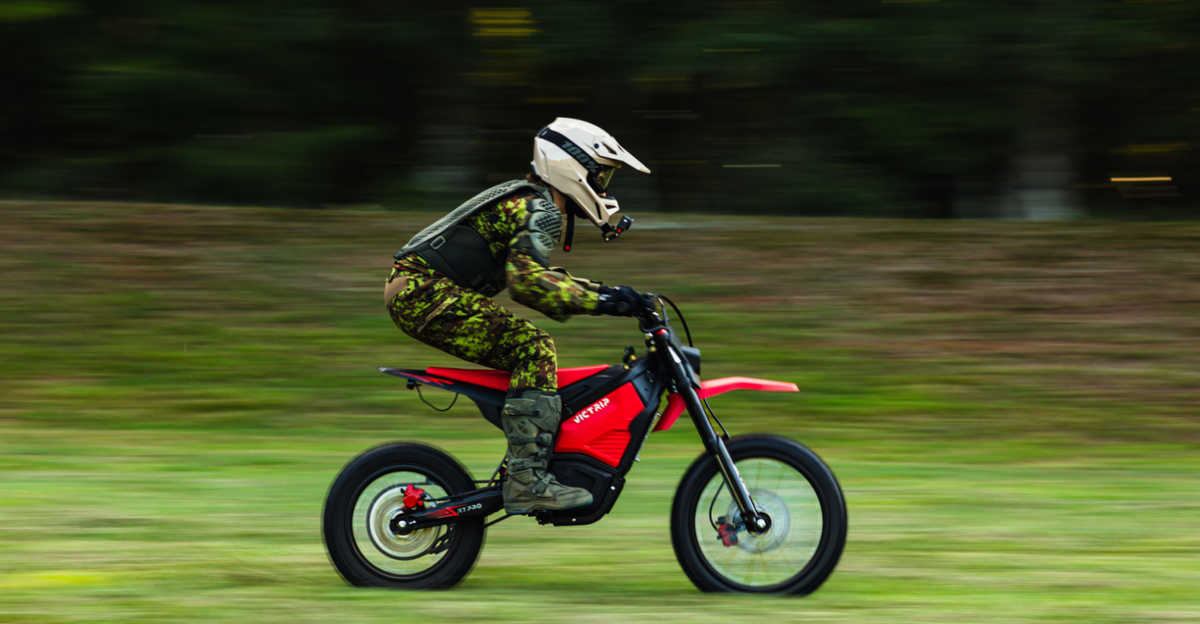
Models such as the VICTRIP R7 4000W electric dirt bike are examples of the high-performance end of the electric dirt-bike category. Their positioning is much closer to recreational off-road performance than everyday commuter eBikes.

That makes them useful examples of an important point:
Electric dirt bikes don't have to be small or low-powered.
However, high power doesn't change the fundamental question of where a vehicle is intended and legally permitted to operate.
If you're considering a high-performance electric dirt bike, look beyond the headline motor number and evaluate suspension, brakes, tires, battery capacity, weight, and rider fit as well.
7. Which Has Better Range?
Range depends heavily on the specific vehicle and how you ride it.
Electric motorcycles often have relatively large battery packs because they're designed for road travel and longer distances.
Electric dirt bikes face a different challenge.
Off-road riding can involve:
- Frequent acceleration
- Steep climbs
- Soft terrain
- Stop-and-go riding
- Higher loads
- Uneven surfaces
All of these can increase energy consumption.
A bike's advertised range should therefore be treated as an estimate rather than a guaranteed number.
What Affects Real-World Range?
Several factors matter:
| Factor | Effect on Range |
| Rider weight | Higher load can reduce range |
| Speed | Higher speeds generally use more energy |
| Terrain | Hills and loose surfaces increase consumption |
| Tire pressure | Incorrect pressure can affect efficiency |
| Temperature | Cold conditions can reduce battery performance |
| Riding style | Aggressive acceleration uses more energy |
| Battery capacity | Larger capacity generally provides more available energy |
If you mostly ride trails, don't compare bikes solely by their claimed maximum range.
Think about how you actually ride.
A bike that provides enough practical range for a two-hour trail session may be more useful to you than one with a larger theoretical range but less suitable off-road equipment.
8. Which Is Better for Adults?
Both types can be suitable for adult riders.
The more important question is what the adult rider wants to do.
Choose an Electric Dirt Bike If You:
- Primarily ride off-road
- Want to explore trails
- Ride on private property
- Prefer aggressive tires
- Want longer-travel suspension
- Enjoy technical terrain
- Value maneuverability
- Don't need the bike primarily for commuting
Choose an Electric Motorcycle If You:
- Need road transportation
- Commute regularly
- Ride mainly on pavement
- Need road-oriented equipment
- Want longer-distance street riding
- Need a vehicle that can meet applicable road requirements
This distinction is more useful than simply asking which one has more power.
9. Electric Dirt Bike vs Electric Motorcycle: Which Should You Buy?
There's no single answer for every rider.
Instead, start with four questions:
Where Will You Ride?
If the answer is mostly dirt trails and private land, look toward an electric dirt bike.
If the answer is mostly city streets and paved roads, look toward a road-oriented electric motorcycle.
What Kind of Terrain Will You Encounter?
For rocks, dirt, sand, hills, and uneven trails, prioritize:
- Suspension
- Ground clearance
- Tire tread
- Weight
- Low-speed control
For pavement, prioritize:
- Road tires
- Braking
- Lighting
- Stability
- Range
- Legal equipment
How Much Performance Do You Actually Need?
Don't automatically choose the most powerful bike.
More power can be useful, but it can also require more rider experience.
A good match between rider ability and vehicle performance is more important than chasing a maximum specification.
Do You Need Public-Road Access?
This should be one of the first questions you answer.
If yes, verify the specific vehicle's legal status before buying.
If no, you can focus more heavily on off-road performance.
10. Electric Dirt Bike vs Electric Motorcycle: Quick Comparison
| Category | Electric Dirt Bike | Electric Motorcycle |
| Best for | Off-road riding | Road riding |
| Main surface | Dirt and trails | Asphalt |
| Tire design | Knobby/off-road | Street-oriented |
| Suspension | Off-road focused | Road focused |
| Ground clearance | Usually higher | Usually lower |
| Rider movement | More active | More seated |
| Road equipment | Depends on model | Typically more extensive |
| Range priority | Trail-session range | Road-trip/commuting range |
| Main advantage | Off-road control | Road practicality |
| Best buyer | Trail rider | Commuter/road rider |
The comparison isn't about which category is universally superior.
It's about matching the vehicle to the job.
FAQs
Is an electric dirt bike the same as an electric motorcycle?
No. They can share similar designs, but they're generally optimized for different environments. Electric dirt bikes are typically designed around off-road riding, while electric motorcycles are generally designed for public-road use.
Are electric dirt bikes street legal?
Some models may be designed or equipped for road use, but many electric dirt bikes are intended only for off-road riding. Street legality depends on the specific vehicle and applicable federal, state, and local requirements.
Which is faster, an electric dirt bike or electric motorcycle?
It depends on the model. High-performance electric motorcycles can have higher top speeds, while performance electric dirt bikes can provide very strong acceleration and off-road performance. Motor power alone doesn't determine speed.
Can an electric motorcycle go off-road?
Some can handle gravel roads or light trails, especially models designed with dual-purpose tires and suitable suspension. However, a dedicated electric dirt bike is generally better suited to demanding off-road terrain.
Is an electric dirt bike better than an electric motorcycle?
Neither is automatically better. An electric dirt bike is generally the better choice for off-road riding, while an electric motorcycle is generally more appropriate for road-focused transportation.
Conclusion
The difference between an electric dirt bike vs electric motorcycle isn't simply about how much power the motor produces.
It's about purpose, design, and where you're going to ride.
Electric dirt bikes are built around off-road conditions, with features such as aggressive tires, suspension travel, ground clearance, and maneuverable geometry. Electric motorcycles generally focus more on paved-road performance, comfort, equipment, and legal road use.
For trail riders, a dedicated electric dirt bike can provide the right combination of control, suspension, and traction. For commuters, a properly equipped electric motorcycle may be a more practical option.
High-performance electric dirt bikes such as the VICTRIP R7 Pro show how capable modern electric off-road machines can be, but power shouldn't be the only thing you consider.
Before buying, ask yourself three simple questions:
Where will I ride? What performance do I actually need? And is the vehicle legal for the places where I plan to ride?
Once you answer those questions, choosing between an electric dirt bike and an electric motorcycle becomes much easier.
Share:
Electric Dirt Bike Acceleration: What Determines How Fast It Feels?
Moped Style eBike vs Step-Through eBike: What's the Difference?