

Choosing the best electric mini dirt bike for young riders isn't simply about finding the bike with the highest wattage or fastest top speed. For parents, the more important question is whether the bike fits the rider's size, experience, riding goals, and intended terrain.
Electric mini dirt bikes have become increasingly popular because they offer young riders an exciting way to explore off-road riding without the fuel, exhaust, and engine noise associated with traditional gas-powered bikes. However, the growing number of models can make choosing the right one surprisingly difficult.

A small beginner may need a lightweight bike with moderate power and simple controls. An experienced teenager, meanwhile, may want more torque, better suspension, stronger brakes, and enough battery capacity for longer trail sessions.
So, what should you look for?
This guide explains the nine most important factors to consider before buying an electric mini dirt bike for a young rider. It also explains when a higher-performance model may make sense and how parents can avoid common buying mistakes.
1. Start With the Rider, Not the Bike
One of the easiest mistakes is shopping for the bike first.
Instead, start with the rider.
Age can provide a general guideline, but it doesn't tell the whole story. Two riders of the same age may have completely different heights, weights, strength levels, and riding experience.
That's why the best electric mini dirt bike for young riders should be selected according to the individual rider rather than age alone.
Consider Height and Weight
Before looking at motor specifications, check:
- Rider height
- Rider weight
- Inseam length
- Arm reach
- Physical strength
- Riding experience
A rider should be able to comfortably reach the handlebars and controls. They should also feel stable when mounting, stopping, and making slow turns.
If a bike feels too large, controlling it can become difficult. If it's too small, the rider may feel cramped and quickly outgrow it.
Experience Matters Too
A young rider who has never used a powered two-wheel vehicle should not automatically start with a high-performance model.
Beginners generally benefit from:
- Moderate acceleration
- Predictable throttle response
- Lower top speed
- Easy-to-reach brake levers
- Stable handling
- Manageable overall weight
Experienced teens may be ready for a more capable bike.
The golden rule is simple: buy for the rider's current ability, not just their future potential.
2. Choose Motor Power Carefully
Motor power is one of the first specifications parents notice.
You'll often see electric dirt bikes advertised with numbers such as 250W, 500W, 1000W, 2000W, or even higher. However, bigger numbers aren't automatically better.
What Does Motor Power Affect?
Motor output influences several aspects of riding, including:
- Acceleration
- Hill climbing
- Torque
- Performance on loose terrain
- Ability to carry heavier riders
- Overall responsiveness
For flat recreational riding, a young beginner may not need substantial power.
For steep trails or experienced teenage riders, additional power can be useful.
Peak Power vs. Rated Power
It's also important to understand that manufacturers may advertise different types of power ratings.
Rated or nominal power generally describes the motor's more sustainable operating output, while peak power describes the maximum output under particular conditions.
As a result, comparing two bikes solely by their advertised wattage can be misleading.
Look at the complete specification sheet rather than focusing on one number.
More Power Requires More Skill
A powerful electric dirt bike can accelerate quickly. That can be exciting, but it also means the rider needs better throttle control.
For younger riders, controllability should come before performance.
3. Don't Ignore Top Speed
Top speed is another specification that attracts attention, especially among teenagers.
But when choosing an electric dirt bike for a young rider, the question shouldn't be:
"How fast can it go?"
Instead, ask:
"How much speed can this rider safely control?"
Beginners Should Start Slowly
A new rider should learn the basics before exploring high speeds.
Important skills include:
- Smooth acceleration
- Controlled braking
- Low-speed turning
- Maintaining balance
- Navigating uneven ground
- Handling emergency stops
Once those skills become natural, the rider can gradually progress.
Higher Speed Isn't Always More Fun
Speed can make a bike exciting, but good handling is often more important.
A well-balanced bike with predictable controls can be much more enjoyable on a trail than a machine that simply accelerates extremely quickly.
Parents should also check local regulations. A high-performance electric dirt bike may not be legal for use on public roads or certain public trails.
4. Look at Battery Capacity and Real-World Range
Battery performance can make or break the riding experience.
Nobody wants to finish a trail ride halfway through because the battery is empty.
Understand Battery Specifications
Battery capacity is commonly expressed in voltage and amp-hours.
For example, a 48V 20Ah battery has a nominal energy capacity of approximately:
48 × 20 = 960Wh
A higher watt-hour capacity generally means more stored energy, although actual range depends on many other factors.
What Affects Range?
Real-world range can change significantly depending on:
- Rider weight
- Riding speed
- Terrain
- Hills
- Tire pressure
- Temperature
- Acceleration frequency
- Surface conditions
- Riding style
A rider cruising slowly on flat dirt may travel much farther than someone repeatedly climbing steep trails.
Charging Time Matters
Don't look at range alone.
Check how long the battery takes to recharge and whether the charging setup works for your family's routine.
If the bike takes several hours to recharge, planning ahead becomes important for weekend riding.
5. Check the Braking System
Brakes are arguably more important than motor power.
A young rider needs to be able to slow down and stop predictably, especially when riding downhill or approaching an obstacle.
Disc Brakes vs. Rim Brakes
Most serious off-road electric bikes use disc brakes.
Disc brakes generally provide better stopping performance for demanding riding conditions.
Hydraulic disc brakes can offer smooth modulation and strong braking performance, while mechanical disc brakes are often simpler to maintain.
What Should Young Riders Practice?
Before heading onto difficult trails, practice:
- Gentle braking
- Firm braking
- Emergency stops
- Downhill braking
- Braking before turns
A rider should learn to control speed before attempting challenging terrain.
6. Suspension Makes a Big Difference
Off-road trails aren't perfectly smooth.
You may encounter rocks, roots, potholes, bumps, loose dirt, and sudden changes in elevation. Good suspension helps the bike deal with those surfaces.
Front Suspension
A front fork helps absorb impacts through the front wheel.
This can improve:
- Steering control
- Comfort
- Front-wheel traction
- Stability over bumps
Rear Suspension
Rear suspension can make a major difference on rough terrain.
It helps reduce harsh impacts and can keep the rear wheel more controlled when riding over uneven surfaces.
For casual riding on smooth paths, elaborate suspension may not be necessary. For genuine trail riding, however, it's worth paying attention to.

7. Pay Attention to Tires and Wheels
Tires are the connection between the bike and the ground.
Even an excellent motor won't perform well if the tires aren't suited to the terrain.
Match Tires to the Terrain
Different riding environments require different characteristics.
| Terrain | Useful Tire Characteristics |
| Hard-packed dirt | Moderate tread |
| Gravel | Durable tread and stable profile |
| Mud | Deeper tread |
| Sand | Wider tires |
| Mixed trails | Versatile off-road tread |
Tire Size Also Matters
Larger wheels can roll over obstacles more easily, while smaller wheels may make a bike easier to maneuver for smaller riders.
Fat tires can provide additional stability and traction, although they may also add weight.
For young riders, the ideal tire size should be based on the overall bike design rather than tire width alone.
8. Consider Bike Weight and Handling
A specification that's often overlooked is the bike's own weight.
A powerful motor may move a heavy bike quickly, but the rider still has to control that weight.
Why Weight Matters
A lighter electric dirt bike can be easier to:
- Turn
- Stop
- Move manually
- Pick up after a fall
- Control at low speed
- Transport
A heavier bike may offer advantages such as stronger construction, larger batteries, and greater stability.
There's a trade-off.
For younger riders, manageable weight is particularly important.
Think About Transportation
Parents should also consider how the bike will be transported.
Before purchasing, ask:
- Can it fit in your vehicle?
- Do you need a bike rack?
- Can you safely lift it?
- Where will it be stored?
- Can the battery be removed?
These practical details can matter just as much as performance.
9. Make Safety Part of the Buying Decision
Safety isn't an accessory. It should be part of the bike-selection process.
A young rider should use a properly fitted helmet and appropriate protective equipment every time they ride.
The U.S. Consumer Product Safety Commission recommends helmets and appropriate protective equipment for off-highway riding and provides safety guidance for recreational vehicles and micromobility products. (CPSC)
Recommended Protective Gear
A young off-road rider should consider:
- Certified helmet
- Goggles or eye protection
- Riding gloves
- Long pants
- Long-sleeve shirt or jersey
- Protective boots
- Knee pads
- Elbow pads
- Appropriate body protection
The right gear won't eliminate every risk, but it can reduce the severity of injuries.
Choose the Riding Area Carefully
A suitable riding environment is equally important.
For beginners, choose a controlled area with:
- Plenty of open space
- No vehicle traffic
- No steep drop-offs
- Minimal obstacles
- Predictable terrain
- Good visibility
Start easy and build up gradually.
Electric Mini Dirt Bike vs. Gas Dirt Bike
For many families, the choice isn't only between different electric models. It may also come down to electric versus gas.
| Factor | Electric Dirt Bike | Gas Dirt Bike |
| Noise | Lower | Higher |
| Fuel | Electricity | Gasoline |
| Engine maintenance | Minimal | More involved |
| Exhaust | No tailpipe emissions | Yes |
| Starting | Usually simple | Can require more effort |
| Torque delivery | Immediate | Engine-dependent |
| Charging/refueling | Charging required | Refueling required |
| Trail experience | Quiet and responsive | Traditional engine feel |
Electric models can be particularly appealing to families looking for a quieter and simpler riding experience.
That doesn't mean they're maintenance-free. Tires, brakes, suspension, drivetrain components, fasteners, and electrical systems still require attention.
Read More: Electric Dirt Bikes vs Gas Dirt Bikes: Which Is Safer for Kids?
What Size Electric Dirt Bike Is Right for a Young Rider?
Size should be considered as a complete package.
Don't judge a bike only by wheel size or seat height.
Use This Simple Fit Checklist
Before buying, check whether the rider can:
- Reach the handlebars comfortably
- Reach the brake levers
- Sit naturally
- Maintain balance
- Control the throttle
- Move the bike at low speed
- Stop without struggling
If the rider looks stretched out or cramped, the bike probably isn't the right fit.
Should You Buy a Larger Bike to Allow for Growth?
This can be tempting.
After all, young riders grow quickly.
However, buying a bike that's too large today can reduce control and confidence.
It's generally better to choose a bike that fits properly now and upgrade later when the rider has genuinely outgrown it.
Beginner vs. Experienced Young Riders
The ideal electric mini dirt bike changes as riding ability improves.
For Beginners
Prioritize:
- Manageable power
- Lower speed
- Lightweight design
- Simple controls
- Stable handling
- Easy braking
The goal is to develop fundamental skills.
For Intermediate Riders
Once a rider becomes comfortable, they may want:
- More torque
- Better suspension
- Longer range
- Improved tires
- Stronger brakes
- Greater trail capability
For Experienced Teen Riders
Experienced teens may be ready for significantly higher performance.
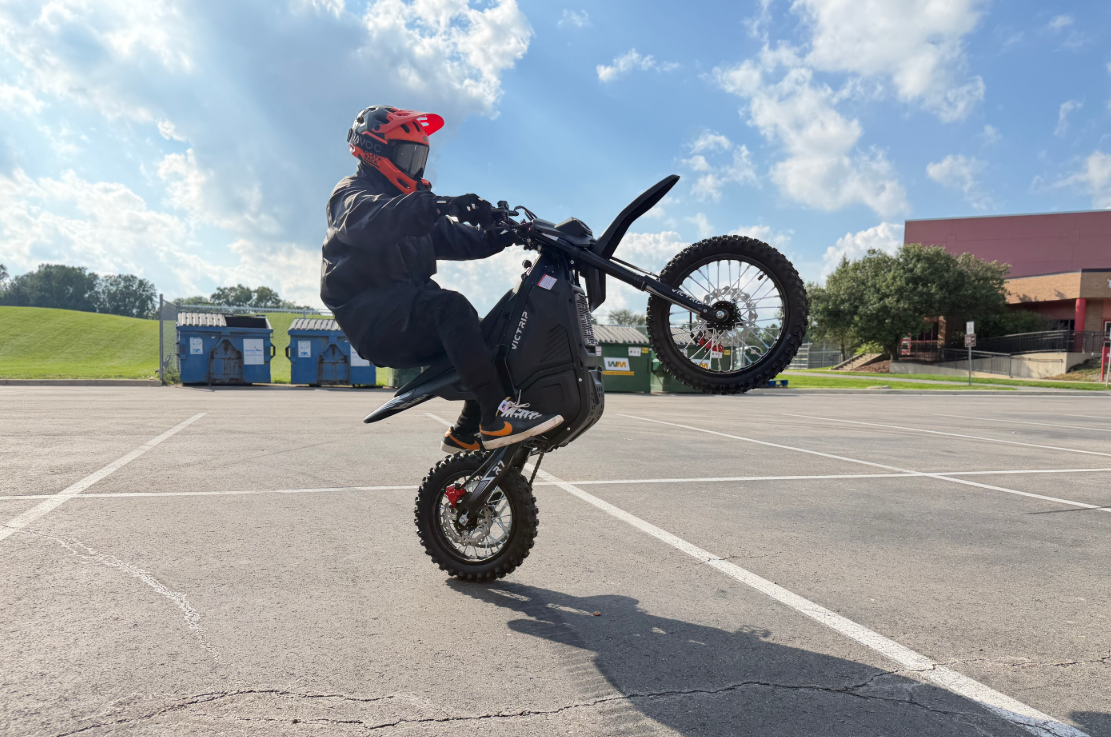
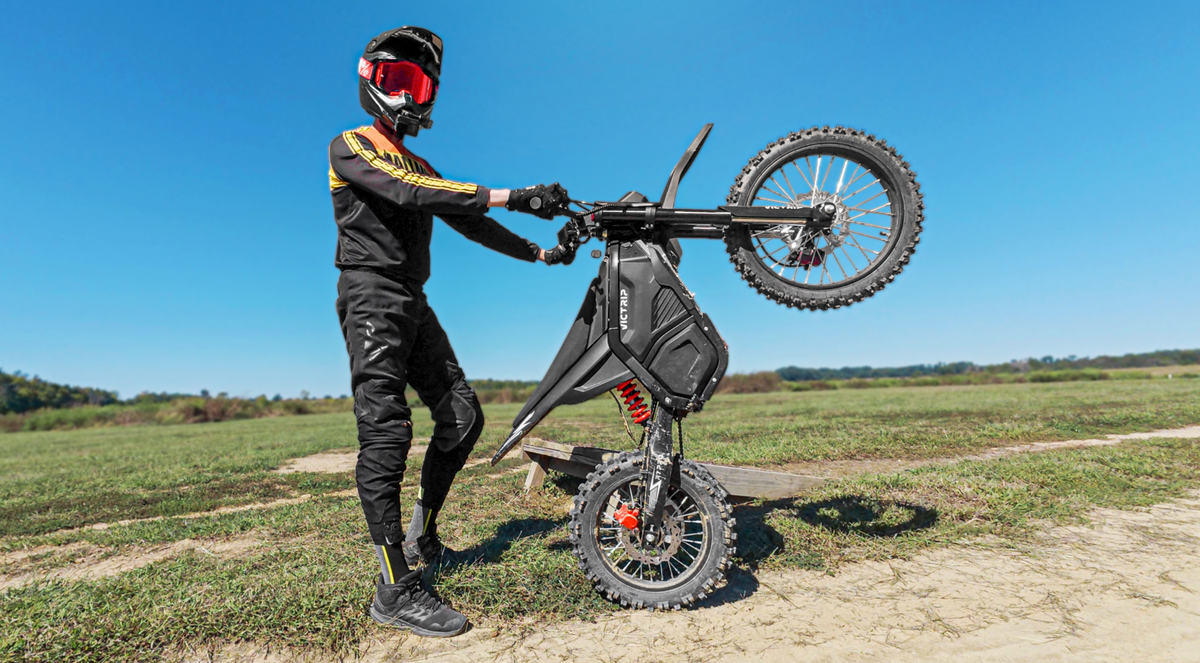
This is where a model such as the VICTRIP R7 can become relevant. It's positioned as a higher-performance electric dirt bike for teens and adults, so it should be considered only when the rider's size, experience, and riding environment are appropriate.
The key takeaway is that performance should follow skill, rather than the other way around.
Early Bird Price

VICTRIP®R7 Electric Mini Bike Motorcycle
$1599.00
How Much Should You Spend?
Price is another important consideration.
A cheap electric dirt bike isn't necessarily a bargain if the rider quickly outgrows it or if key components need frequent replacement.
At the same time, spending more doesn't automatically guarantee a better experience.
Focus on Value
When comparing prices, consider:
- Motor quality
- Battery capacity
- Brake system
- Suspension
- Tire quality
- Frame construction
- Warranty
- Replacement parts
- Customer support
A slightly more expensive bike with better components may provide better long-term value.
Don't Forget Gear Costs
The purchase price isn't the entire budget.
Parents should also account for:
- Helmet
- Gloves
- Boots
- Protective pads
- Riding clothing
- Transport equipment
- Maintenance supplies
Safety gear should never be treated as an afterthought.
Common Buying Mistakes to Avoid
Even after researching specifications, it's easy to make a few common mistakes.
Mistake 1: Buying the Fastest Bike
Maximum speed isn't the same as suitability.
Mistake 2: Focusing Only on Motor Wattage
A complete bike is more than its motor.
Mistake 3: Ignoring Weight
A heavy bike can be difficult for a young rider to control.
Mistake 4: Buying Without Checking Fit
Always compare the manufacturer's recommended rider size with the actual rider.
Mistake 5: Forgetting Battery Replacement Costs
Batteries are consumable components. Check whether replacement batteries are available and what they cost.
Mistake 6: Ignoring Local Rules
An off-road electric dirt bike isn't automatically street legal.
Check local requirements before riding in public areas.
How to Maintain an Electric Mini Dirt Bike
Good maintenance can extend the life of an electric dirt bike.
Before Every Ride
Perform a quick inspection.
Check:
- Tire pressure
- Tire condition
- Brake operation
- Throttle response
- Handlebar
- Fasteners
- Chain or drivetrain
- Battery connections
- Suspension
- Frame
After Riding
Clean off dirt and mud according to the manufacturer's instructions.
Don't use excessive water pressure around electrical components.
Battery Care
Use the correct charger and follow the manufacturer's charging instructions.
Avoid using a damaged battery or charger. If you notice swelling, overheating, unusual smells, physical damage, or other abnormal behavior, stop using the battery and contact the manufacturer.
FAQs
What is the best electric mini dirt bike for young riders?
The best model depends on the rider's height, weight, experience, and intended terrain. Beginners should generally choose a manageable bike, while experienced teens may benefit from more powerful off-road models.
Are electric dirt bikes safer than gas dirt bikes?
Electric bikes can be quieter and easier to operate, but they're not inherently risk-free. Speed, terrain, rider skill, and protective equipment all affect safety.
Are electric mini dirt bikes street legal?
Not necessarily. Street legality depends on local laws and the bike's classification and equipment. Always check the rules in your area before riding on public roads.
Should a beginner choose a high-powered electric dirt bike?
Usually, beginners are better served by a bike with manageable power and speed. A high-powered model may be difficult to control until the rider has developed basic skills.
Is suspension important on a mini electric dirt bike?
Yes, particularly for off-road riding. Suspension can improve comfort, stability, and control when riding over uneven terrain.
Final Thoughts
Finding the best electric mini dirt bike for young riders is less about chasing the biggest motor and more about finding the right balance.
The ideal bike should fit the rider physically, match their current skill level, provide enough performance for the intended terrain, and include dependable brakes, suitable suspension, and a practical battery.
For beginners, simplicity and control should come first. As riders become more experienced, they can move toward bikes with greater power, longer range, and more advanced off-road components.
For experienced teens who need substantially more performance, the VICTRIP R7 is one option worth researching. However, it should be evaluated based on the rider's size, skill, and intended use rather than simply because it offers high performance.
Ultimately, the smartest purchase is the bike that gives a young rider room to learn, ride confidently, and progress safely.
A little research before buying can save a lot of frustration later—and make every ride more enjoyable.
Share:
Why Compact Electric Bikes Are Perfect for Younger Riders?
Mini Electric Dirt Bike for Teens: How to Choose the Right One