


Why eBikes Are More Practical Than Cars in Europe — This piece argues that, for many everyday trips in European towns and cities, electric bicycles (eBikes) are more practical than cars. In short: they’re cheaper to own and run, easier to park, often quicker in dense urban areas, greener, and they improve health. The rest of the article explains how, why, and when that’s true, with concrete comparisons and buyer guidance.
Cost advantages of eBikes vs cars
Purchase price and total cost of ownership
Upfront, eBikes are cheaper. A decent commuter eBike often costs a fraction of a small city car. Even higher-end eBikes rarely match the purchase price of a used compact car. But total cost of ownership is where the gap widens: insurance, tax, parking, parking fines, depreciation, and fuel for cars add up fast. eBikes typically need nothing more than occasional maintenance, battery care, and small part replacements.
Running costs: energy, maintenance, taxes
An eBike’s “fuel” is electricity. Charging a battery costs pennies to a few euros for tens of kilometers. Maintenance is simpler: chain, brakes, tires, and occasional service. Cars face much higher costs: gasoline/diesel, more complex maintenance, periodic MOT-style inspections, and insurance premiums that climb with age and region.
Practical point: if you commute 10–20 km round trip, an eBike usually pays for itself in months when you factor in parking and fuel savings.
Urban practicality: parking, congestion, and door-to-door speed
Parking and curb access
In many European cities, finding a car parking spot can take longer than the trip itself. eBikes fold or park in bike racks, on sidewalks where allowed, or in compact secured storage. This reduces parking time and cost. You often stop right at the café, market, or office door.
Congestion and average trip time
In congested cores, an eBike can be faster than a car. You can use bike lanes, skip gridlock in narrow streets, and maintain consistent trip times. On many short urban trips — under 7–10 km — eBikes beat cars door-to-door because they avoid parking and traffic delays.
Environmental benefits
eBikes emit far less greenhouse gas per passenger-kilometer than cars. They also cut local air pollution and noise. That matters in European cities facing strict air-quality goals and low-emission zones. The small energy and manufacturing footprint of an eBike (including battery production amortized over many kilometers) is typically much lower than that of a car.
Health, well-being, and lifestyle
Riding an eBike provides regular, low-impact exercise. You get the benefits of outdoor activity without the strain of a conventional push-bike if you’d prefer assistance. That incidental movement improves cardiovascular health, mood, and reduces sedentary time. Plus, commuting by eBike can feel less stressful than driving in traffic.
Infrastructure and policy in Europe
European cities have invested heavily in cycling infrastructure. Protected lanes, bicycle parking, traffic-calming, and subsidies for eBike purchases make adoption easier. Many municipalities offer incentives, and national policies frequently support micromobility as a part of climate plans. For official EU transport policy context, see the European Commission transport hub. (External link: https://transport.ec.europa.eu/).
Policy note: Low-emission zones and congestion charges across Europe make car trips costlier; eBikes bypass many of these charges.
Safety, technology, and design improvements
Modern eBikes come with better brakes, integrated lights, stronger frames, and often electronic aids like ABS-style braking, integrated sensors, and connectivity. Cargo eBikes and longtails are engineered for child seats and deliveries, with low centers of gravity for safety. Helmet use, visible lights, and riding predictably remain important for safety.
Range, charging, and battery realities
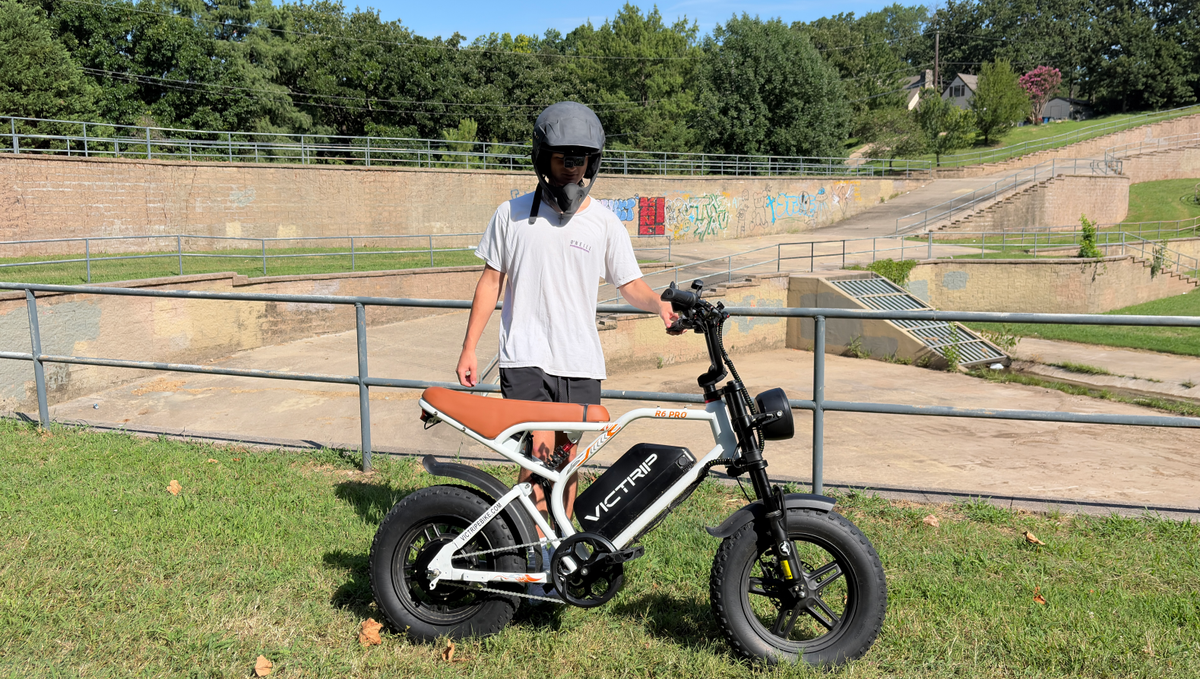
Typical eBike ranges today vary from 30 km on older setups to 100+ km on high-capacity batteries. Real-world range depends on rider weight, assist level, terrain, and speed. Charging is simple: plug into a household outlet overnight. For riders who need extended range or flexibility, models like the VICTRIP R5 Pro Folding Electric Bike offer high-capacity battery options and efficient power systems that support longer daily trips or multi-day touring without frequent charging stops. Spare batteries or workplace charging can further extend range for touring or deliveries. Battery longevity is improving across the industry, and proper care (moderate charge cycles, avoiding full deep discharges) helps extend lifespan.
TOP PICK

VICTRIP® R5 Pro 250W Foldable City Ebike
€1,699.00
Versatility: cargo, family, and delivery use
eBikes aren’t just single-rider commuters. Cargo eBikes, longtails, and trailers can replace many short car trips: grocery runs, school runs, courier deliveries. They exist in many shapes — front cargo boxes, long rear racks, and modular frames. For small families or urban businesses, a cargo eBike often matches the utility of a small car without the costs.
Use cases: commuting, errands, touring
-
Commuting: predictable travel times in dense areas; parking at work; lower commute costs.
-
Errands: quick stops at multiple locations without hunting for parking.
-
Touring & leisure: eBikes enable longer scenic rides with less fatigue.
-
Delivery & business: last-mile delivery with low operating costs and easy access to bike zones.
Barriers and common misconceptions
-
Weather: rain and cold are real considerations, but proper gear and fenders mitigate issues.
-
Theft: eBike theft is a concern; use quality locks and secure storage.
-
Cost: while cheaper than cars, good eBikes are an investment — but they often recoup cost quickly.
-
Range anxiety: choose a bike with appropriate range or arrange charging stops.
Comparative table: eBike vs Car
| Factor | eBike | Car |
|---|---|---|
| Typical purchase cost | Low–medium | High |
| Running cost (per km) | Very low | High |
| Parking | Easy, cheap | Often costly and time-consuming |
| Urban door-to-door speed (short trips) | Often faster | Often slower in congestion |
| Environmental impact | Low | High |
| Cargo capacity | Moderate (with cargo models) | High |
| Weather protection | Low | High |
| Health benefit | High (active) | Low |
| Suitability for deliveries | High (last-mile) | High (large loads) |
| Policy incentives | Often eligible | Often charged (zones/tolls) |
Choosing the right eBike in Europe — buyer checklist
-
Purpose: commuting, cargo, touring, or mixed-use?
-
Range: choose battery capacity for your daily needs plus margin.
-
Weight and frame: low-step frames help mounting/dismounting.
-
Accessories: lights, mudguards, racks, and panniers.
-
Service & warranty: local dealers for maintenance and battery support.
-
Security: robust locks and theft-resistant parking.
-
Compliance: ensure motor power and speed conform to local laws.
Policy recommendations & future outlook
Cities should continue to expand segregated cycling lanes, incentivize eBike adoption (subsidies, tax breaks), and invest in secure bike parking. From a business perspective, fleets of cargo eBikes for urban logistics reduce congestion and emissions. Expect further tech improvements (lighter batteries, smarter integration) and stronger policy alignment with climate goals.
VICTRIP eBike Expert Views
According to VICTRIP eBike experts, the rapid shift from cars to eBikes across Europe is not just a lifestyle trend, but a structural change in how people move through cities. VICTRIP’s engineering and product teams emphasize that modern eBikes are now designed specifically for European urban realities—shorter daily travel distances, dense city layouts, strict emission regulations, and a growing demand for sustainable mobility.
Conclusion
For many urban and suburban journeys in Europe, eBikes offer a practical, fast, healthy, and low-cost alternative to cars. They shine on short-to-medium trips, errands, and last-mile deliveries. While cars remain essential for heavy loads, long family trips, or off-network travel, eBikes are transforming how Europeans move day-to-day. Cities that support cycling infrastructure and policy incentives will accelerate this practical shift.
FAQs
Are eBikes allowed on European bike lanes?
Mostly yes — in most European cities, legal motor assistance up to specific limits is allowed on bike lanes. Rules vary by country, so check local regulations for speed/power limits.
How far can a typical eBike go on one charge?
Typical practical ranges are 40–80 km for city-assist use; higher-capacity batteries can achieve 100+ km under gentle assist and flat terrain.
Do eBikes require insurance or registration?
It depends. Many European countries treat class-1 pedal-assist eBikes (cut-off at 25 km/h) like regular bicycles, needing no registration. Faster or throttle-based models might be classified differently and require registration/insurance.
How do eBikes perform in winter/rain?
With proper tires, fenders, and maintenance, eBikes handle wet and cold conditions. Riders should clean drivetrains regularly and store batteries in moderate temperatures.
Can eBikes replace cars for families?
For many families in urban settings, cargo eBikes can replace many car trips (school runs, groceries). For long-distance travel or multiple passengers, cars may still be needed.
Are there subsidies for buying an eBike?
Many European cities and some national programs offer subsidies or tax incentives. Check local government websites for current schemes.
Share:
What to Look for When Buying an eBike in Italy
Best eBikes for Daily Commuting in Italy