


Buying an electric dirt bike isn't just about finding the highest motor wattage or the lowest price. The right bike needs to match your riding style, terrain, experience, and budget.
If you're asking what should you check before buying an electric dirt bike, start with the basics: motor power, battery capacity, realistic range, suspension, brakes, tires, rider fit, safety features, maintenance, and warranty. These factors work together to determine how the bike feels and performs in real-world conditions.
This electric dirt bike buying guide walks through the key points to check before you make a purchase.
Electric Dirt Bike Buying Checklist at a Glance
| What to Check | Why It Matters |
|---|---|
| Motor power | Influences acceleration and hill climbing |
| Battery | Determines available energy and riding time |
| Range | Helps you plan realistic rides |
| Suspension | Improves control and comfort on rough terrain |
| Brakes | Important for controlled stopping |
| Tires | Affect traction and stability |
| Rider fit | Helps maintain comfortable control |
| Bike weight | Affects handling and transportation |
| Safety | Reduces electrical and mechanical risks |
| Maintenance | Impacts long-term ownership |
| Warranty | Provides support if something goes wrong |
1. Know Where You Plan to Ride
Before comparing electric dirt bikes, think about your typical riding environment.
Will you ride on:
- Private property?
- Dirt trails?
- Gravel?
- Sand?
- Rocky terrain?
- Steep hills?
- Designated OHV trails?
Different environments place different demands on an electric dirt bike.
A bike used mainly on smooth dirt paths may not need the same suspension and tire setup as one used on rocky, uneven trails. Likewise, riders tackling steep terrain may place greater importance on motor output, battery performance, and braking.
You should also check local regulations before buying. Electric dirt bikes aren't automatically legal on public roads, bike paths, or every public trail. Requirements can vary depending on the location and vehicle classification.
2. Compare Motor Power Beyond the Wattage Number
Motor power is one of the first specifications shoppers notice, but it's easy to compare the wrong numbers.
Manufacturers may list rated power and peak power. These describe different aspects of motor output.
Rated power generally represents a continuous operating level, while peak power refers to a higher output that the system may reach under certain conditions.
When comparing models, check:
- Rated motor power
- Peak motor power
- Motor type
- Battery voltage
- Controller specifications
- Torque, if provided
Hub Motor vs. Mid-Drive
Electric dirt bikes can use different motor configurations.
A hub motor is integrated into a wheel, while a mid-drive motor is positioned closer to the center of the bike and transfers power through the drivetrain.
The motor position isn't the only factor that determines performance. Battery output, controller programming, gearing, weight distribution, and chassis design also matter.
That's why it's better to look at the complete power system rather than choosing a bike based on wattage alone.
Read More: Electric Dirt Bike Motor Types Explained: Hub Motor vs Mid Drive
3. Check Battery Voltage and Capacity
Battery specifications are essential when you're learning how to choose an electric dirt bike.
Two numbers you'll commonly see are voltage (V) and amp-hours (Ah).
Battery energy can be roughly estimated by multiplying voltage by amp-hours:
Watt-hours (Wh) ≈ Volts (V) × Amp-hours (Ah)
For example, a 72V 25Ah battery has approximately 1,800Wh of nominal energy.
However, this doesn't mean every rider will get the same range.
Actual energy consumption depends on:
- Rider weight
- Speed
- Terrain
- Hills
- Riding mode
- Temperature
- Tire pressure
- Acceleration
- Battery condition
A rider cruising on relatively flat ground will generally use energy differently from someone repeatedly accelerating up steep trails.
Check the Battery Management System
It's also worth checking whether the battery has a battery management system (BMS).
A BMS can monitor battery conditions and provide various protection functions depending on its design.
Don't look only at the Ah number. Check the battery's specifications, charger compatibility, warranty, and replacement availability as well.
4. Look at Realistic Riding Range
Range is another specification that shouldn't be taken at face value.
Manufacturers often provide a maximum or estimated range based on particular riding conditions. Your real-world range can be lower if you ride faster, carry more weight, climb hills, or use aggressive acceleration.
Instead of asking only, "What's the maximum range?" ask:
How much range do I need for my normal ride?
If your typical trail ride is relatively short, you may not need the largest battery available. On longer rides, however, additional capacity can provide a useful safety margin.
When comparing range claims, look for testing information such as:
- Rider weight
- Average speed
- Terrain
- Riding mode
- Temperature
The more information provided, the easier it is to understand what the advertised range actually means.
5. Check Suspension for Your Terrain
Suspension can make a noticeable difference when riding over uneven ground.
An electric dirt bike may encounter rocks, roots, bumps, ruts, and loose surfaces. A suitable suspension system helps the wheels follow the terrain while improving rider comfort and control.

Front Suspension
The front fork absorbs impacts at the front wheel and influences steering behavior.
Look for information about:
- Suspension type
- Travel
- Adjustability
- Damping
- Replacement parts
Rear Suspension
If you're riding rough trails, rear suspension is also worth considering.
A full-suspension electric dirt bike has both front and rear suspension, while a hardtail has front suspension only.
Full suspension can be useful for rougher terrain, but the right setup depends on how and where you'll ride.
6. Don't Overlook the Brakes
A powerful electric dirt bike needs an appropriate braking system.
When comparing bikes, check whether they use hydraulic or mechanical disc brakes and whether both wheels have dedicated brakes.
Also consider:
- Rotor size
- Brake lever design
- Pad availability
- Brake cutoff features
- Replacement parts
Hydraulic disc brakes are commonly valued for their lever feel and braking consistency, while mechanical systems can be simpler to adjust.
However, the brake type alone doesn't tell the entire story. Bike weight, rotor size, brake components, setup, and riding conditions all influence braking performance.
7. Choose Tires for the Terrain
Tires are the only part of the bike directly touching the riding surface, so they're a major part of the riding experience.
Before buying, check:
- Tire size
- Tire width
- Tread pattern
- Tube or tubeless design
- Recommended pressure
- Intended terrain
For example, loose sand and hard-packed dirt can require different tread characteristics.
Wider tires can provide additional flotation on some loose surfaces, while aggressive tread can help with traction. Still, tire width alone doesn't guarantee better grip.
Tire pressure, rubber compound, surface conditions, and riding technique all matter.
8. Make Sure the Bike Fits the Rider
A bike can have excellent specifications and still be a poor choice if it doesn't fit the rider.
Check:
- Seat height
- Handlebar position
- Rider height recommendations
- Maximum rider weight
- Overall bike weight
- Reach and riding position
The rider should be able to operate the controls comfortably and manage the bike's weight.
This is particularly important for younger or less experienced riders. Don't choose a bike simply because the rider can reach the seat. Consider speed capability, weight, control layout, and experience level together.
9. Consider Weight and Overall Design
Electric dirt bikes can be heavier than conventional bicycles because of their batteries, motors, suspension, and reinforced components.
A heavier bike may feel stable in certain situations, but it can also be more difficult to:
- Move without power
- Load into a vehicle
- Store
- Pick up after a fall
- Maneuver at low speeds
Check both the bike's weight and maximum recommended load.
If you regularly transport the bike, weight becomes even more important. A bike that's perfect on the trail may be inconvenient if getting it to the trail is a struggle.
10. Review Safety, Charging, and Maintenance
Safety should be considered before purchase, not after.
Check the manufacturer's information about:
- Battery construction
- Battery management
- Charger compatibility
- Electrical protection
- Wiring
- Brakes
- Frame
- Tires
- Suspension
For e-bike electrical systems, UL 2849 is one safety standard worth understanding. UL Solutions explains that UL 2849 evaluates the electrical drive system, battery system, and charger system of an e-bike.
You should also use the charger specified or approved for the particular battery system.
Think About Maintenance
An electric dirt bike still has plenty of mechanical components that require attention.
Typical maintenance can include:
- Checking tire pressure
- Inspecting brake pads
- Checking bolts and fasteners
- Maintaining the chain or drivetrain where applicable
- Inspecting wheels and bearings
- Checking suspension components
- Keeping electrical connections in good condition
Before buying, see whether replacement parts are actually available.
11. Check Warranty and Long-Term Support
The buying process doesn't end when the bike arrives.
A good electric dirt bike buying checklist should include warranty and customer support.
Read the warranty carefully and check what's covered:
| Component | What to Check |
| Battery | Coverage period and conditions |
| Motor | Warranty length |
| Controller | Replacement coverage |
| Charger | Included warranty |
| Frame | Structural coverage |
| Display | Electronic component coverage |
| Parts | Availability after purchase |
It's also worth checking whether the manufacturer provides assembly instructions, troubleshooting information, replacement parts, and customer service.
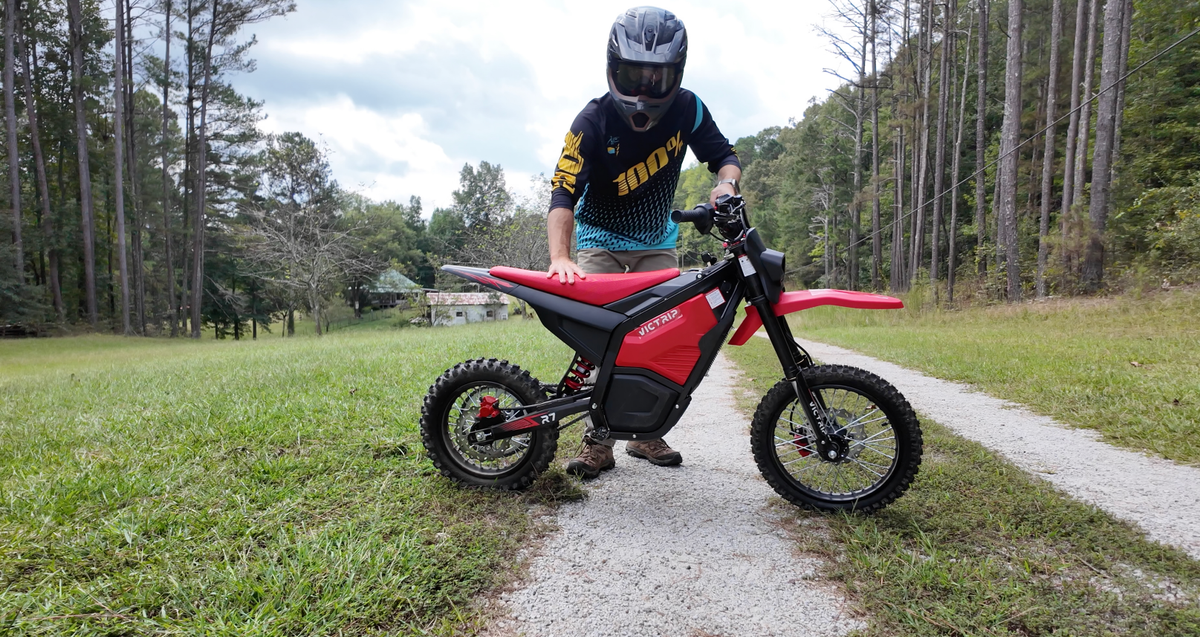
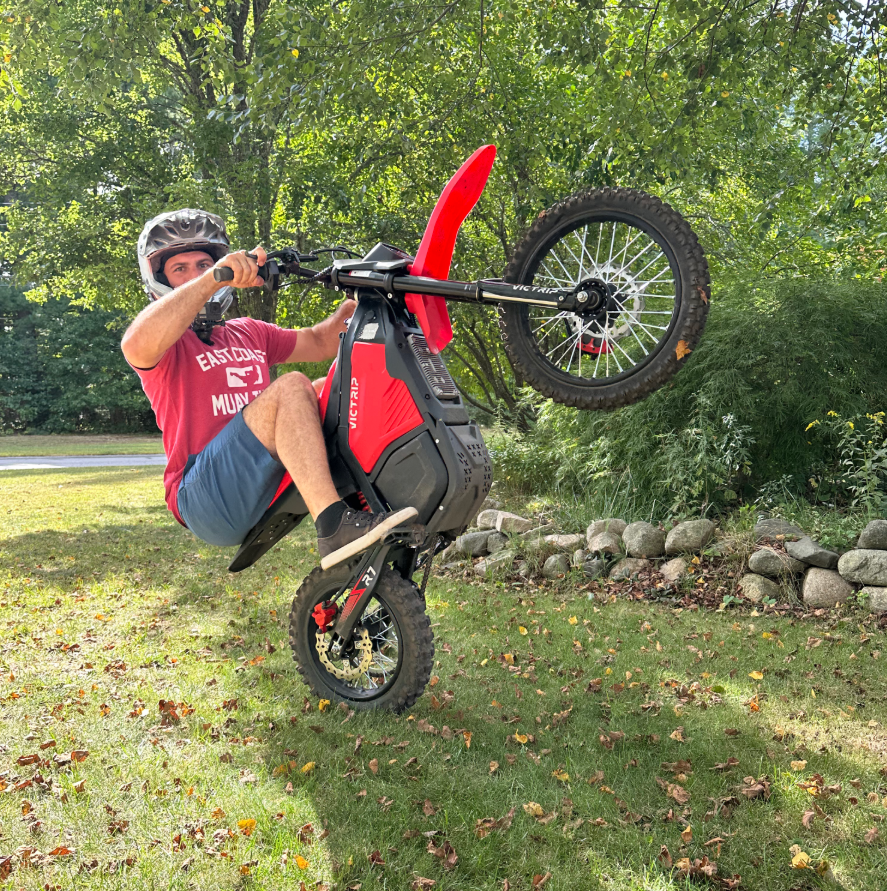
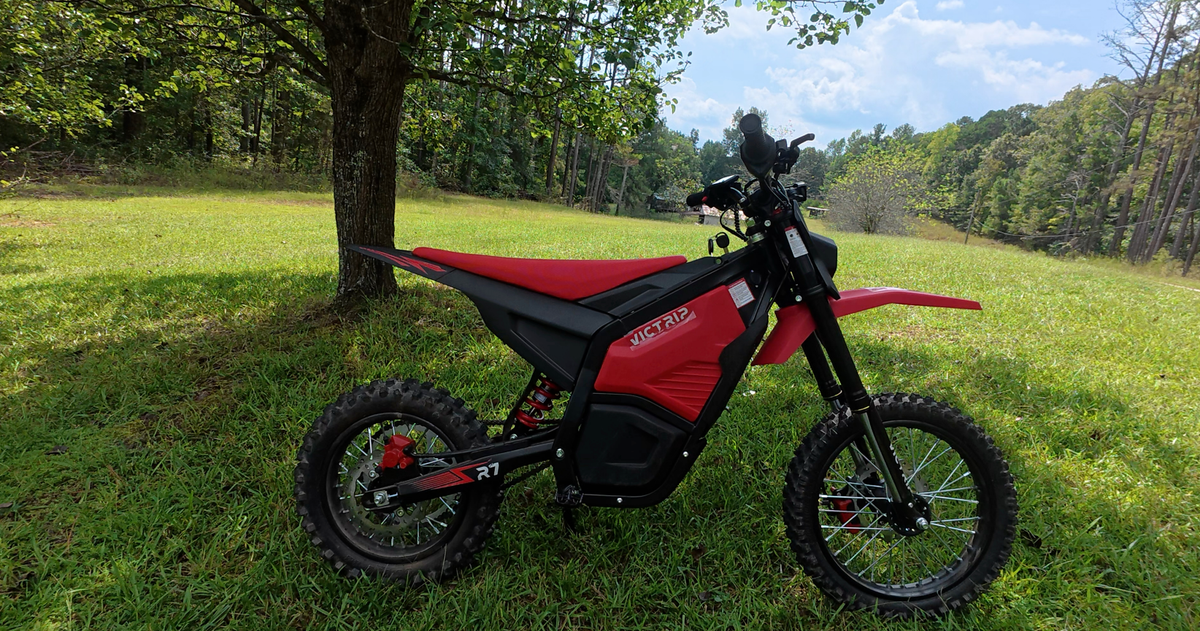
For example, higher-performance electric dirt bikes such as the VICTRIP R7 and R7 Pro place greater emphasis on motor, battery, suspension, and braking systems because they're designed around more demanding off-road performance. The important point when comparing models is to consider how those components work together rather than focusing on one specification.
Electric Dirt Bike Buying Mistakes to Avoid
Even after checking the major specifications, a few common mistakes can still lead to the wrong purchase.
Choosing the Highest Wattage
More motor power doesn't automatically mean a better bike for every rider.
Power should match the rider's experience, terrain, battery system, brakes, and chassis.
Trusting the Maximum Range
Maximum range is usually based on specific conditions. Your riding style may produce a different result.
Ignoring Bike Weight
A bike that's difficult to transport or maneuver can become frustrating even if it performs well on the trail.
Forgetting Replacement Parts
Before buying, find out whether you can purchase tires, brake pads, chargers, batteries, and other common components.
Comparing Price Only
Two bikes with similar prices can have very different batteries, suspension systems, brakes, warranties, and included equipment.
FAQs
What should you check before buying an electric dirt bike?
Check the motor, battery, range, suspension, brakes, tires, rider fit, bike weight, safety features, maintenance requirements, warranty, replacement parts, and local riding regulations.
Is full suspension necessary?
Not for every rider. Full suspension can be useful for rough trails, while front suspension may be sufficient for smoother terrain.
Are hydraulic brakes necessary?
Not necessarily, but hydraulic disc brakes can offer strong braking performance and consistent lever feel. The complete brake system should be evaluated rather than the brake type alone.
What safety gear should I use?
An appropriate helmet is essential. Depending on the terrain and riding style, riders may also use gloves, eye protection, boots, knee protection, elbow protection, and other protective equipment.
Should I buy an electric dirt bike based on price?
Price is only one factor. Compare the bike's specifications, warranty, parts availability, safety information, and expected maintenance before making a decision.
Final Electric Dirt Bike Buying Checklist
Before you buy, ask yourself:
- Where will I ride?
- Does the bike fit my height and weight?
- Is the motor output appropriate for my experience?
- Does the battery provide enough usable energy?
- Is the advertised range realistic for my riding style?
- Does the suspension suit my terrain?
- Are the brakes appropriate for the bike?
- Do the tires match the surfaces I'll ride?
- Can I comfortably transport and store the bike?
- Are replacement parts available?
- What does the warranty cover?
- Are there relevant safety certifications or listings?
- Is the bike legal to use where I plan to ride?
Conclusion
Knowing what should you check before buying an electric dirt bike makes it easier to look beyond marketing claims and compare bikes based on what actually matters.
Motor power and battery capacity are important, but they're only part of the picture. Suspension, brakes, tires, rider fit, weight, safety, maintenance, warranty, and local regulations should all be considered before you make your decision.
In short, don't shop for the biggest number on the specification sheet. Shop for the electric dirt bike that fits your rider, terrain, riding habits, and long-term needs.
Share:
Electric Dirt Bike for Teens: How Rider Height Affects Bike Choice
Electric Dirt Bike Charging Guide: How Long Does It Take?