


The world of off-road riding is undergoing a quiet revolution, and at its forefront is the electric dirt bike. What started as a niche offering has rapidly expanded into a diverse category, encompassing everything from lightweight mini electric dirt bikes perfect for backyard adventures to powerful, full-sized machines that can go head-to-head with traditional gas-powered motorcycles. This explosion in the market means more choices than ever for riders looking to experience the thrill of off-road without the noise, fumes, and maintenance often associated with gasoline engines.
These innovative vehicles utilize electric motors and battery packs to deliver instant torque and a surprisingly capable riding experience. They cater to a wide range of riders, from those seeking accessible off-road fun to serious enthusiasts looking for competitive performance. As the technology continues to advance, electric dirt bikes are becoming increasingly powerful, efficient, and affordable, making them a compelling option for anyone considering a foray into the dirt.
Choosing Your Ride: Key Factors to Consider
Selecting the right electric dirt bike involves understanding several crucial factors that impact performance, rideability, and overall enjoyment. We've broken down the most important considerations to help you make an informed decision.
Power and Top Speed
The power output of an electric dirt bike is measured in kilowatts (kW) and directly influences how hard the bike pulls. Top speed is another critical metric, indicating how fast the bike can go.
-
Mini Electric Dirt Bikes: These typically offer 3 to 4 kW of peak power and can reach top speeds between 37 and 45 mph. This is often ample for trail riding, backyard tracks, and recreational use.
-
Full-Sized Electric Dirt Bikes: For more demanding terrain and higher performance, full-sized models push past 20 kW and can achieve speeds upwards of 59 mph. Bikes like the Sur-Ron Ultra Bee HP, for example, boast 24.5 kW of peak power, allowing them to tackle difficult terrain with ease.
Motor Type: Hub vs. Mid-Drive
The type of motor significantly affects the bike's performance characteristics and maintenance requirements.
-
Hub Motors: These are generally more affordable and require less maintenance. They are integrated directly into the wheel hub.
-
Mid-Drive Motors: These motors transfer power through the chain, offering better climbing capabilities and a feel that more closely mimics a traditional dirt bike, especially on technical terrain.
Battery and Range
The battery is the heart of an electric dirt bike, determining how long you can ride and how consistently the bike can deliver power.
-
Amp-Hours (Ah): A higher amp-hour rating generally means longer rides and more sustained power output.
-
Ride Time: Expect most electric dirt bikes to provide one to two hours of hard trail riding on a single charge. For instance, the Sur-Ron Ultra Bee HP features a 74V 60Ah battery, designed for robust performance.
Suspension and Tires
For true off-road capability, robust suspension and appropriate tires are non-negotiable.
-
Suspension Travel: Look for bikes with real suspension travel. Inverted forks and adjustable rear shocks are indicators of a bike designed to handle rough terrain.
-
Tires: Knobby tires are essential for grip on loose surfaces. For challenging off-road conditions, 19-inch enduro wheels are often recommended.
Weight and Transport
The weight of your electric dirt bike can impact its transportability.
-
Mini Bikes: Lighter models, ranging from 105 to 125 pounds, are easier to load into a truck bed or onto a hitch rack by a single person.
-
Full-Sized Bikes: Heavier, full-sized models will require more effort or specialized equipment for transport. The Sur-Ron Ultra Bee HP, for example, weighs 187 lbs.
Pricing
The cost of an electric dirt bike varies widely depending on its size, power, battery capacity, and components.
-
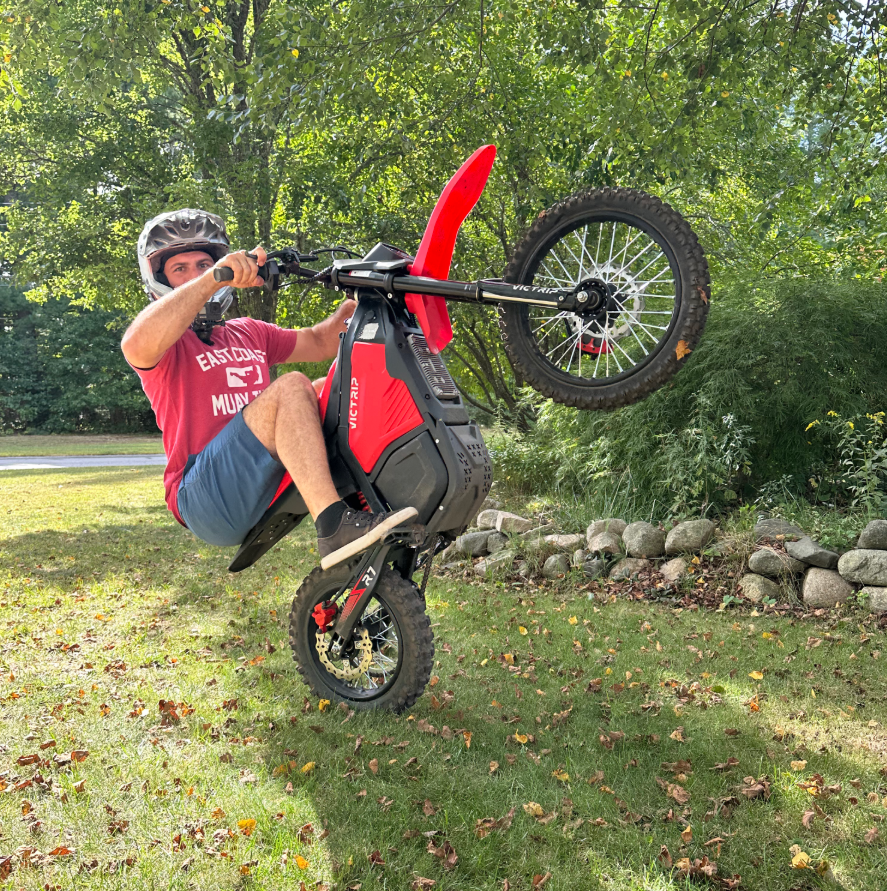
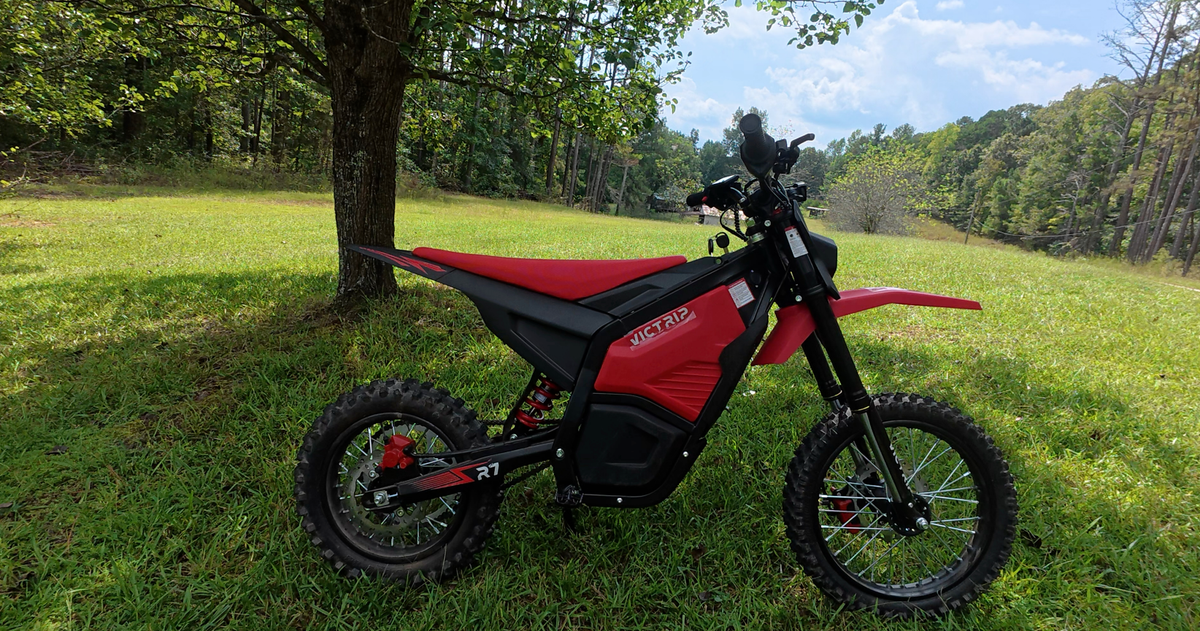
Quality Minis: These typically start around $1,200. The Aptum VM1, for instance, is a value pick at $999, while the VICTRIP R7 is priced at $1,199.
-
High-Performance Full-Sized Models: These can range from approximately $3,000 to $6,500. The Sur-Ron Ultra Bee HP is a premium option at $6,399.
TOP PICK

VICTRIP®R7 Electric Mini Bike Motorcycle
$1199.00
Street Legality and Regulations
One of the most common questions surrounding electric dirt bikes is their street legality. The answer, unfortunately, is not straightforward and varies significantly by location.
General Classification
Most electric dirt bikes are designed and sold as off-road only vehicles. They are generally classified as Off-Highway Vehicles (OHVs) in most states. This designation permits riding on private property and designated OHV trails but prohibits use on public roads.
-
No Standard E-Bike Classification: Due to their significant power output and lack of pedals, most adult electric dirt bikes do not fall under the standard three-tier e-bike classification system (Class 1, 2, or 3). Instead, they are often treated as motorized dirt bikes or OHVs.
-
State and Local Variation: Regulations can vary wildly from state to state, and even county to county. It's crucial to check with your local Department of Motor Vehicles (DMV) or Department of Natural Resources to understand specific classifications, trail access rules, and registration requirements in your area.
Making an Electric Dirt Bike Street Legal
While most are sold off-road only, it is often possible to convert an electric dirt bike to be street legal, though this process involves several steps and costs.
-
Lack of DOT Equipment and VINs: Most stock electric dirt bikes lack the necessary Department of Transportation (DOT) compliant equipment, Vehicle Identification Numbers (VINs), and registration required for street use.
-
Conversion Process: To make an electric dirt bike street legal, you typically need to:
-
Add DOT-compliant equipment (lights, mirrors, horn).
-
Obtain a VIN and title.
-
Register the vehicle as a motorcycle.
-
Secure insurance.
-
Obtain a Class M license endorsement.
-
Consider DOT street tires (optional but recommended).
-
-
Cost of Conversion: The cost for this conversion can range significantly. A DIY approach might cost approximately $475-$1,300 for the first year, while using services like DirtLegal.com, which can handle much of the paperwork for $400-$600, could bring the total to $850-$1,750 for the first year. Annual recurring costs for registration and insurance typically range from $230-$700 after the first year.
Read More: Do You Need a License for a Street Legal Electric Dirt Bike?
Where You Can Ride
-
Designated OHV Parks and Trails: Public OHV trail systems generally welcome electric dirt bikes under the same rules as gas bikes. Some may require an OHV sticker, typically costing $25-$75 per year. Examples include California SVRAs, Utah BLM land, and Michigan ORV trails.
-
Private Property: Riding on private property is permissible with the owner's permission.
-
Restricted Areas: It is illegal everywhere to ride electric dirt bikes on public roads, sidewalks, bike paths, multi-use trails, or any trail designated for bicycles and pedestrians. The significant speed and weight of these bikes pose serious safety risks when sharing space with pedestrians and cyclists.
Pricing and Popular Models
The market for electric dirt bikes offers a wide array of choices across various price points and performance levels. Here's a look at some popular models and their key specifications.
Mini Electric Dirt Bikes
Mini electric dirt bikes are designed for younger riders, beginners, and recreational use. Their compact frames and lower power outputs can make them easier to handle, although riders should still choose a bike appropriate for their age, size, and experience.
|
Model |
Price |
Weight |
Peak Power |
Top Speed |
|---|---|---|---|---|
|
Heybike Villain |
$1,199 |
125 lbs |
4.1 kW |
45 mph |
|
VICTRIP R7 |
$1,199 |
125 lbs |
4.0 kW |
45 mph |
The Heybike Villain offers an accessible entry point for riders looking for a compact electric dirt bike. The VICTRIP R7 provides more power and a higher advertised top speed for those seeking additional performance.
Mid-Range and Full-Sized Electric Dirt Bikes
Mid-Range and High-Performance Electric Dirt Bikes
For adult riders and experienced off-road enthusiasts, mid-range and high-performance electric dirt bikes offer greater power, higher speeds, and components designed for more demanding terrain. Options range from versatile recreational bikes to powerful machines built for aggressive off-road riding.
|
Model |
Price |
Peak Power |
Top Speed |
Best For |
|---|---|---|---|---|
|
VICTRIP R7 Pro |
Check current listing |
6,000W |
Up to 55 mph |
High-performance off-road riding |
|
Juiced Nomadix |
$2,499* |
15 kW* |
50+ mph* |
Performance-focused riding |
|
NIU XQi3 |
$3,999* |
10.6 kW* |
50 mph* |
Versatile off-road riding |
|
Solar E-Clipse 2.0 |
$5,695.99* |
12 kW* |
55 mph* |
Premium electric off-road riding |
|
Sur-Ron Ultra Bee HP |
$6,399* |
24.5 kW* |
59 mph* |
Demanding off-road performance |
For riders who want more power, the VICTRIP R7 Pro features a 6,000W peak mid-mounted motor, a 72V 25Ah LG battery, and an advertised top speed of up to 55 mph. Its performance-oriented design makes it a model to consider for riders who need stronger acceleration and more capability on challenging trails. Actual range and speed depend on rider weight, terrain, riding mode, and other conditions.
At the premium end, the Sur-Ron Ultra Bee HP offers substantially higher advertised peak power, while models such as the NIU XQi3 target riders looking for a combination of off-road performance and modern electric-bike technology.
Ultimately, the right electric dirt bike depends on more than peak power or top speed. Compare the total cost, battery range, rider fit, suspension, brakes, warranty, and local riding regulations before making a purchase.
FAQs
Are electric dirt bikes loud?
No, one of the significant advantages of electric dirt bikes is their quiet operation. Unlike their gas-powered counterparts, they produce minimal noise, making them ideal for areas where noise pollution is a concern and enhancing the rider's connection with nature.
How long does an electric dirt bike battery last?
Battery life, or range, depends on several factors, including battery capacity (measured in amp-hours), rider weight, terrain, and riding style. Generally, you can expect one to two hours of hard trail riding from the batteries on most popular models. Some models with larger batteries may offer longer ride times.
Can I ride an electric dirt bike in the rain or through water?
Most electric dirt bikes are designed to be water-resistant and can handle splashes and light rain. However, they are typically not fully waterproof, and submerging them in deep water can damage electrical components. Always check the manufacturer's specifications and recommendations regarding water exposure.
Do electric dirt bikes require much maintenance?
Compared to gas-powered dirt bikes, electric dirt bikes generally require less maintenance. There are no oil changes, spark plugs, air filters, or carburetor adjustments. Maintenance primarily involves checking tires, brakes, chain/belt, and suspension, similar to a bicycle, along with proper battery care.
How do electric dirt bikes perform compared to gas dirt bikes?
Electric dirt bikes offer instant torque, which can provide a powerful and responsive acceleration that many riders find exhilarating. While some high-end electric models can rival the power and speed of gas bikes, minis and entry-level electric bikes are generally not as powerful as full-sized gas motocross bikes. However, for trail riding and recreational use, electric models offer a unique and highly enjoyable experience with fewer emissions and noise.
What is the typical lifespan of an electric dirt bike battery?
The lifespan of an electric dirt bike battery depends on usage, charging habits, and storage conditions. Lithium-ion batteries, commonly used in these bikes, are typically rated for a certain number of charge cycles (e.g., 500-1000 cycles) before their capacity significantly diminishes. With proper care, a battery can last several years.
Conclusion: The Future of Off-Road Riding
The rise of the electric dirt bike marks an exciting new chapter in off-road riding. With advancements in battery technology, motor efficiency, and overall design, these bikes are becoming increasingly capable, diverse, and accessible. From the nimble Heybike Villain that offers incredible value to the powerhouse Sur-Ron Ultra Bee HP, there's an electric dirt bike to suit nearly every rider and budget.
While considerations like street legality and initial investment are important, the benefits of quiet operation, reduced maintenance, and instant torque make a compelling case for going electric. As regulations continue to evolve and technology progresses, we anticipate an even greater expansion of the electric dirt bike market, solidifying its place as a dominant force in the future of off-road adventures. Whether you're a seasoned rider or new to the dirt, exploring the world of electric dirt bikes promises an exhilarating and environmentally conscious way to hit the trails.
Share:
Electric Dirt Bike Battery Replacement Cost: What Owners Should Expect