


When shopping for a moped style eBike, it's easy to focus on motor power, battery capacity, tire size, and top speed. Weight, however, is one of the specifications that can have a major effect on the everyday riding experience.
A moped style eBike weight can influence how easily the bike accelerates, turns, stops, gets moved around, and fits into a garage or vehicle. A heavier bike isn't automatically a better bike, just as a lightweight bike isn't necessarily more practical.
The right weight depends on how and where you plan to ride.
For example, someone who mainly rides on paved streets may value a lighter frame that's easier to maneuver and transport. A rider who regularly travels over uneven ground may prefer the planted feeling of a heavier bike with larger tires, suspension, and a substantial frame.
The trick is to look at weight as part of the complete design rather than as an isolated number.
Weight and Riding Stability
Weight can contribute to a stable, planted feeling while riding. This can be especially noticeable on moped-style models with wide tires and motorcycle-inspired frames.
A heavier bike may feel less twitchy at higher speeds and can remain more settled over rough pavement. However, weight alone doesn't create stability. Wheelbase, tire size, suspension, frame geometry, and weight distribution all matter.
A well-designed bike should distribute its weight in a way that feels predictable rather than simply making the bike as heavy as possible.
Weight and Acceleration
Every eBike has to move both the rider and itself.
If two bikes use motors with similar output but one weighs considerably more, the heavier bike has more mass to accelerate. Battery charge, riding surface, rider weight, tire pressure, and motor characteristics also affect real-world acceleration.
That's why looking only at motor wattage can be misleading.
A high-powered moped style eBike is often designed with a larger battery, stronger frame, suspension components, and wider tires. Those additions can increase total weight, but they may also support the performance and riding conditions the bike was designed for.
Weight and Portability
Here's where weight becomes particularly important.
A bike that feels excellent on the road can be surprisingly difficult to lift into an SUV or carry up a flight of stairs. This is one reason buyers should consider where the bike will be stored and transported before purchasing.
Ask yourself:
- Do you need to lift the bike regularly?
- Will you transport it by car?
- Is your storage area upstairs?
- Can you use a ramp?
- Will someone help you move it?
- Do you have enough floor space for a larger frame?
If the answer to several of these questions is yes, a lighter model may be worth considering.
How Much Does a Moped Style eBike Weigh?
There isn't one standard weight for moped style eBikes. Depending on the frame, motor, battery, tires, suspension, and accessories, models can range from relatively manageable to very substantial.
As a general guide:
| eBike Category | Approximate Weight | Typical Characteristics |
|---|---|---|
| Lightweight | Under 55 lb | Smaller battery, simpler components |
| Mid-weight | 55–70 lb | Balanced commuter-oriented design |
| Heavy | 70–90 lb | Larger batteries, fat tires, suspension |
| Very heavy | 90+ lb | High-power systems and robust components |
These aren't strict industry categories. They're useful benchmarks for thinking about what you'll actually be comfortable handling.
A moped-style eBike with a large battery and fat tires can easily weigh significantly more than a conventional city eBike.
Lightweight Moped Style eBikes
Lightweight models are attractive because they're easier to move and maneuver.
They can work well for:
- Short urban trips
- Apartment storage
- Riders who frequently transport their bike
- Flat or moderately hilly roads
- Everyday commuting
The trade-off is that reducing weight often means using a smaller battery, narrower tires, fewer accessories, or a simpler frame.
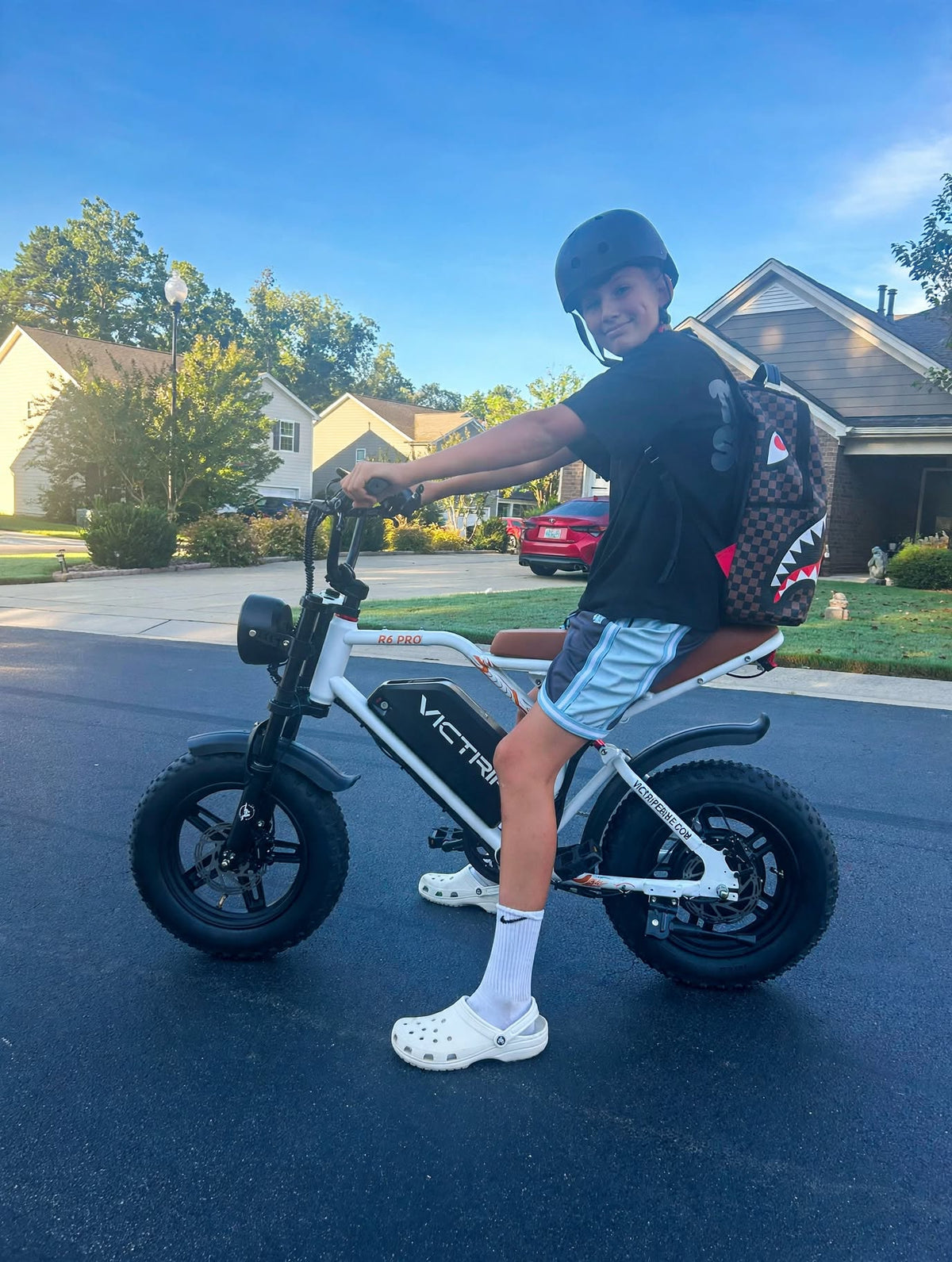
For riders who want a more substantial option without giving up the convenience of a moped-style design, the VICTRIP R6 Pro 1500w moped style ebike offers a different balance. Its full-suspension frame, fat tires, and larger battery are suited to riders who want more stability, comfort, and range for longer commutes or mixed-surface riding. It is less focused on being ultra-lightweight and instead prioritizes ride comfort and overall capability, making it a practical choice for riders who need more than a basic lightweight commuter.
Mid-Weight Models
For many riders, the mid-weight range offers a useful compromise.
These bikes can provide enough frame strength, battery capacity, and equipment for daily riding without becoming extremely difficult to handle.
A mid-weight moped-style eBike may be particularly suitable for riders who:
- Commute regularly
- Need moderate range
- Want comfortable tires
- Occasionally transport the bike
- Ride both pavement and light trails
This category is often where practicality and performance meet.
Heavy Moped Style eBikes
Heavy models typically prioritize capability over portability.
They may feature:
- High-capacity batteries
- Powerful motors
- Fat tires
- Full suspension
- Hydraulic disc brakes
- Reinforced frames
- Large seats
- Rear racks or other accessories
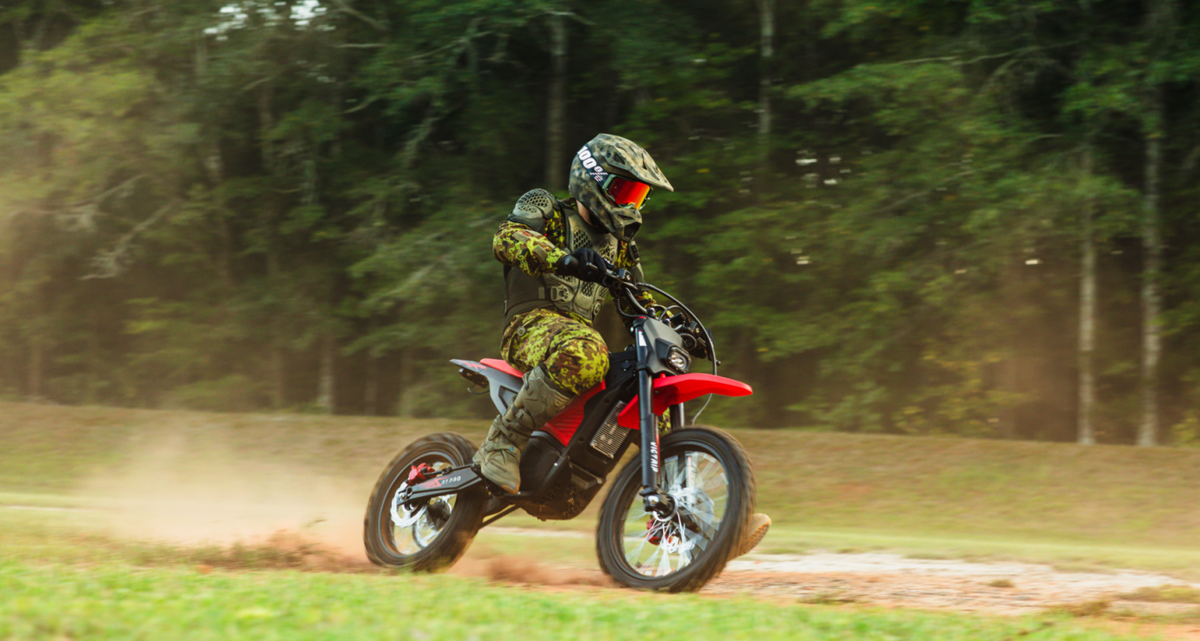
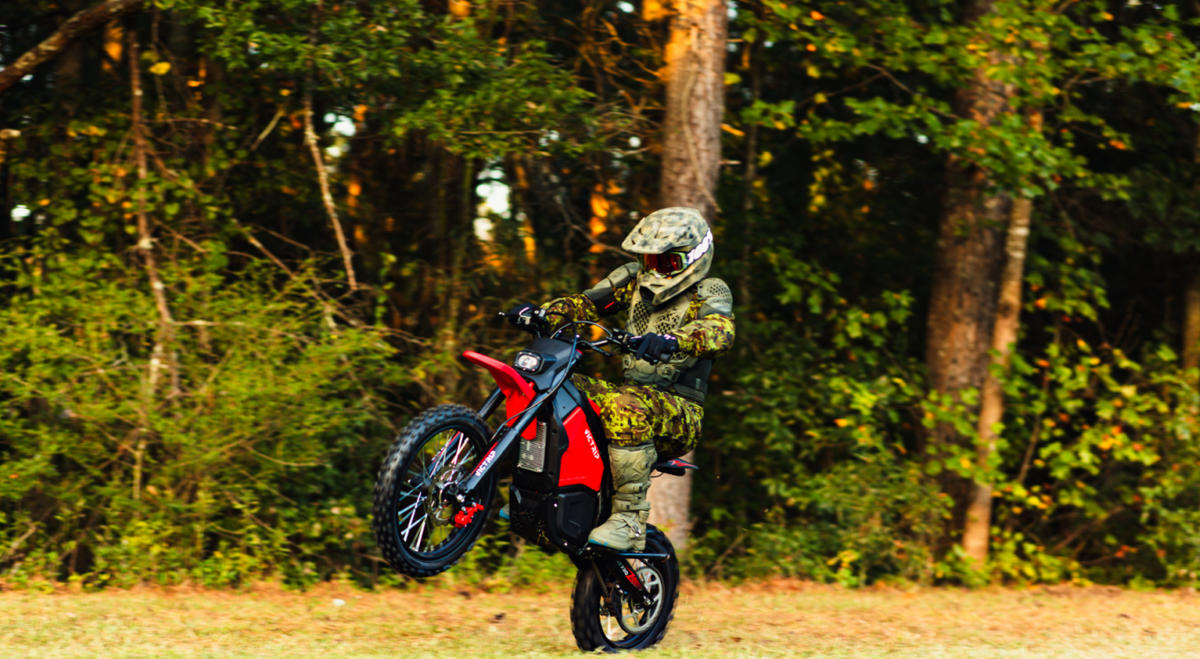
For example, the VICTRIP R7 Pro is built around a high-power electric dirt-bike-style platform, so its substantial construction is part of the design rather than an accidental drawback. The important point is that a heavier bike should offer a reason for its weight.

What Makes a Moped Style eBike Heavy?
Several components contribute to total eBike weight. Understanding them makes it much easier to compare models.
Battery
The battery is usually one of the largest contributors.
Higher-capacity batteries contain more cells, which generally means more weight. A large battery can provide greater energy capacity and potentially longer riding range, but there's a physical trade-off.
In simple terms:
More battery capacity → more energy storage → potentially more weight.
Battery placement matters, too. A centrally positioned battery can help keep the bike balanced even when the battery itself is relatively heavy.
Motor
Motor weight varies depending on design and output.
A compact commuter motor may be relatively light, while a high-output system can require larger components and stronger supporting parts.
The motor isn't the only factor. A high-power motor may also require a more robust controller, wiring, frame, brakes, and drivetrain.
Frame and Suspension
Moped-style eBikes often have larger frames than traditional commuter eBikes.
Suspension also adds weight. Forks, rear shocks, swingarms, pivots, and mounting hardware all contribute to the final number.
But this extra hardware can serve an important purpose.
If you ride over potholes, gravel, dirt, roots, or other uneven surfaces, suspension can improve comfort and control.
Tires and Wheels
Fat tires are another major factor.
A 4-inch-wide tire contains more rubber and material than a narrow road tire. Larger rims and stronger spokes can add even more.
The benefit is increased tire volume and a larger contact area, which can be useful on loose or uneven terrain.
The downside? You guessed it: weight.
Is a Heavier eBike Better?
Not necessarily.
A heavier eBike can be better for a particular type of riding, while a lighter bike may be better for another.
When More Weight Helps
Additional weight can be beneficial when it comes from useful components.
For example, a substantial frame and wide tires may help create a stable platform for off-road riding.
Other potential benefits include:
- Greater stability
- Robust frame construction
- Larger battery capacity
- More substantial suspension
- Better support for higher system loads
- More equipment and accessories
This is particularly relevant to riders who prioritize trail capability or high-power performance.
When Less Weight Is Better
A lighter bike generally has advantages when portability is important.
Lower weight can make it easier to:
- Carry up stairs
- Load onto a vehicle
- Move through a garage
- Turn at low speeds
- Push when the motor isn't running
- Store in smaller spaces
If you live in a walk-up apartment and need to carry your eBike every day, shaving 20 pounds can make a much bigger difference than gaining a little extra motor power.
How Rider Weight Changes the Equation
The bike isn't the only thing being moved.
When considering an eBike's capabilities, think about total system weight:
Bike weight + rider weight + cargo weight = total moving weight
For example, a 65-pound eBike carrying a 180-pound rider and 10 pounds of cargo has a total system weight of 255 pounds.
That number matters for acceleration, braking, climbing, range, and component load.
This is also why manufacturers provide maximum payload or weight ratings. You shouldn't assume that a bike's frame can safely carry unlimited additional weight simply because the motor is powerful.
Always check the manufacturer's specifications before adding heavy cargo or accessories.
Moped Style eBike Weight vs Traditional eBike
Moped-style eBikes generally have a different design philosophy from lightweight city eBikes.
| Feature | Traditional eBike | Moped Style eBike |
|---|---|---|
| Frame | Usually lighter | Often larger and stronger |
| Tires | Narrow to moderate | Often wider |
| Battery | Small to medium | Medium to large |
| Seat | Bicycle-style | Often longer and wider |
| Suspension | Optional/common | Frequently emphasized |
| Portability | Usually better | Often lower |
| Riding position | Upright or hybrid | More relaxed/moped-inspired |
| Typical use | Commuting/recreation | Commuting, recreation, mixed terrain |
Neither design is universally better.
A traditional eBike can be easier to carry and pedal. A moped-style model may provide a more substantial riding platform and accommodate larger tires, batteries, and suspension systems.
Your riding environment should determine which trade-offs make sense.
How to Choose the Right eBike Weight
Instead of asking, "What's the ideal moped style eBike weight?", ask:
"What's the heaviest bike I can comfortably use for my actual riding routine?"
That's a much more useful question.
For Daily Commuting
If you commute every day, consider the entire route.
A heavier bike can still be practical if you:
- Store it at ground level
- Have secure parking
- Don't need to lift it
- Ride mostly on pavement
- Want a larger battery
If stairs or public transportation are involved, however, weight becomes much more important.
For Off-Road Riding
Off-road riders often have different priorities.
A little extra weight may be acceptable if it comes with:
- Better suspension
- Wider tires
- A stronger frame
- Larger battery capacity
- More powerful components
Still, heavier doesn't mean easier off-road. If you need to maneuver the bike around obstacles or pick it up after a fall, excessive weight can become a disadvantage.

For Longer Rides
For longer rides, don't judge a bike solely by its weight.
A larger battery may add several pounds but provide considerably more usable energy.
Likewise, comfortable suspension and tires may make a heavier bike more enjoyable over a long ride.
The goal isn't minimum weight. It's useful weight.
How to Transport a Heavy eBike
If you're considering a heavier moped-style eBike, think about transportation before buying it.
Use a Suitable Bike Rack
Not every standard bicycle rack is designed for heavy electric bikes.
Check:
- Maximum rack capacity
- Maximum weight per bike
- Tire compatibility
- Frame compatibility
- Hitch size
- Loading height
For particularly heavy models, a heavy-duty hitch rack may be more practical than a roof-mounted system.
Use a Ramp
A small loading ramp can make a big difference.
Instead of lifting the entire bike, you can roll it into a truck bed, trailer, or suitable vehicle platform.
This is especially useful for riders who don't regularly have another person available to help.
Remove the Battery When Appropriate
If the manufacturer allows battery removal, taking out the battery before transportation can reduce the lifting weight.
However, don't remove components simply to make transportation easier unless they're designed to be removed by the user.
7 Key Factors to Check Before Buying
Weight should be considered alongside these seven factors:
- Total bike weight — Know what you'll actually need to move.
- Maximum payload — Include rider and cargo.
- Battery capacity — More capacity can add weight but extend range.
- Motor output — Match power to your terrain and intended use.
- Tire size — Wider tires often add weight but improve traction and comfort.
- Suspension — Useful for rough terrain but contributes to overall mass.
- Storage and transportation — Make sure you can realistically move the bike.
This approach gives you a much better picture than comparing one specification on a product page.
FAQs
Does a heavier eBike have more power?
Not automatically. Weight and motor output are separate specifications. Heavier bikes often have larger motors and batteries, but you should always check the actual specifications.
Does eBike weight affect range?
Yes, but it's only one factor. Rider weight, terrain, speed, tire pressure, wind, temperature, battery capacity, and riding mode can all affect range.
Are moped style eBikes heavier than regular eBikes?
Generally, many moped-style models are heavier because they use larger frames, seats, batteries, tires, suspension systems, and other components. However, actual weight varies considerably.
Should I choose a heavier eBike for off-road riding?
Not simply because it's heavier. Look for the complete package: appropriate suspension, tires, frame strength, brakes, motor, battery, and suitable weight capacity.
Can I make a heavy eBike lighter?
Sometimes. Removing accessories or using lighter components can reduce weight, but you shouldn't remove safety-critical equipment or modify the bike beyond the manufacturer's recommendations.
Conclusion: Find the Right Balance
The ideal moped style eBike weight isn't a single number.
A lightweight model may be perfect for someone who carries their bike upstairs every evening. A heavier model may make more sense for someone who wants a large battery, fat tires, suspension, and a stable platform for mixed-terrain riding.
The key is to consider why the bike weighs what it weighs.
If the extra pounds come from useful components that support your riding style, they may be well worth carrying. If you rarely need those features and frequently need to lift or transport the bike, a lighter design could be the smarter choice.
In the end, the best eBike isn't necessarily the lightest or the most powerful. It's the one whose weight, components, performance, and practicality match the way you actually ride.
Share:
Moped Style eBike vs Step-Through eBike: What's the Difference?
48V vs 60V vs 72V Electric Dirt Bikes: What's the Difference?