


When shopping for an electric dirt bike, motor power is one of the first specifications you'll notice. A 4000W electric dirt bike sounds dramatically more powerful than a 2000W model, and on paper, the difference looks huge.
But does twice the wattage automatically mean twice the performance?
Not necessarily.
Motor wattage matters, but it's only one part of the equation. Battery voltage, battery capacity, controller output, motor efficiency, gearing, tire size, rider weight, suspension, terrain, and even throttle tuning can change how a bike feels on the trail.
That's why the question isn't simply whether a 4000W electric dirt bike is better than a 2000W electric dirt bike. The better question is: Which power level matches the way you actually ride?
A 4000W machine can provide stronger acceleration, better hill-climbing ability, and more performance headroom. However, it may also consume more energy, require stronger components, and demand more skill from the rider.
Meanwhile, a 2000W electric dirt bike can deliver plenty of usable performance for recreational trail riding, beginner-friendly off-road riding, and riders who don't need maximum acceleration.
So, before chasing the biggest number on the specification sheet, let's break down what 2000W and 4000W really mean in the real world.
1. What Does Motor Wattage Really Mean?
Motor wattage is a measurement of electrical power.
In simple terms, a higher wattage motor has the potential to deliver more power to the drivetrain. However, the actual performance you experience depends on the complete electrical and mechanical system.
For example, two electric dirt bikes can both be advertised with a 2000W motor but feel very different.
One may have:
- A higher-voltage battery
- A stronger controller
- Better thermal management
- A more responsive throttle
- More efficient motor construction
- Different gearing
- Larger off-road tires
The same principle applies to 4000W models.
Rated Power vs Peak Power
This distinction is extremely important.
A manufacturer may advertise a motor's rated power, while another may emphasize its peak power. Peak power is usually available for shorter periods, such as during hard acceleration or hill climbing.
Therefore, comparing a 4000W peak motor directly with a 2000W rated motor can create a misleading impression.
When comparing electric dirt bikes, look at the entire power system rather than a single wattage figure.
Why Voltage Matters
Electrical power is related to voltage and current:
Power = Voltage × Current
This means a higher-voltage system can potentially deliver substantial power without relying on extremely high current.
Higher voltage can also help reduce certain electrical losses and support stronger performance when the controller, battery, motor, and wiring are properly matched.
So, don't judge a dirt bike only by whether it says "2000W" or "4000W."
Read More: Volts vs Watts: What’s the Difference and Why It Matters?
2. 4000W Electric Dirt Bike vs 2000W: Acceleration
Acceleration is where the difference between these power classes can become obvious.
A 4000W electric dirt bike generally has more power available for rapid acceleration, especially when the controller and battery can supply the necessary current.
When you twist the throttle, the motor can generate strong torque and push the bike forward quickly.
Why More Power Feels Different
More power can be particularly noticeable when:
- Starting from a stop
- Riding uphill
- Accelerating through loose terrain
- Carrying a heavier rider
- Exiting corners
- Riding through sand
- Climbing steep trails
A 2000W model may still accelerate quickly, but a properly configured 4000W bike can have significantly more headroom.
That extra power can make the bike feel less strained under demanding conditions.
More Power Doesn't Always Mean Better Acceleration
Here's the catch.
If the battery can't provide enough current, or if the controller limits the motor, a larger motor won't necessarily deliver its theoretical maximum output.
The same goes for traction.
A powerful motor can't magically overcome a tire that can't grip the ground. If the rear wheel spins excessively, some of that extra power is simply wasted.
That's why motor power and tire performance need to work together.
3. Top Speed: Is 4000W Automatically Faster?
Not always.
Motor power can contribute to higher speed, but top speed also depends on:
- Battery voltage
- Controller limits
- Motor RPM
- Gearing
- Wheel diameter
- Aerodynamic resistance
- Rider weight
- Terrain
- Manufacturer programming
A 4000W electric dirt bike may be capable of substantially higher speeds than a 2000W model, but manufacturers can electronically limit speed.
This is especially important because electric dirt bikes are used in very different environments.
A bike designed for technical trails may prioritize torque and control instead of maximum speed. Another model may be tuned for open off-road terrain.
Speed Isn't the Same as Performance
For off-road riding, raw top speed isn't always the most useful specification.
Consider a narrow forest trail filled with:
- Rocks
- Roots
- Tight corners
- Mud
- Uneven ground
- Short climbs
A rider may spend more time accelerating, braking, and changing direction than riding at maximum speed.
In this situation, controllable torque and suspension performance may matter more than an extra 10 or 20 mph of potential speed.
4. Hill Climbing: Where Extra Power Can Shine
Hill climbing is one of the strongest arguments for choosing a higher-power electric dirt bike.
When climbing a steep hill, the motor must overcome gravity, rolling resistance, tire resistance, and the combined weight of the bike and rider.
A 4000W system can provide more power reserve when conditions become difficult.
2000W on Hills
A 2000W electric dirt bike can perform well on moderate hills, especially when:
- The rider is relatively light
- The battery is well charged
- The tires have good traction
- The surface is firm
- The bike is geared appropriately
However, steep inclines can expose the limitations of a lower-power setup.
The motor may need to operate closer to its limits, and battery consumption can increase significantly.
4000W on Steep Terrain
A 4000W electric dirt bike offers greater performance headroom.
This can be valuable for riders who regularly encounter:
- Steep trails
- Rocky climbs
- Loose dirt
- Sand
- Mud
- Technical off-road sections
The important word here is headroom.
You don't necessarily need to use all 4000W all the time. Instead, having additional power available means the bike doesn't have to work as hard when conditions become demanding.

5. Battery Capacity and Riding Range
There's another side to the power equation: energy consumption.
A more powerful motor can consume more energy when ridden aggressively.
This means a 4000W electric dirt bike isn't automatically going to have longer range than a 2000W model.
In fact, if two bikes have similar battery capacities and the 4000W model is ridden aggressively, the higher-power bike may drain its battery faster.
Battery Capacity Matters
Battery energy is commonly expressed in watt-hours (Wh).
You can estimate battery energy with:
Battery Voltage × Amp-Hours = Watt-Hours
For example, a 48V 20Ah battery has approximately:
48 × 20 = 960Wh
Actual usable energy will vary because of factors such as battery management, temperature, rider load, terrain, speed, and riding style.
Why Riding Style Matters
Imagine two riders using the same 4000W electric dirt bike.
Rider A cruises smoothly and uses moderate throttle.
Rider B repeatedly launches at full throttle, climbs steep hills, and rides through sand.
Their range can be dramatically different.
So, when comparing 2000W and 4000W electric dirt bikes, don't look at motor wattage alone. Compare the battery as well.
| Specification | 2000W Bike | 4000W Bike |
| Motor power | Lower | Higher |
| Potential acceleration | Strong | Very strong |
| Hill climbing | Good | Excellent potential |
| Energy demand under hard riding | Moderate | Higher |
| Range potential | Depends on battery | Depends on battery |
| Power reserve | Moderate | High |
| Beginner friendliness | Generally easier | Requires more control |
6. Weight and Handling
More power often comes with additional hardware.
A high-output electric dirt bike may require:
- A larger motor
- A larger battery
- A stronger controller
- Heavier wiring
- More robust drivetrain components
- Larger brakes
- Stronger suspension components
As a result, some 4000W bikes can be heavier than 2000W alternatives.
Weight isn't necessarily bad.
A heavier bike can feel planted and stable at speed. However, it can also require more effort when changing direction, lifting the bike, or navigating tight technical trails.
Lightweight vs High-Power
If your favorite trails are narrow and technical, a lighter bike can be incredibly enjoyable.
If you ride fast across open terrain, stability and power may become more important.
There's no universal winner.
The ideal combination depends on your riding environment.
7. Suspension and Brakes Become More Important
This is one area riders sometimes overlook.
More motor power means the bike can accelerate harder and potentially travel faster.
Therefore, the rest of the motorcycle-like system needs to support that performance.
A high-power electric dirt bike should have appropriate:
- Front suspension
- Rear suspension
- Frame strength
- Brake performance
- Tires
- Wheels
- Chain or belt system
- Steering components
Braking Is Especially Important
A bike capable of strong acceleration needs reliable braking.
Hydraulic disc brakes are common on performance-oriented electric dirt bikes because they can provide strong stopping performance and good modulation.
But brake size and quality aren't the only factors.
Tire grip, rider technique, terrain, and suspension setup also influence stopping distance.
More power should never be viewed in isolation.
8. Heat Management and Motor Efficiency
Electric motors aren't perfectly efficient.
Some electrical energy becomes mechanical energy, while some is lost as heat.
When a motor is pushed hard for extended periods, heat can build up.
This matters especially during:
- Long hill climbs
- Sand riding
- Heavy loads
- Repeated acceleration
- Hot weather
- Low-speed technical riding
A 4000W electric dirt bike needs an electrical system capable of supporting its output.
Why Controllers Matter
The controller manages how electrical energy is delivered to the motor.
A well-matched controller can help provide smooth throttle response and efficient power delivery.
An improperly matched system may create unnecessary heat or fail to deliver the performance expected from the motor rating.
This is another reason not to compare bikes using wattage alone.
9. Rider Skill Makes a Huge Difference
A 4000W electric dirt bike can be exciting, but it can also be demanding.
More power means the throttle can produce stronger reactions.
For experienced riders, that's often part of the fun.
For beginners, it may make learning more difficult.
A 2000W bike can provide a more manageable platform for learning:
- Throttle control
- Body positioning
- Cornering
- Braking
- Hill climbing
- Loose-surface riding
Once those skills become natural, stepping up to a higher-power bike may make sense.
Don't Buy Power You Can't Use
It's tempting to think:
"If 2000W is good, 4000W must be better."
But that's not always true.
If you spend most of your time on easy trails, a 4000W bike may offer performance you rarely use.
In that case, spending more on better suspension, tires, brakes, or battery capacity could provide a bigger improvement to your riding experience.
10. Safety Considerations for High-Power Electric Dirt Bikes
Safety should be part of the power comparison from the beginning.
Higher acceleration and speed can increase the consequences of mistakes. Riders should choose protective equipment appropriate for off-road riding, including a properly fitted helmet, gloves, eye protection, boots, and protective clothing.
The U.S. Consumer Product Safety Commission also emphasizes using micromobility products and batteries designed, manufactured, and certified to applicable safety standards. Its current guidance warns against modified or reworked battery packs and recommends proper handling and disposal of lithium-ion batteries.
External safety resource: U.S. Consumer Product Safety Commission – Micromobility Safety
Battery Safety Matters
A high-power bike places substantial demands on its electrical system.
Look for:
- Quality battery cells
- A suitable battery management system
- Proper wiring
- Appropriate connectors
- Correct charger
- Good thermal management
- Clear manufacturer specifications
Never modify a lithium-ion battery unless the work is performed by a qualified professional using appropriate components.
Check Local Laws
Another important point is legality.
The terms "electric dirt bike," "electric motorcycle," and "e-bike" don't necessarily have the same legal meaning.
Rules concerning:
- Motor power
- Speed
- Throttle operation
- Registration
- Insurance
- Helmet requirements
- Road use
- Off-road access
can vary significantly by country, state, and local jurisdiction.
A 4000W electric dirt bike may be treated very differently from a low-speed electric bicycle.
Always check the rules that apply where you intend to ride.
11. Cost and Long-Term Value
A higher-power electric dirt bike can cost more, but purchase price isn't the whole story.
Consider the total ownership cost.
A high-performance bike may require stronger or more expensive:
- Tires
- Brake components
- Chains
- Sprockets
- Suspension parts
- Batteries
- Chargers
Aggressive riding can also accelerate wear.
On the other hand, a well-built 4000W machine may offer more performance headroom and remain useful as the rider gains experience.
Where Should You Spend Your Budget?
If your budget is limited, don't automatically put every dollar toward motor power.
A balanced electric dirt bike with a good battery, quality suspension, dependable brakes, and suitable tires can be much more enjoyable than a high-wattage bike with weak supporting components.
The goal is a complete system.
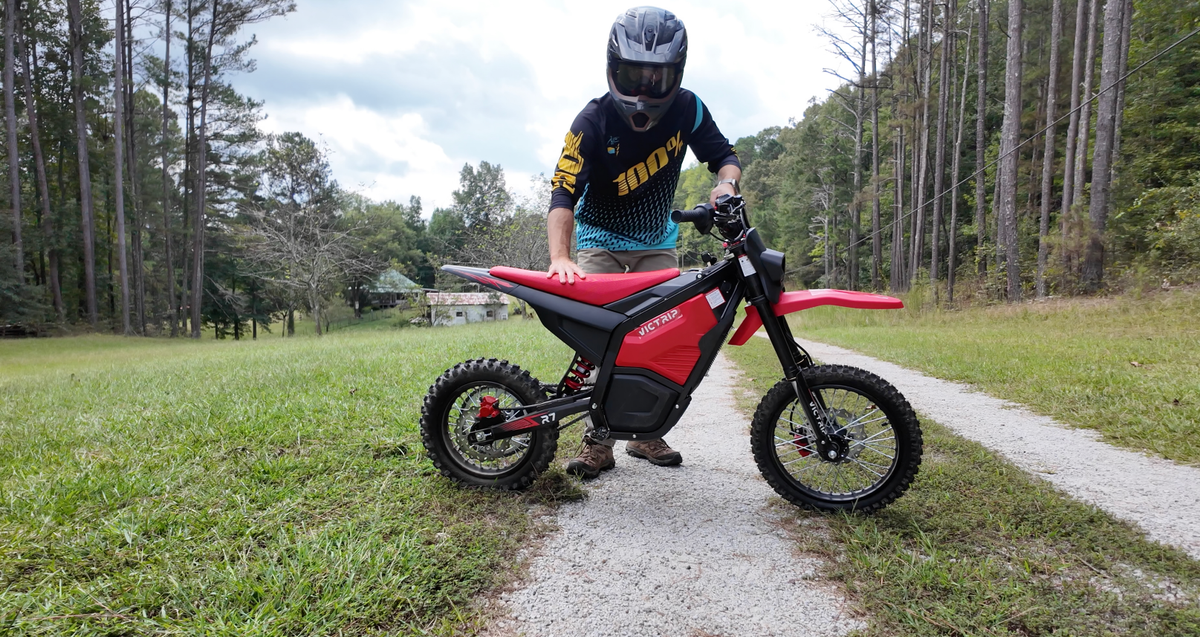
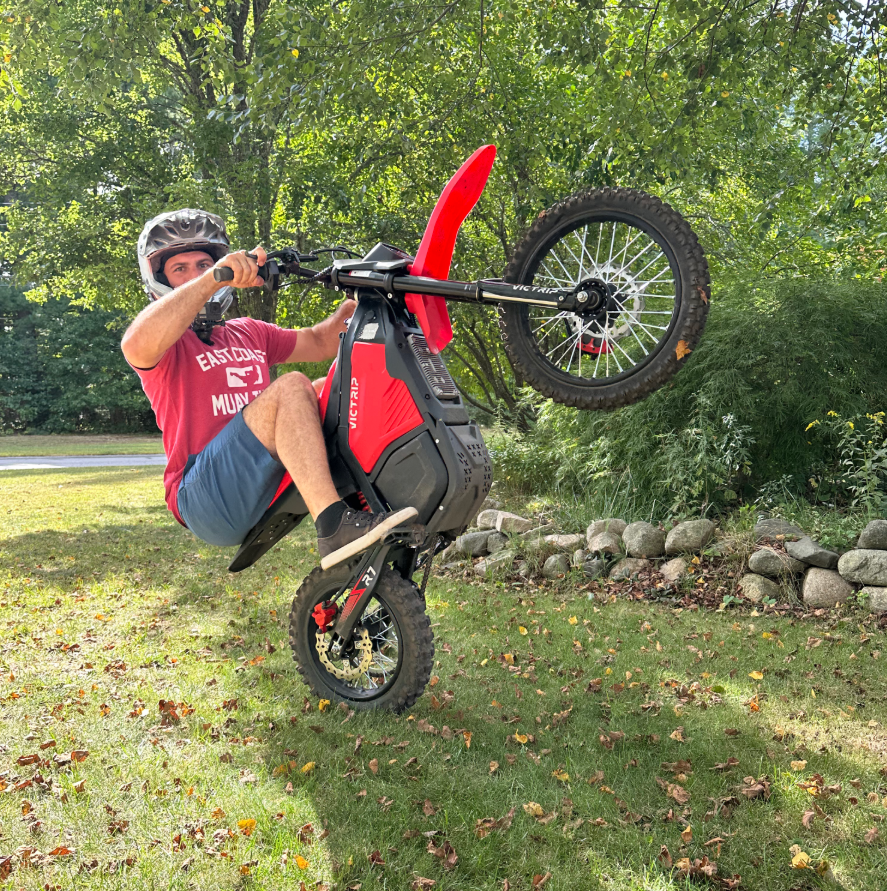
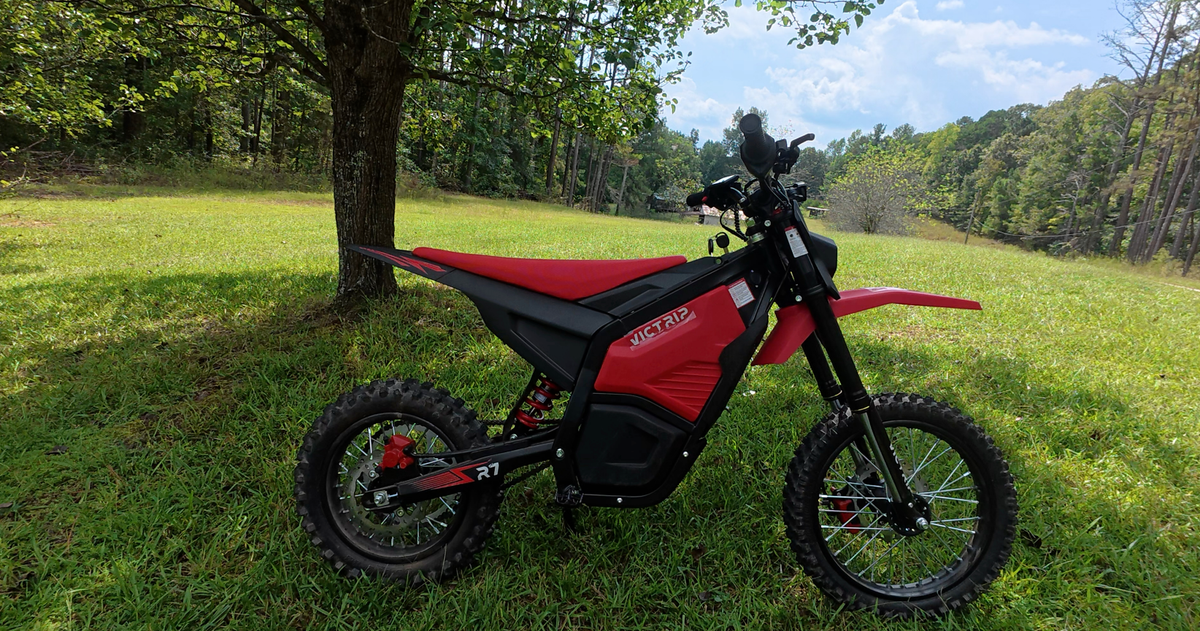
TOP PICK

VICTRIP®R7 Electric Mini Bike Motorcycle
$1599.00
12. When Does a 4000W Electric Dirt Bike Make Sense?
A 4000W electric dirt bike can be a strong choice if you want serious off-road performance.
It's particularly attractive for experienced riders who frequently ride:
- Steep hills
- Open trails
- Rocky terrain
- Sand
- Mud
- Technical climbs
- High-speed off-road sections
It can also make sense for heavier riders who need additional power reserve.
Main Advantages
1. Strong acceleration
Extra motor output can deliver a more aggressive throttle response.
2. Better climbing potential
More power can help maintain momentum on steep terrain.
3. More performance headroom
The motor doesn't have to work as close to its limits in demanding situations.
4. Better suited to experienced riders
Those who already understand throttle control can make better use of the extra output.
5. Fun factor
Let's be honest—strong acceleration can be a blast.
13. When Is a 2000W Electric Dirt Bike the Better Choice?
A 2000W electric dirt bike can be the smarter option for riders who want usable performance without going overboard.
It's often a better fit when:
- You're relatively new to electric dirt bikes
- You ride recreationally
- Your trails aren't extremely steep
- You prioritize manageable handling
- You want lower energy demand
- Your budget is limited
- You don't need extreme acceleration
For many riders, 2000W is already plenty.
The best dirt bike isn't the one with the biggest specification. It's the one that gives you enough performance for your actual riding conditions.
14. 4000W Electric Dirt Bike vs 2000W: Complete Comparison
| Category | 2000W Electric Dirt Bike | 4000W Electric Dirt Bike |
| Acceleration | Strong | Very strong |
| Hill climbing | Good | Excellent potential |
| Top-speed potential | Moderate to high | High |
| Energy consumption | Generally lower | Generally higher under hard riding |
| Rider control | Easier to manage | Requires more skill |
| Technical trails | Often easier | Powerful but potentially demanding |
| Open terrain | Good | Excellent |
| Beginner suitability | Generally better | Better for experienced riders |
| Battery requirements | Moderate | More demanding |
| Component demands | Moderate | Higher |
| Maintenance potential | Moderate | Potentially higher |
| Performance headroom | Good | Excellent |
| Best use | Recreational off-road | Performance-oriented off-road |
15. How to Choose the Right Power Level
Instead of asking, "How much power can I get?" ask these seven questions.
1. What Terrain Do You Ride?
Flat dirt paths don't require the same output as steep mountain trails.
2. How Experienced Are You?
If you're still learning throttle and braking control, moderate power can make the learning process easier.
3. How Much Do You Weigh?
Rider weight affects acceleration and climbing performance.
4. Do You Ride in Sand or Mud?
Loose surfaces often require more torque and traction.
5. How Important Is Range?
If range is a priority, examine battery capacity rather than simply choosing the highest motor rating.
6. Do You Want Maximum Speed?
If yes, examine the complete drivetrain and manufacturer's speed specification instead of assuming more watts automatically means more speed.
7. What's Your Budget?
A balanced 2000W bike may offer better overall value than an unnecessarily powerful 4000W model.
17. Is More Power Always Better?
The short answer is no.
More power is better when you actually need more power.
A 4000W electric dirt bike can offer impressive acceleration, climbing ability, and performance potential. But those advantages come with trade-offs.
You may have:
- Higher energy consumption
- More demanding throttle response
- Greater component stress
- More weight
- Higher purchase costs
- Greater responsibility for rider control
A 2000W bike, meanwhile, may deliver a better balance for recreational riders.
Think of it like buying a pickup truck.
A powerful truck is fantastic if you're towing heavy loads every week. But if you're mainly driving around town, you may not benefit from all that extra capability.
Electric dirt bikes work in much the same way.
FAQs
Is a 4000W electric dirt bike twice as fast as a 2000W bike?
No. Motor wattage doesn't translate directly into top speed. Battery voltage, controller settings, gearing, motor RPM, wheel size, rider weight, aerodynamics, and terrain all influence speed.
Is 2000W enough for off-road riding?
For many recreational riders, yes. A properly designed 2000W electric dirt bike can provide strong acceleration and useful hill-climbing performance, especially on moderate terrain.
Is a 4000W electric dirt bike good for beginners?
It can be more difficult for a beginner to control because of its stronger acceleration and higher performance potential. New riders should prioritize controllability, appropriate riding areas, protective equipment, and skill development.
Does a 4000W motor use more battery?
It can, especially when ridden aggressively. Actual consumption depends on riding style, terrain, rider weight, battery capacity, speed, temperature, and system efficiency.
Which is better for steep hills, 2000W or 4000W?
Generally, a 4000W system has more power reserve and can be better suited to steep climbs. However, traction, gearing, battery output, rider weight, and tire design also play major roles.
Conclusion: Choose the Power You Can Actually Use
The 4000W electric dirt bike vs 2000W debate doesn't have one universal winner.
A 4000W electric dirt bike offers more performance potential. It's better suited to riders who want strong acceleration, steep hill-climbing ability, and extra power reserve for challenging terrain.
A 2000W electric dirt bike, however, can be an excellent all-around option for recreational riders, beginners, and people who want capable off-road performance without going to the extreme.
The smartest approach is to evaluate the complete package.
Look at the:
- Motor
- Battery
- Controller
- Tires
- Suspension
- Brakes
- Frame
- Weight
- Range
- Rider experience
- Intended terrain
Most importantly, don't let a big wattage number make the decision for you.
More power isn't automatically better. The right power is better.
If your trails demand serious climbing and acceleration, 4000W may be the sweet spot. If you want manageable, efficient, and enjoyable recreational riding, 2000W could be more than enough.
Ultimately, the best electric dirt bike is the one whose performance matches your skill, terrain, and riding goals.
Share:
Electric Dirt Bike Troubleshooting: Common Problems and Solutions
How Often Should You Service an Electric Dirt Bike?